
It’s a sweltering, 95-degree day in mid-May. School kids loudly roam along the burning South Philly sidewalks. Late afternoon traffic and busyness soundtracks the stale air.
Most of the distractions dissipate once inside the A.C.-cooled Headlong Dance Theater.
Then, everything — South Philly and beyond — disappears when Katarina Poljak begins reciting a poem over a techno-distorted song, and a dancer moves uncannily, executing every sound and syllable with their body in a sharp and clean way that is far from traditional ballet.
“You’re already gone, but you can never disappear. The wires of my heart reach further than the internet, and I will never let you go,” Poljak reads.
Soon after the music stops, Poljak instructs the dancer to improvise a sequence with a long USB cord:
“Am I just plugging myself in?” asks Kira Shina, the dancer, who is also an old classmate of Poljak’s.
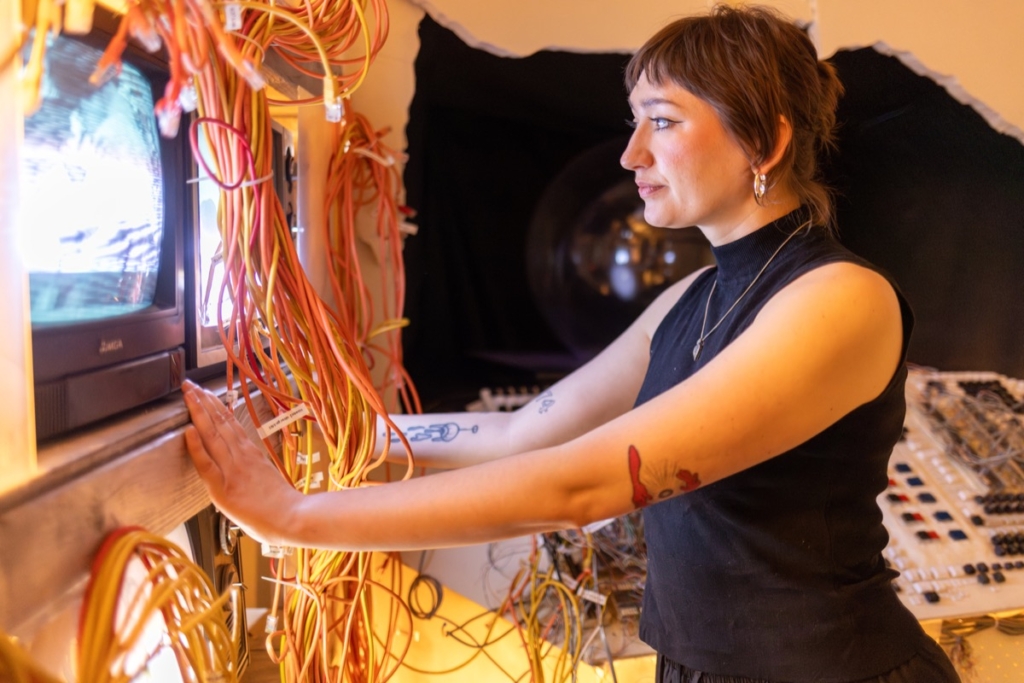
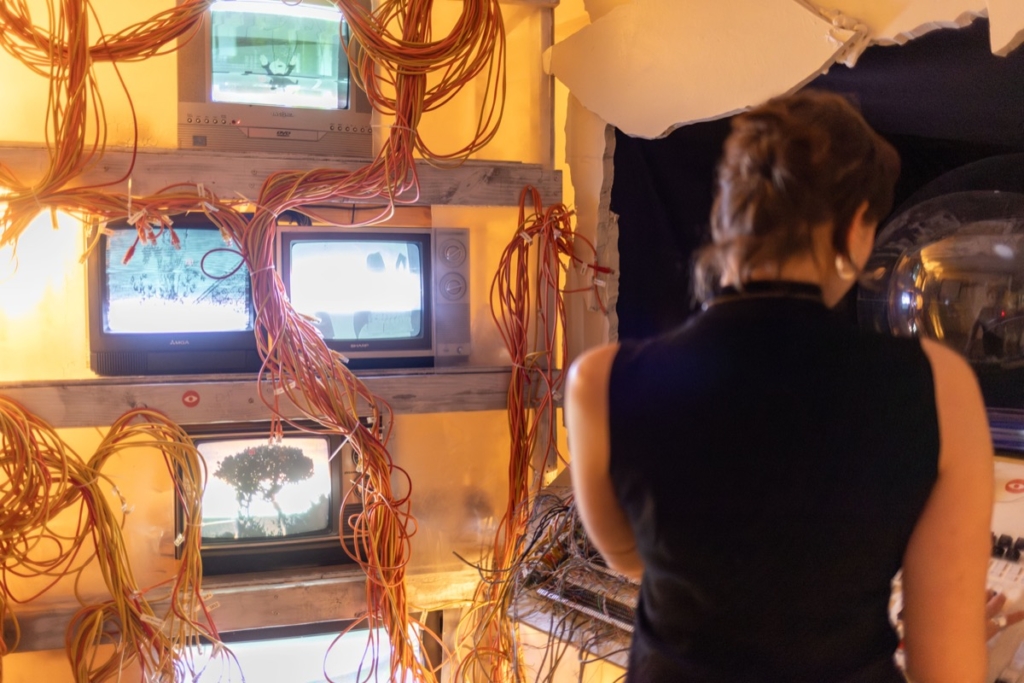
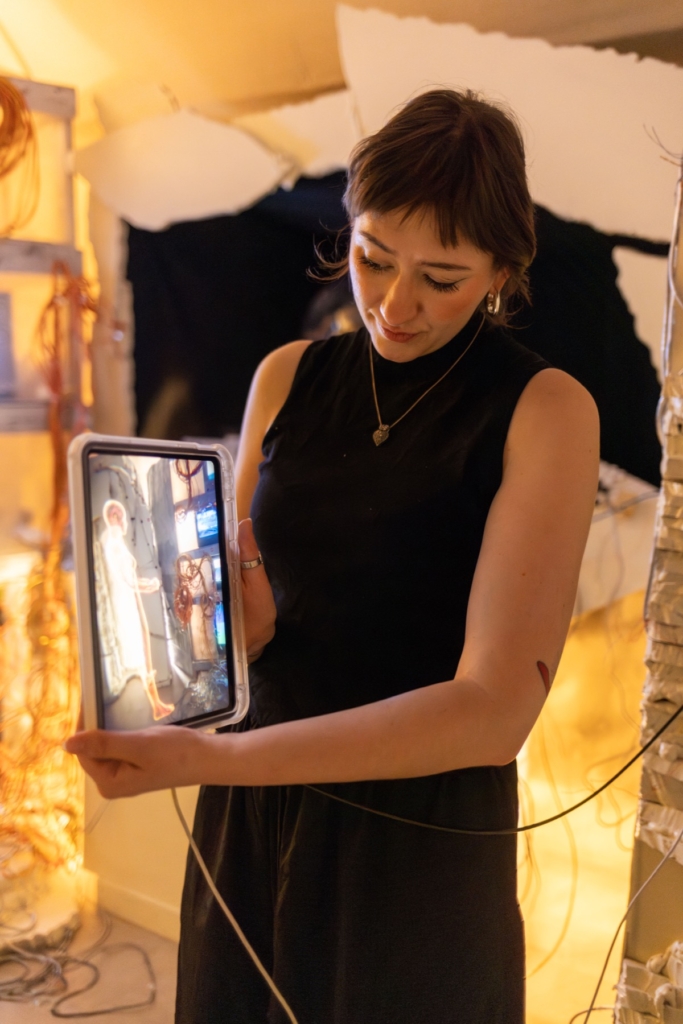
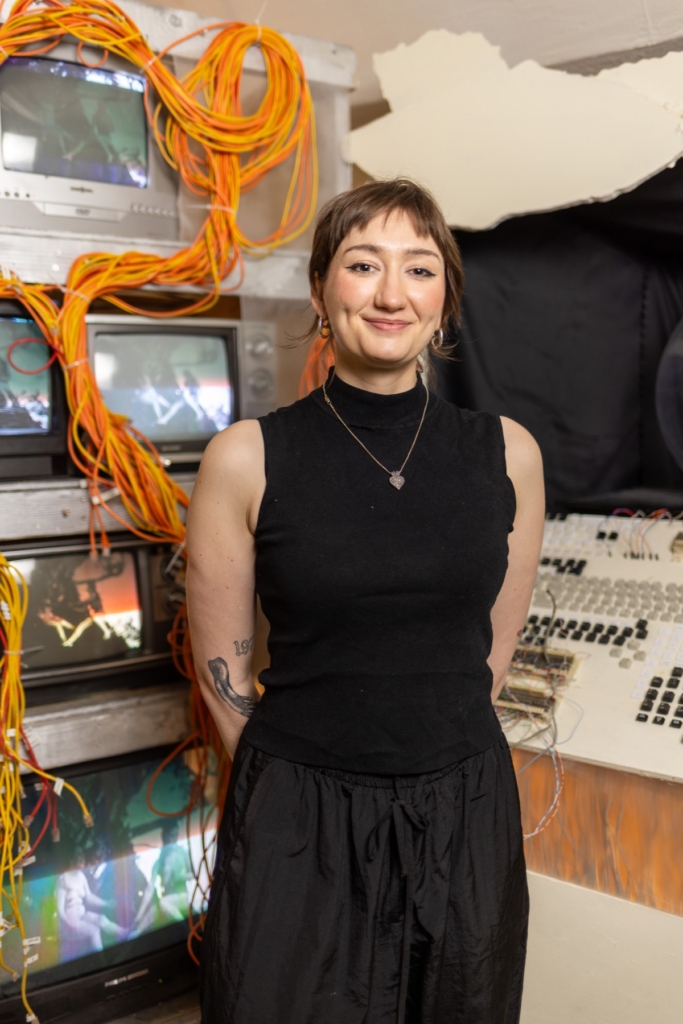

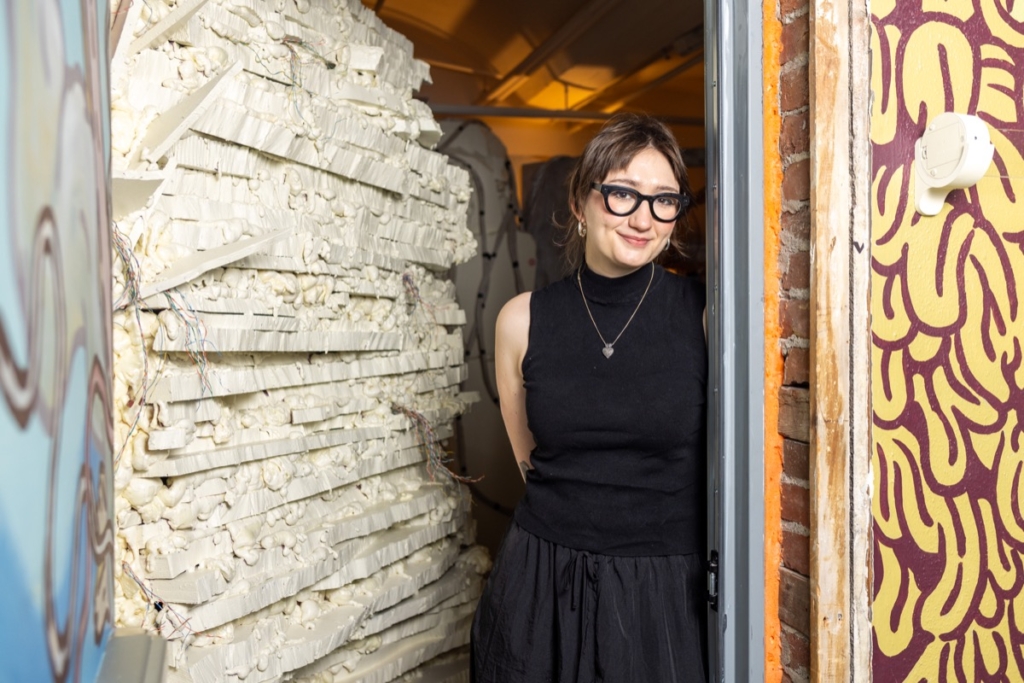
Multidisciplinary artist Katarina Poljak uses dance, film, and immersive installations to explore technology, mass consumerism, unfair beauty standards, and environmental collapse. “ We want the audience to not just see. We want them to feel,” says Poljak. “That’s always central to whatever it is I’m creating.”
“The plug is part of your body. Unravel it and pull it out of your organs,” Poljak says. Shina listens, works through the prompt, and discusses how it felt to perform the movement once the sequence is complete.
They intuitively listen to each other’s perspectives and collaborate on the choreography. The dancer and choreographer are refreshingly unique: They each have arms covered in tattoos, edgy haircuts, baggy rehearsalwear. A kind of style that pulls them apart from your standard prima ballerina, and even from one another. And yet, in an instant, they perfectly align when marking the dance moves together.
This is one of the final rehearsals for Poljak’s upcoming short experimental film “Source Architecture.” Poljak, a multidisciplinary artist, filmmaker, dancer and choreographer, has been working on this project since 2020, shortly after graduating in 2019 from Philly’s now-shuttered University of the Arts. Poljak, who is nonbinary and uses “she/her” and “they/they” pronouns, studied dance and filmmaking there.
Over the last six or so years, Poljak, has been busy, working on project after project. Some of Poljak’s most prominent current projects include this short film, a major immersive art installation in Philly’s latest museum Ministry of Awe, and a debut documentary that they co-directed, which premiered at the Tribeca Film Festival in June.
However, Poljak has always been hungry to create and perform at their highest potential. It goes back to their childhood in Moorestown. Poljak started dancing at 14 years old.
“She was a little quiet, a little insecure. But she would do anything to learn. She didn’t care what class she was in, so she actually started with the beginners who were six years old,” says Dalia (Hay) Robertson, Poljak’s former dance instructor and mentor.
Robertson was a professional ballerina with the Pennsylvania Ballet before opening her dance studio in Cherry Hill in 2008 (first called The Dance Academy, then later rebranded to Dance Arts Cherry Hill until it closed in 2018). Poljak was part of both iterations and quickly became a serious dancer.
Robertson says Poljak was like a sponge, quickly and effectively absorbing all they were taught. “She was willing to go backwards because she wanted to do it right. She was self-motivated, and it’s easy to teach someone who wants to be taught.”
Poljak, now 30, still credits Robertson as one of their greatest mentors and teachers. Robertson is proud of Poljak’s success.
“I just always saw her as an artist, so I’m not surprised that she has her own voice and has her own style,” Robertson says.
Personal style is what stands out most when it comes to Poljak’s art, which deals with humanity’s intersection with technology, unearthly beauty standards, mass consumerism, and the collapse of the environment. Science fiction, space, horror, and representing underserved communities also feature prominently in their work.
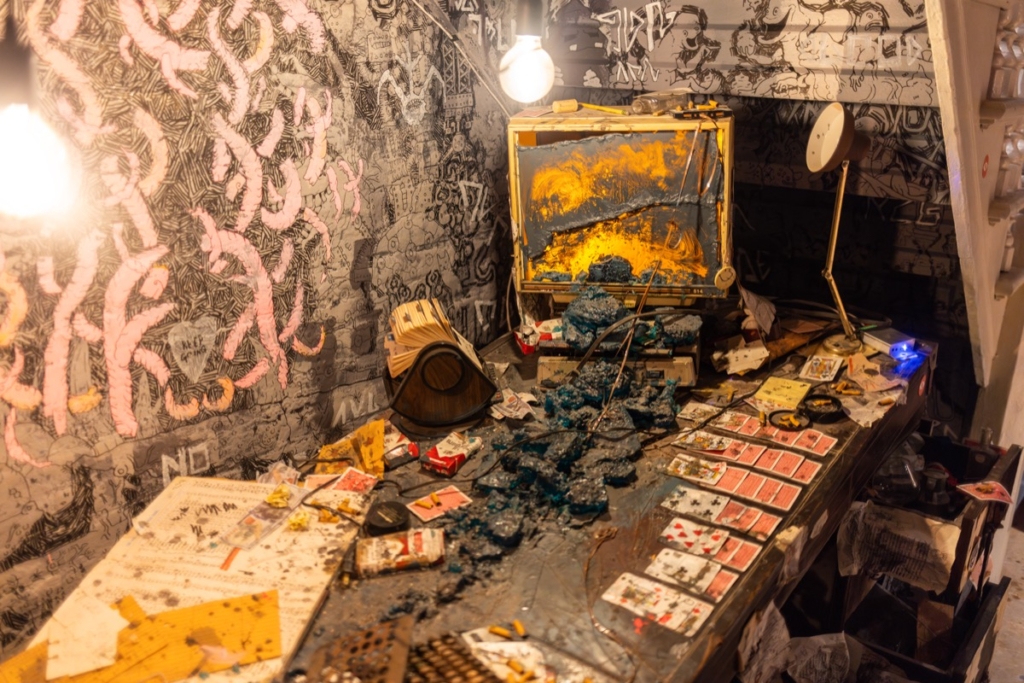
Poljak’s physical sculptural work often is made of recycled or thrifted materials. Sometimes Poljak trashpicks, other times they put out posts asking for any materials they may need for their work. As for Poljak’s piece, “Crash Site,” in Old City’s Ministry of Awe — which is housed inside an old bank — it was made almost entirely of wasted televisions, wires, keyboards, and foam installation. The exhibit sits on the top floor of the old bank, isolated from any other pieces, almost as if a spaceship crashed into the top of the museum. Collaborator Sam Cronick worked on all the video display components for the installation.
Ministry of Awe features original, absurdist, immersive artwork from over 150 local artists; Poljak was one of the first artists the museum’s creator Meg Saligman recruited.
“I was a dancer in a piece Meg was putting on at FringeArts, and we stayed connected,” Poljak says. Poljak pitched the installation idea as a component to their short film “Source Architecture.” While the installation can still stand on its own and offer a discomforting experience for museumgoers, it also will serve as a set for the film.
The lead dancer is portraying a cyborg in the film, and some scenes (like the routine Poljak and Shina were rehearsing in South Philly) were shot at the installation in June. The film highlights the loss of humanity and technological debris that we may be rapidly approaching. Above all, the project is emotionally raw and thought provoking, questioning what it means to love, think, and connect as a human when we have given ourselves up to technology.
“As artists, we always wrestle with the in between of ‘Are we making this so people watch it, or are we making this because this is how we can be seen in the world?” Poljak says.
The short film wrapped last month. Poljak will spend the next few months editing and polishing the film. Hopefully, it will be released by the end of the year; updates can be found on Poljak’s Instagram (@rageboxx) and website (rageboxx.net).
Poljak’s longform work “The Haunting of Pennhurst” debuted at the Tribeca Film Festival in early June. Poljak, along with two other collaborators, directed the documentary feature film that focuses on the mistreatment and segregation of disabled individuals at Pennhurst Asylum. The asylum, which officially shuttered in 1987 after decades of abuse towards its patients who just needed help, is now a haunted attraction, and many of its performers are people with disabilities who are trying to rewrite the narrative of the institution’s history.
Poljak utilized a mixture of archival footage and materials, as well as new shots taken over the last couple of years. The film’s subject is the Pennhurst Asylum, but it serves as a piece of media with a greater mission to bring awareness to the historical and ongoing mistreatment and misunderstanding of disabled individuals.
No matter what Poljak is doing, they are a passionately innovative artist who makes art for others and themselves.
“There’s a lot of artists that feel like when we’re making something, it’s not just to be seen, but also just because we feel it in a real way. I think what’s super magical for me is to sort of translate that feeling,” Poljak says. “We want the audience to not just see. We want them to feel. That’s always central to whatever it is I’m creating.”

