
When families face the difficult decision of finding memory care for a parent, spouse, or other loved one, they want more than a safe, secure home.
They want highly-trained caregivers, specialized expertise, meaningful engagement, and the peace of mind that comes from knowing their loved one is receiving exceptional care.
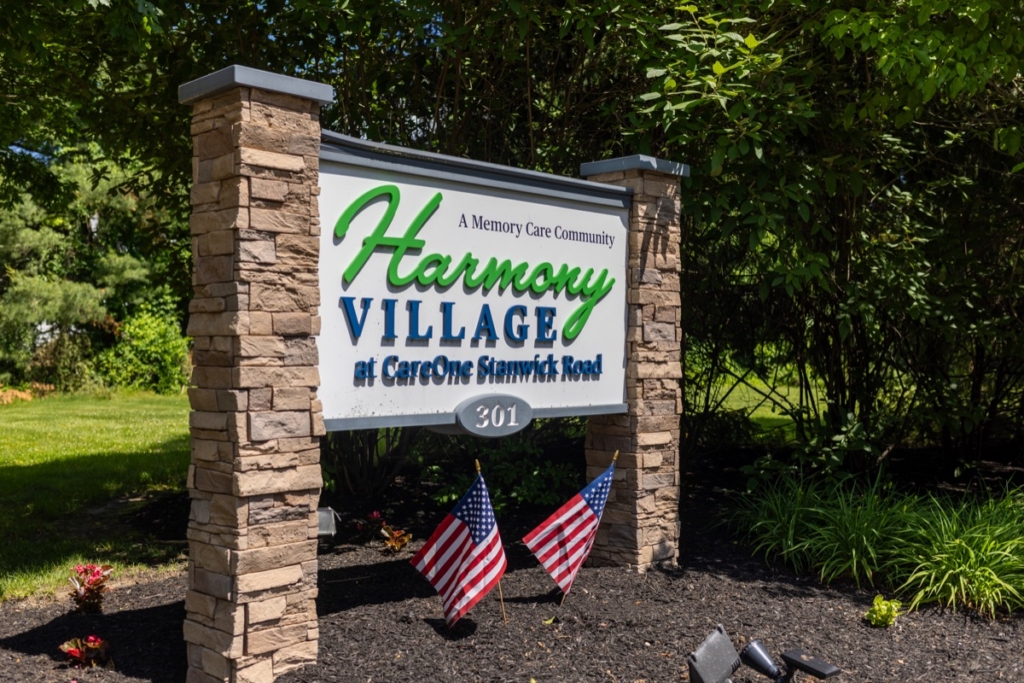
For 18 years, CareOne’s Harmony Village at Stanwick Road in Moorestown has provided exactly that level of compassionate care for local families.
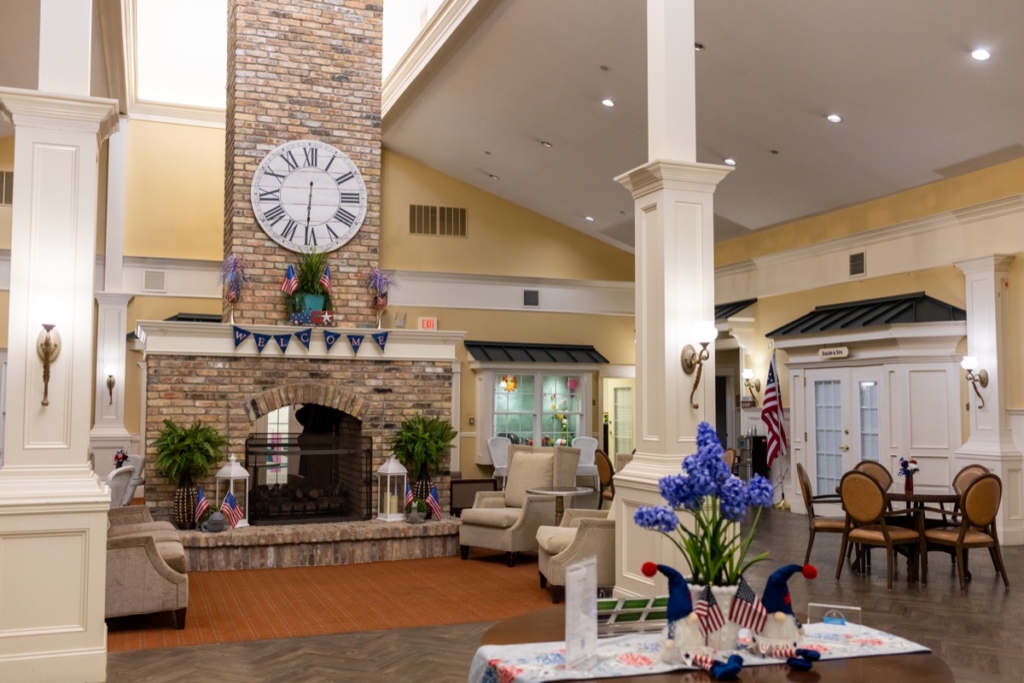
As the first all-memory-care assisted living community within the CareOne network, Harmony Village has become a flagship model for dementia care, offering a holistic approach that prioritizes safety, dignity, connection, and quality of life. The innovative neighborhood design allows residents to receive care tailored to their cognitive abilities while remaining in a familiar environment as their disease progresses.
Originally opened 18 years ago with four neighborhoods housing 16 to 17 residents each, the community has expanded over the past four years to eight neighborhoods. Residents are grouped according to their stage of dementia, allowing them to socialize and interact with peers facing similar challenges.
Dementia — a group of symptoms affecting memory, thinking, behavior, and social skills — can significantly interfere with daily life. Alzheimer’s disease is the most common form of dementia, and as the disease progresses, individuals often require increasing levels of support.
What distinguishes CareOne’s Harmony Village from other facilities is its ability to care for residents through every stage of dementia — early, mild, moderate, and advanced — allowing them to age in place without the disruption of multiple moves.
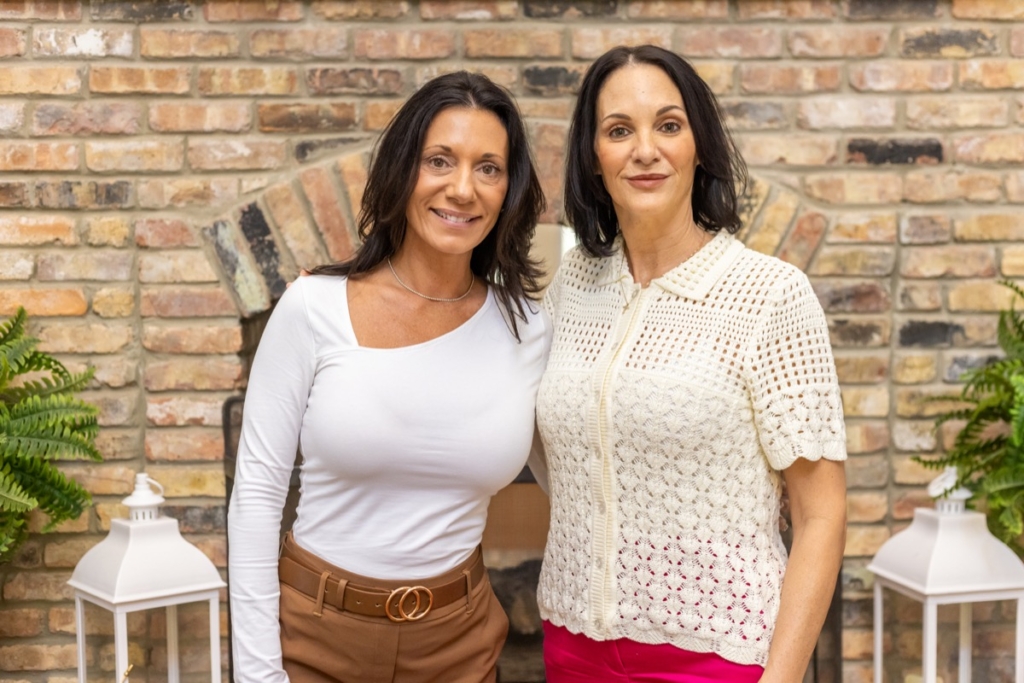
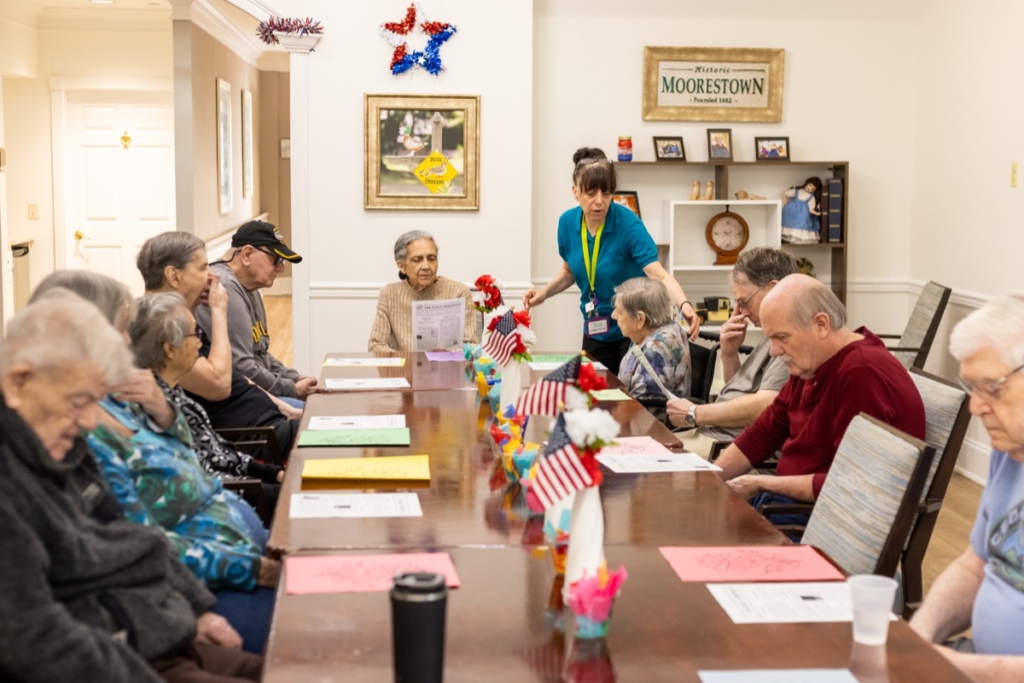
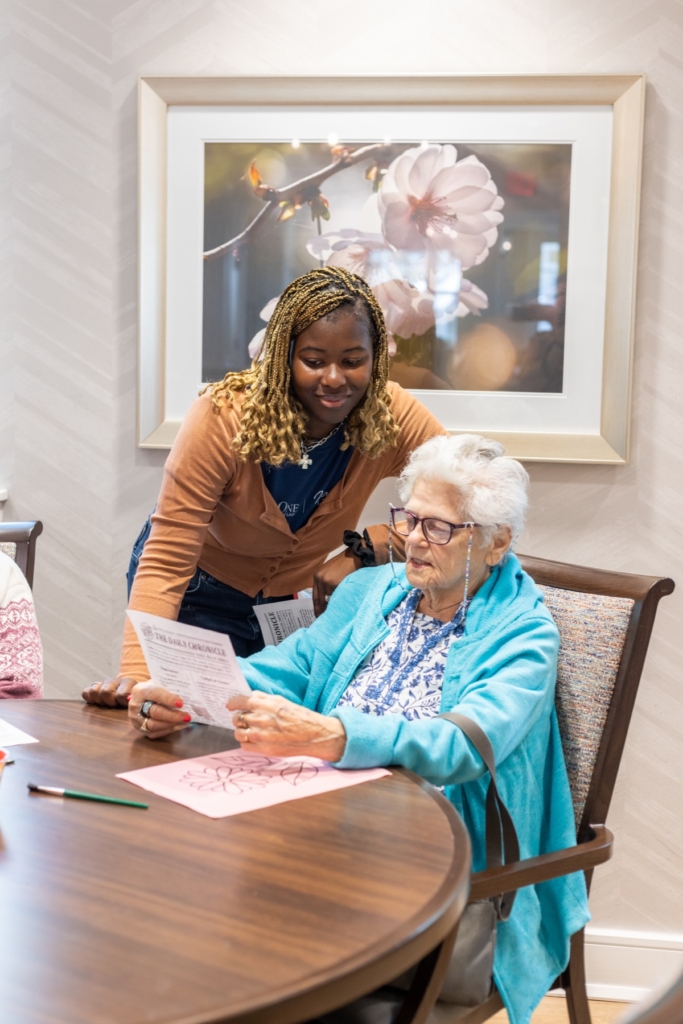
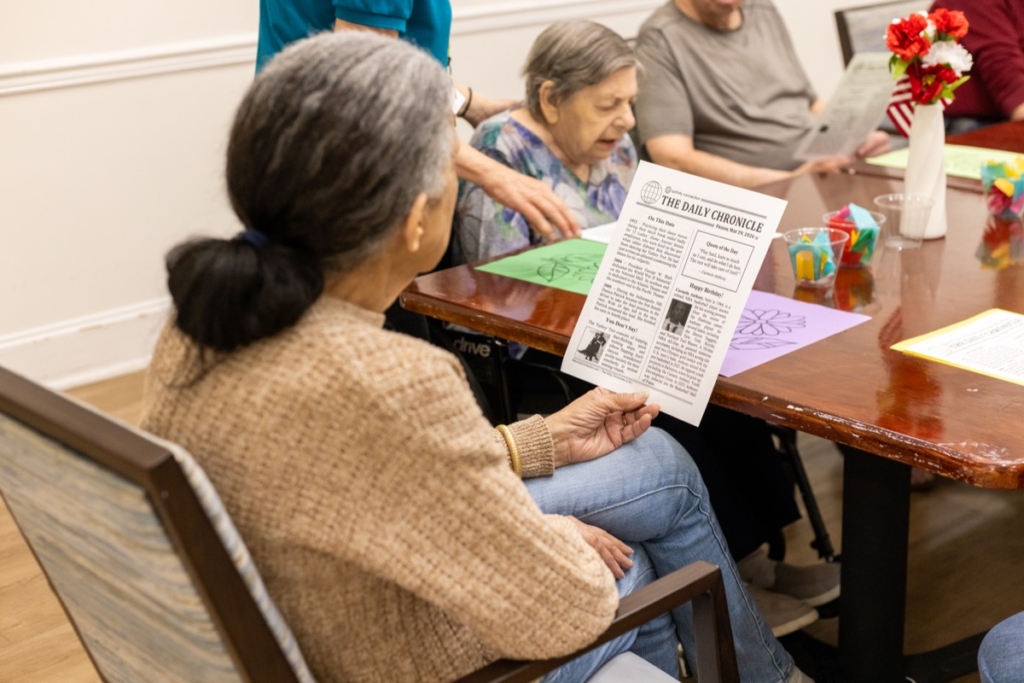
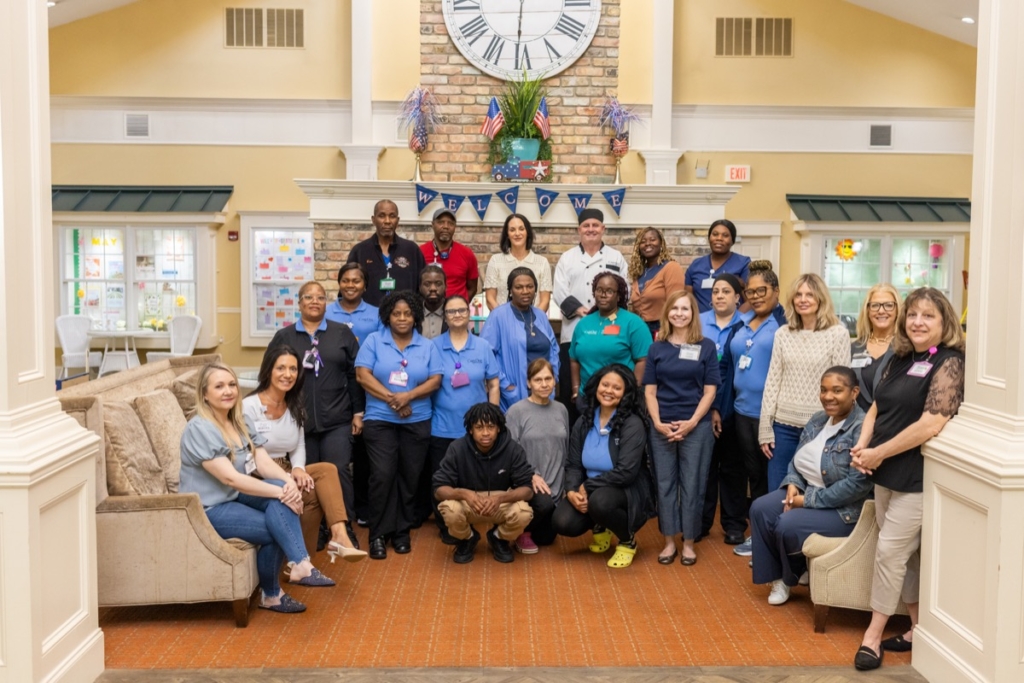
At CareOne’s Harmony Village at Stanwick Road, memory care extends beyond clinical support to include music, poetry readings, and fashion shows that help residents stay engaged and connected. “Never underestimate your loved ones in memory care,” said Rebecca Donohue, a dementia care specialist (pictured above, at left, with Patrice Yannessa, the community’s executive director). “They still want connection. They still have strength. They still want to be seen and valued.”
Custom care plans, specialized programming, secure surroundings, and activities designed to promote cognitive engagement all contribute to what the community calls a richer quality of life for residents while easing the burden on their families.
“When families come to Harmony Village, they are often experiencing one of the most difficult times in their lives,” said dementia care specialist Rebecca Donohue. “We become their second family, and this becomes their second home.”
“Our residents are going to require complete care with all of their aspects of daily living, and Harmony Village allows them to age in place, while we focus on safety and quality of life needs,” she said.
“We are here when they require advanced care, such as being fed or a mechanical lift to get them out of bed,” she said. “We are able to meet all of those requirements.”
In addition to memory, Donohue said that dementia affects much more than memory loss. It can affect everything involving sequencing, including conversation, mobility, and vision — all of the senses change with dementia.
Understanding how overwhelming having a loved one with dementia can be, Donohue runs family support groups, including connecting spouses with other spouses and providing much-needed resources.
“No one knows what they are going through more than another spouse,” she said.
A wide range of activities, including music and other entertainment, are available for the residents. They invite musicians to come to perform at the facility.
“We may have a resident who doesn’t have conversations with family members or staff, but we play a song from their past, and they start singing.” She added that the rhythm from both music and prayer are aspects of their lives they can retain, despite their dementia.
The activities also include family nights where several generations will come to the grand lobby area or courtyard for birthday parties and other celebrations. The residents, their loved ones, as well as the dedicated staff members enjoy this.
Donohue says that during the past 18 years, the need for dementia care has increased drastically. Before a resident moves into the facility, Donohue and the facility’s director of wellness, Lisa Lane, carry out assessments to determine the care needs of the potential residents.
A Family Perspective
For retired college English professor and Ocean City resident Christine Gallagher Schmitz, finding Harmony Village was life-changing.
Her mother, Barbara Gallagher, who turned 80 in June, had always been active, independent, and healthy while living at home and in a 55-plus community in Marlton. But subtle signs of dementia began to emerge. “She started losing track of time and becoming disoriented,” Schmitz recalled.
The situation escalated when Barbara fell while walking outdoors and was taken to the hospital by local teenagers who found her injured. After a six-week recovery, a hospital social worker recommended elder-care attorney Jane Fearn-Zimmer, who helped the family navigate the next steps.
“My mom was physically healthy aside from the fall, but she was diagnosed as being in the early stages of dementia,” Schmitz said. “Harmony Village worked with us so quickly and compassionately. She immediately connected with the nursing staff and formed friendships with employees throughout the community.”
Recognizing Barbara’s lifelong love of fashion and poetry, staff members found creative ways to keep her engaged.
“They held fashion shows where she could wear her beautiful clothes and poetry events where she could read her work to residents and staff,” Schmitz said. “Considering the trauma that brought us there, her transition was remarkably smooth.”
Today, Barbara is receiving hospice care and is in the advanced stages of dementia. Schmitz believes entering Harmony Village early in the disease process made a tremendous difference.
“Because my mother arrived early, she had time to build meaningful relationships with staff members who have remained part of her life throughout her journey,” Schmitz said. Harmony Village “exceeded every expectation we had. I truly consider it the Ritz-Carlton of memory care.”
Plan Early To Have Options
Patrice Yannessa, executive director of CareOne’s Harmony Village at Stanwick Road, encourages families not to wait until a crisis occurs before exploring memory care options.
“Be proactive,” she said. “Having a plan in place before the need becomes urgent reduces stress for everyone involved. If you’ve already toured communities and know your options, the transition becomes much easier.”
Yannessa acknowledges that caregiving is one of life’s most demanding responsibilities.
“Once you have peace of mind knowing your loved one is receiving the care they need, you can focus on enjoying your time together,” she said. “Instead of being overwhelmed by caregiving responsibilities, you can share laughs, create moments, and make memories.”
Another hallmark of Moorestown’s Harmony Village is staff longevity. Families benefit from seeing familiar caregivers, nurses, and team members day after day, building trusting relationships that often last for years.
Yannessa understands the emotional toll dementia takes on families. Her 83-year-old mother resides at CareOne in Hamilton, giving her a deeply personal perspective.
Never Underestimate Loved Ones
The philosophy reflects the mission that has guided CareOne’s Harmony Village since its inception: helping residents live with dignity, purpose, and connection while supporting the families who love them every step of the way.
“Dementia is one of the few diseases where families experience grief twice — once at diagnosis and again when their loved one passes away,” Donohue said.
Her advice is simple but powerful. “Never underestimate your loved ones in memory care,” she added. “They still want connection. They still have strength. They still want to be seen and valued. Never count them out.”

