
Local author finds fulfillment in learning about life on the creek
Growing up in Mount Laurel, fishing, boating and tubing on the Rancocas Creek was a favorite summer pastime for Stephanie Marks Sawyer.
Her family owned a restaurant, and her father spent much of his time working. But when he could get away, the Rancocas Creek offered something rare: uninterrupted family time.
It was “one of his favorite things to do,” Sawyer remembers, adding they had a boat when she was young. “It was something we could do easily during the summer.”
Today, Sawyer works right next to the Rancocas Creek in Lumberton.
“I cross it multiple times a day,” she said.
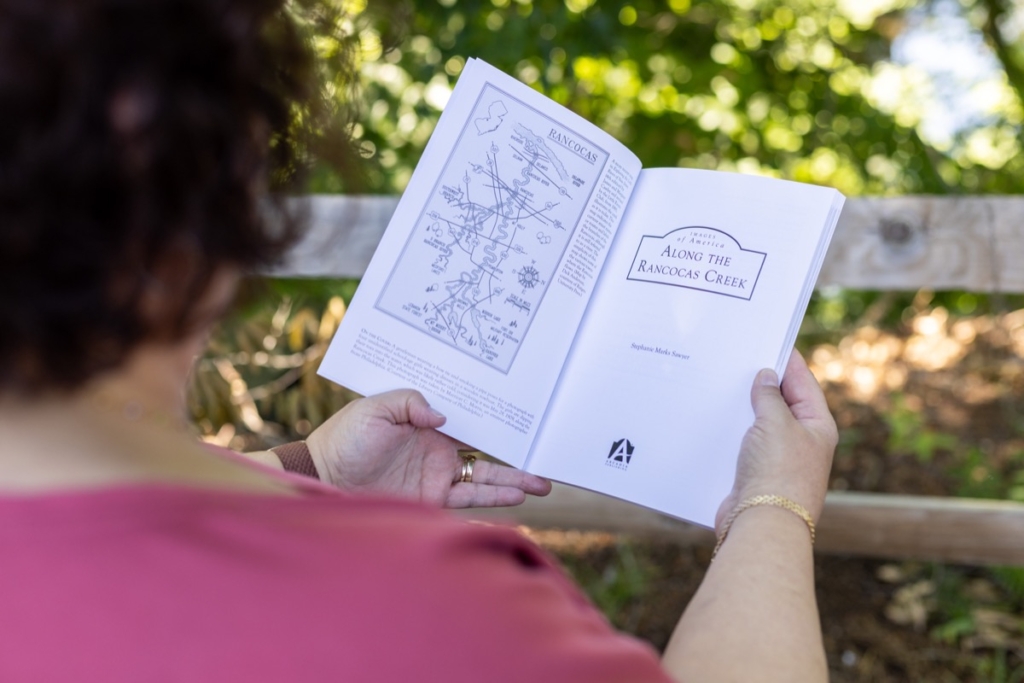
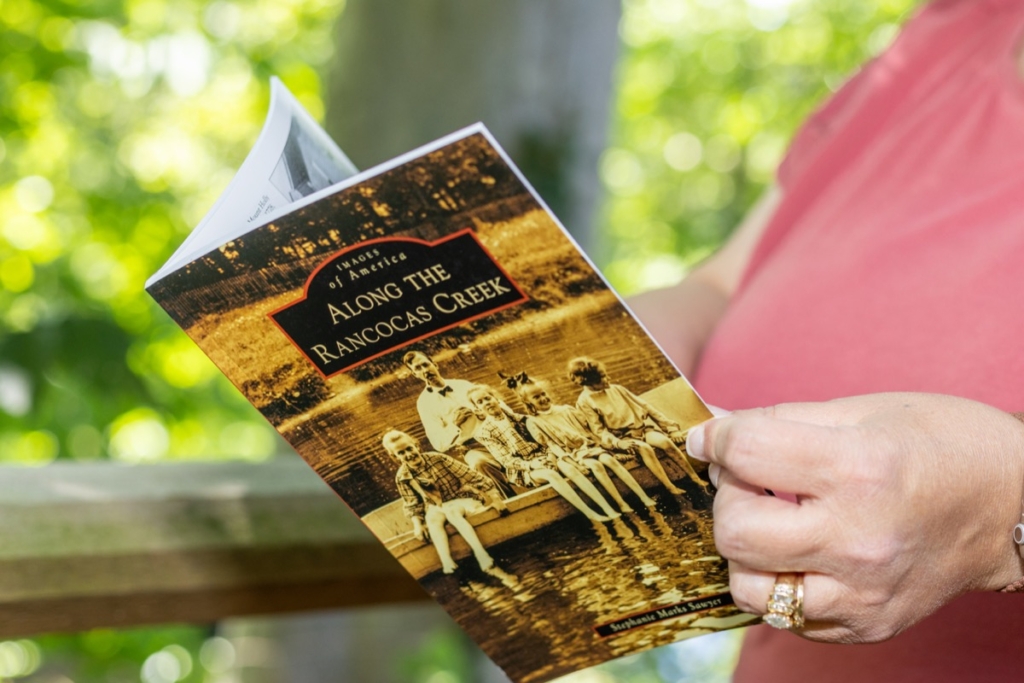
Sawyer is the author of “Along the Rancocas Creek,” which is part of the popular “Images of America” series. It is the second book she published through Arcadia Publishing in May. Her first book focused on the history of Mount Laurel, which was published in 2014.
If you ask her, her journey into book writing and publishing was unconventional to say the least.
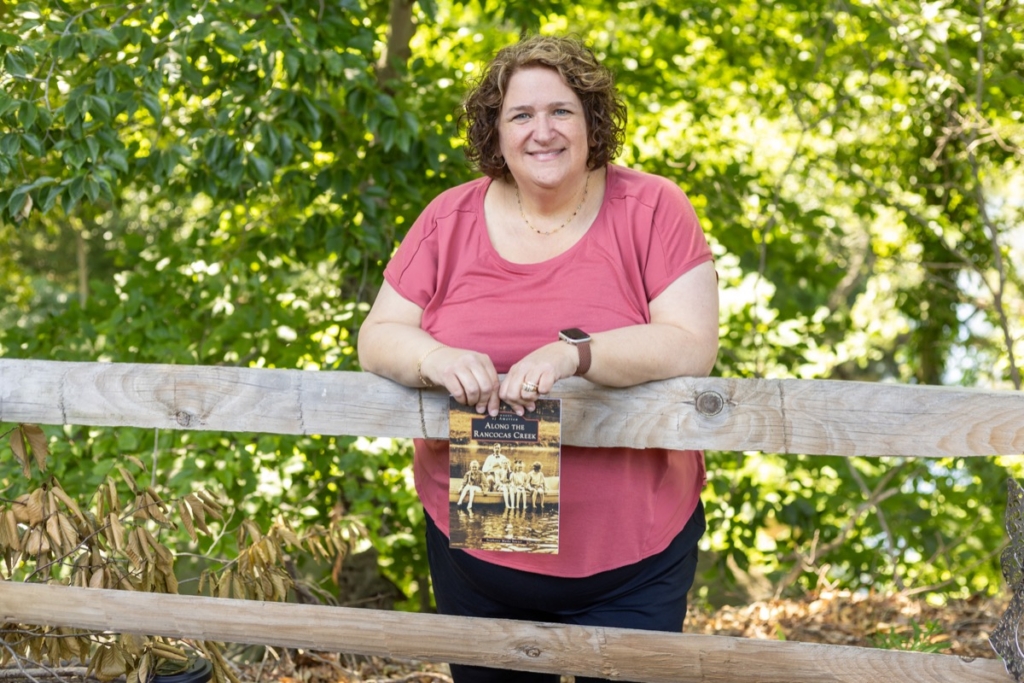
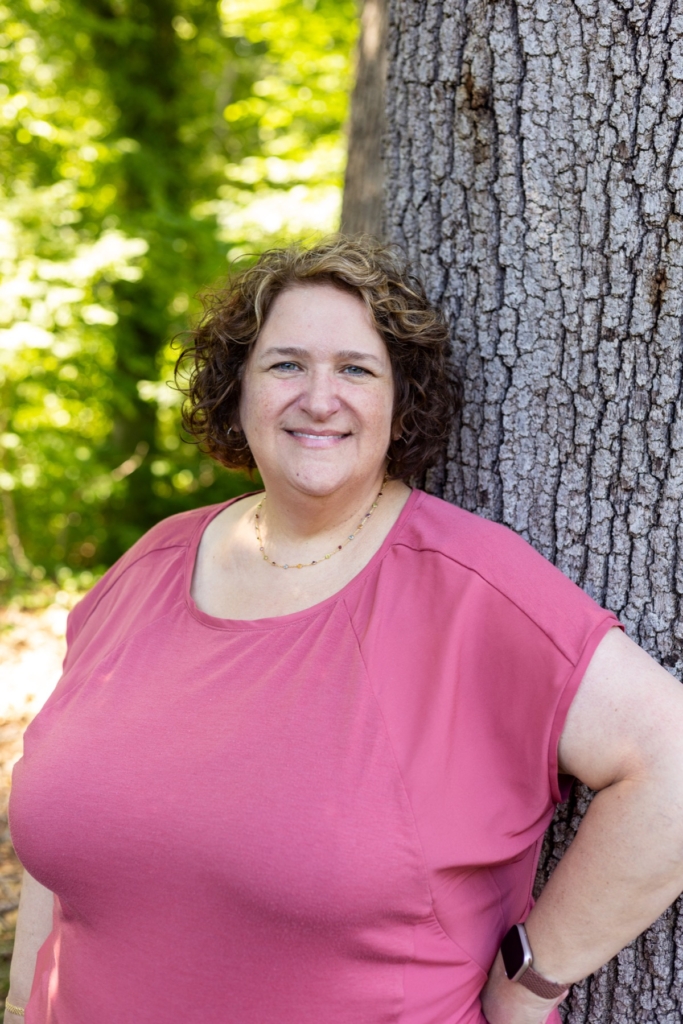
Stephanie Marks Sawyer
“I was a stay-at-home mom,” Sawyer explained, “and I kind of lost myself and my identity.”
And although she loved being involved in every aspect of her two daughters’ lives – — she served as PTO president at their schools – it felt like “a little part of me was missing something.”
A friend of Sawyer’s published an “Images of America” book about Browns Mills in Burlington County and she suggested her friend publish one on Mount Laurel.
At first, Sawyer was taken aback. “I’m not a writer. I have a degree in elementary education and a master’s [degree] in counseling.”
But, long story short, Sawyer took her friend’s advice and began the process of writing her first book. She began reaching out for initial interviews of historians and families who had lived in the area for generations.
“It really just sparked something and I loved it. I loved meeting all the people and everything,” she said.
Fast forward to two years ago, Sawyer had been thinking about the Rancocas Creek.
“My kids are away now – they are in college and grad school – and I was feeling a little lost again,” she admitted. “I do love my job now. I work with seniors and affordable housing and it’s very fulfilling … but I needed to fulfill a little something for me again.”
Researching the Rancocas Creek gave Sawyer that “scholarly” fulfillment.
“My initial direction was more factual, more industry-related,” she said.
But that direction took a turn through the contacts she met.
“[The contacts] had amazing photos of life along the Rancocas Creek,” Sawyer said. “I still addressed industry, but I found [the people] really interesting. I had no idea – having grown up here my whole life – that there was a vibrant community [that lived along the Rancocas Creek].”
Such as in the 1930s, ‘40s, and ‘50s — between Mount Holly and Smithville –- some 300 to 350 vacation cottages were built at the water’s edge. These were simple cottages — many with no running water or electricity. They were used by people from Philadelphia and beyond, who would come to enjoy their weekends on the Rancocas Creek.
“I had no idea that the Rancocas became this destination,” Sawyer said.
Two canoe rental establishments provided canoes for vacationers to get to town, get to the spring for fresh water, or to simply socialize with their neighbors. Hack’s Canoe Retreat opened in 1876, and Kates’ Island Store, which was located deeper along the Rancocas, opened in the 1920s or 1930s.
There was plenty to do on the creek: bird watching, sunning, fishing and gardening, among many other activities.
Today these cottages have transformed into beautiful homes on the water, Sawyer said.
“For me it was eye-opening,” she said. “I found [Eleanor Gesensway] who had [the foresight] to do oral histories of a lot of people who lived along the Rancocas back in the late 1980s and that was the impetus [for the change in direction for her book].”
Thanks to social media, Sawyer was able to locate and then interview a child mentioned in the oral histories. That child is now an older gentleman.
“I spoke with him and he gave me many of the photos in the book and that was amazing,” she said.
Gesensway also provided photographs.
“I could not have written this book without her well-documented narratives,” Sawyer said of Gesensway’s oral histories in her acknowledgments in the book. “I found her book in the New Jersey Room at the Burlington Country Library in Westampton.”
Sawyer also noted Marisa Bozarth of the Burlington County Lyceum of History and Natural Sciences, which has “an amazing display on the Rancocas Creek.”
“In one of the oral histories that I read, the person referenced that the von Trapp family from ‘The Sound of Music’ would vacation on the Rancocas,” Sawyer said. “I was fascinated. I couldn’t believe it.”
Sawyer immediately ordered Maria Trapp’s (formerly von Trapp) memoir “The Story of the Trapp Family Singers: The Classic Memoir of a Musical Family” online.
“Sure enough, when they [escaped] Austria [portrayed in the ‘Sound of Music’] they had settled in Merion, Pennsylvania,” Sawyer learned. “When in Merion, they met people who had a summer place here on the Rancocas and they would come over a couple of summers and vacation on the Rancocas Creek.”
In her memoir, Trapp tells the extraordinary story of her romance with the baron Georg von Trapp, patriarch of the Trapp Family Singers, their escape from Nazi-occupied Austria, and their life in America.
The family experienced the Rancocas. According to the author’s foreword, the family “enjoyed the exercise of hiking, swimming and canoeing, which (Maria Trapp) wrote about in her memoirs.”
Another person Sawyer learned about was the notable, self-taught 20th-century painter Hugh H. Campbell, who found inspiration in the Mount Holly area. Hugh Campbell had a quiet, austere lifestyle. Each day, carrying his heavy painting gear, he would roam the fields, valleys and woods up and down the Rancocas Creek and look for inspiration.
If not for researching the book, “he’s not someone who I would have ever looked into,” she said.
Campbell was from Camden but came to the Rancocas, where he would stay a few days at a time, sketching and wandering around, allowing his creativity to flourish. Campbell pitched a tent to sleep at night on the banks of the creek.
He was transient and a loner by choice, Sawyer said. Campbell was a landscape artist who used oil paints and thick brush strokes. He painted pictures of houses and scenes all around Mount Holly and the creek area in the 1930s through 1950s. He sketched and painted scenes of mundane daily life and perfected his technique through repetition.
Campbell died at the age of 91 in 1997. He left behind a substantial number of paintings that have steadily increased in value.
Sawyer said she looked into purchasing one of his paintings. She was surprised they were selling for thousands.
“His humble self would probably be quite shocked at the worth of his artwork,” she said. “For a man who had naught, relied on no one, and needed nothing, he left behind a legacy not only locally but also in the art world.”
Sawyer took about a full year to research and write the book that was published on the Rancocas Creek.
The book isn’t comprehensive, she said, noting there’s so much more information she gathered. “It’s just a glimpse of life along the Rancocas.”
The Rancocas Creek watershed encompasses parts of 33 municipalities in three counties in Southern New Jersey. There are multiple branches of the creek: the main branch, which connects with the Delaware River; the North Branch, which meanders through Mount Holly and continues through Pemberton all the way to Ocean County; the South Branch, which starts at Hainesport and goes through Lumberton to Southampton; and the Southwest Branch, which splits toward Evesham and Medford.
“I know this would not be a complete volume of the Rancocas Creek, but I had to start somewhere,” she said.
“The Rancocas [Creek] was such a big deal.”

