
With a background in promotional marketing and strategic campaigns, Cortney Petrillo-Heine infuses estate sales with intention. Based in Barrington, she and her team at Thee Perfect Sale sort through clients’ homes to price and stage select items, creating sales that feel less like clear-outs and more like curated experiences. Working with sellers across South Jersey — particularly in historic towns like Haddonfield, Moorestown, and Medford — Petrillo-Heine has built a reputation for transforming the often overwhelming process of downsizing into something more considered and inviting.
Going to estate sales wasn’t something I grew up doing, but when I first met my husband nine years ago, we started going together. We’d go to places like the Columbus mart, and if we were traveling, I’d pull him into whatever flea market or antique spot I could find. On our honeymoon in Portugal, I looked up flea markets. I just love seeing what people hold onto, the mix of things they collect, and the stories you can piece together from it. Even if I don’t know the story, I’ll start putting one together in my head. I’ve always been drawn to older things, things that feel like they were made with more care, whether it’s a handmade pillowcase, a vintage book, or something small that most people might overlook.
I was working as a recruiter for a global sports marketing company when COVID eliminated my role. Around that time, a family friend needed help liquidating a large collection of diecast cars. I didn’t have a plan, but I made calls, found buyers, and eventually connected with someone who drove up from North Carolina and bought a large portion of it. It didn’t take long to realize I really enjoyed the process.
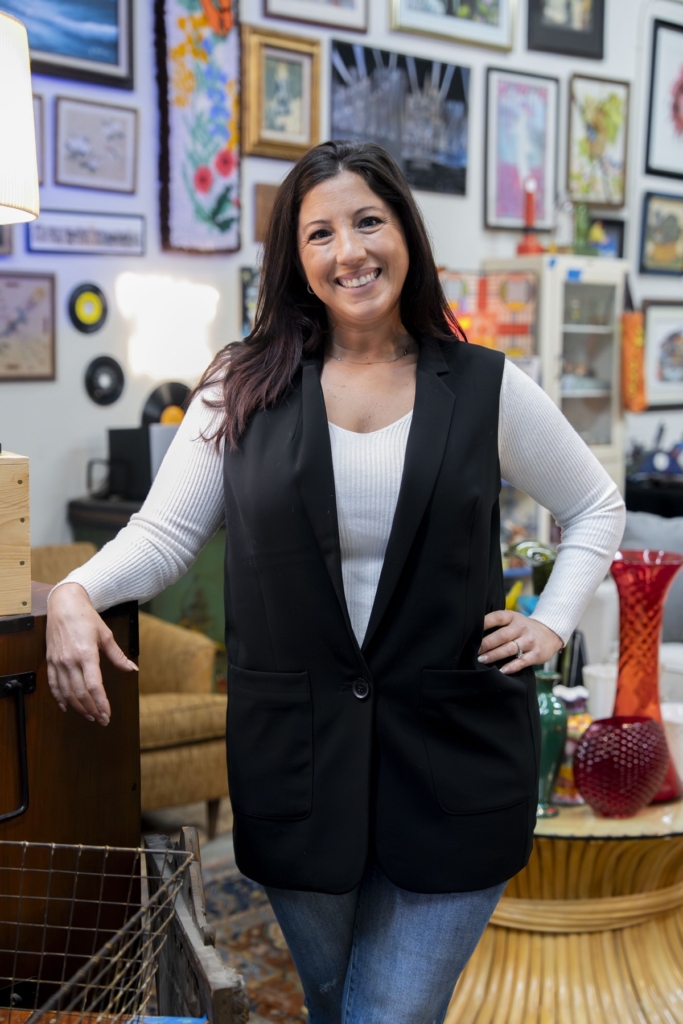

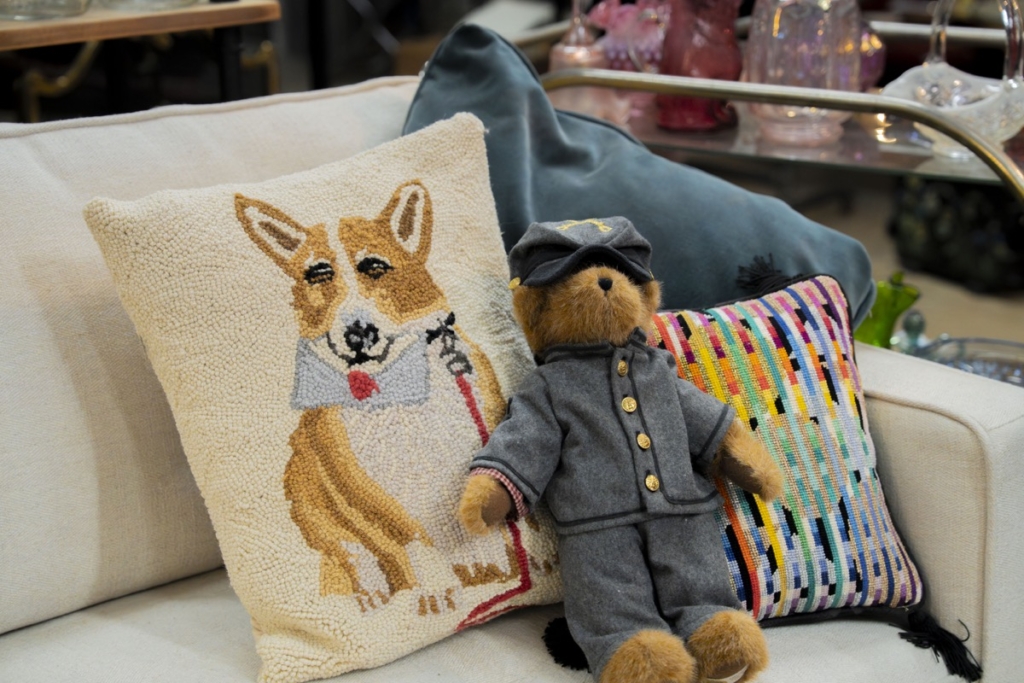
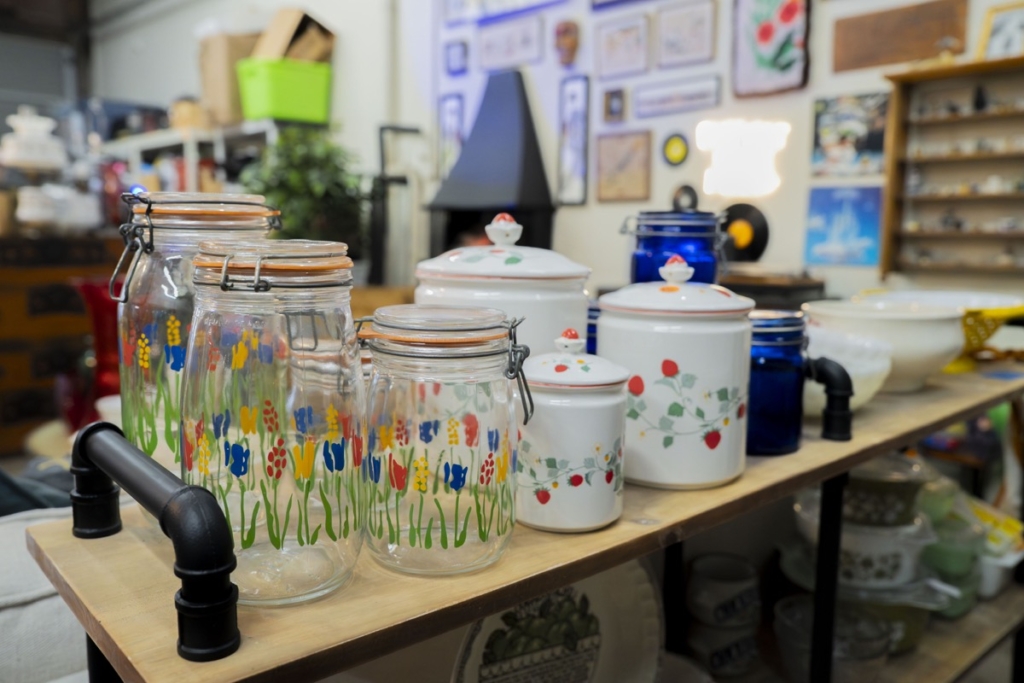
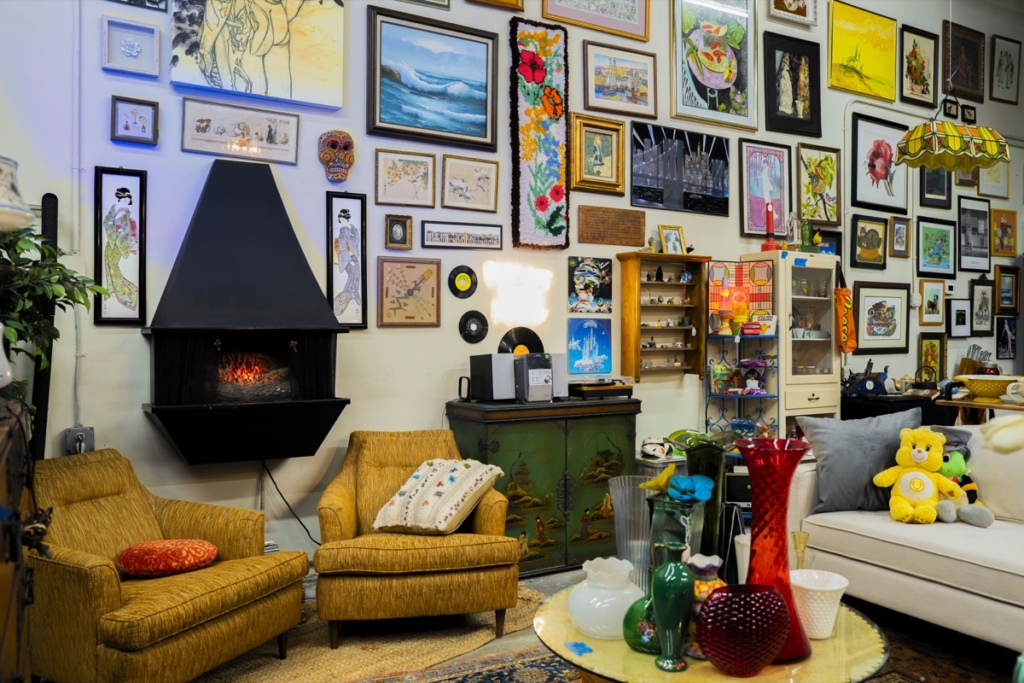
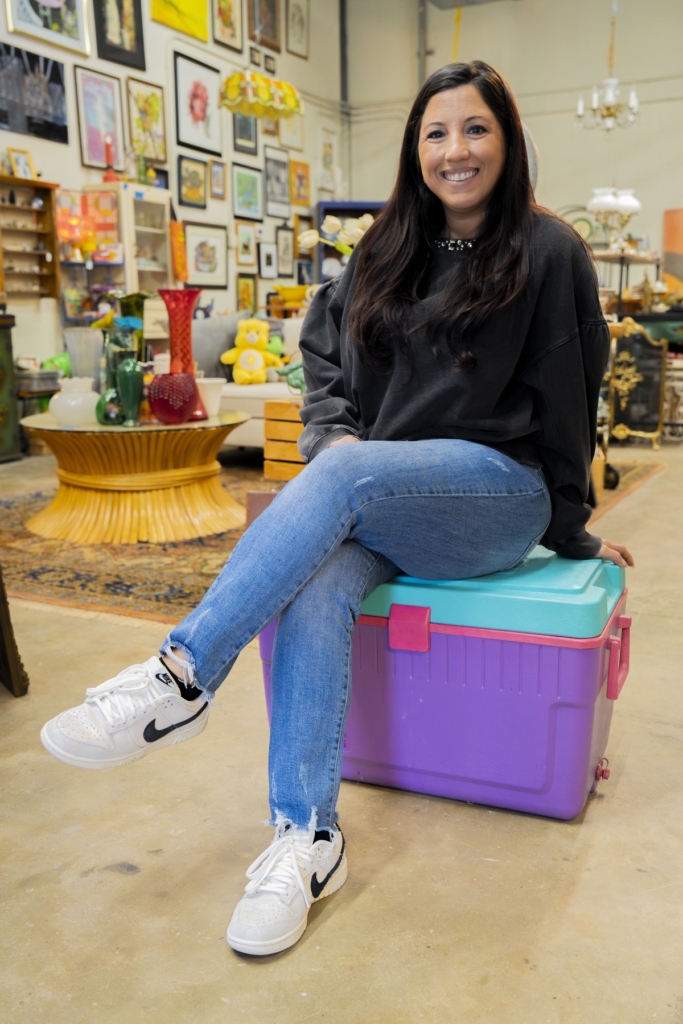
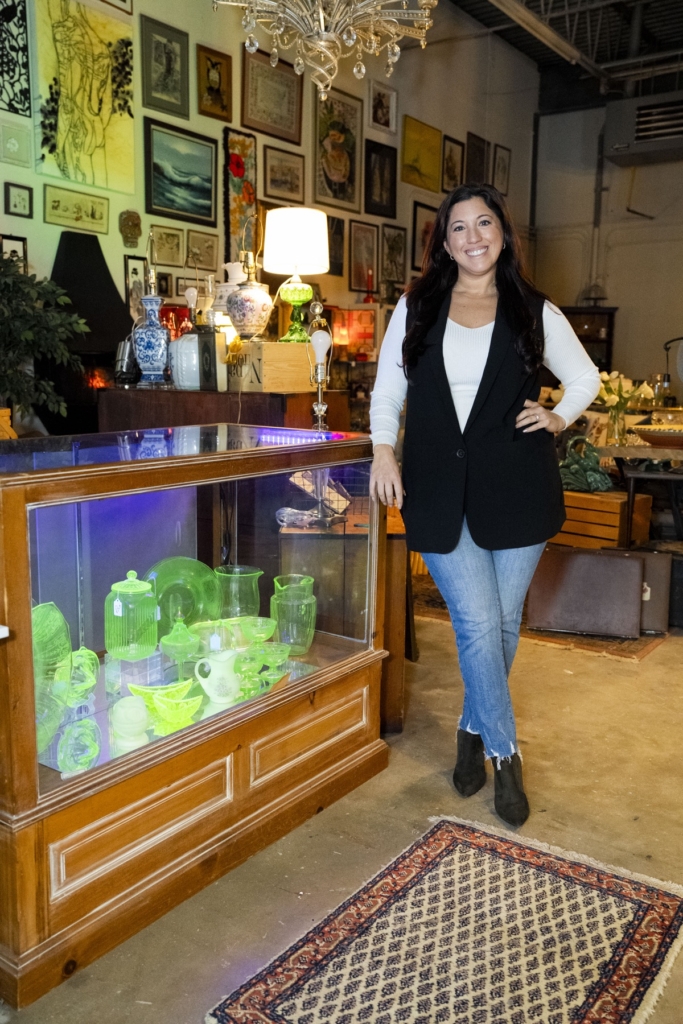
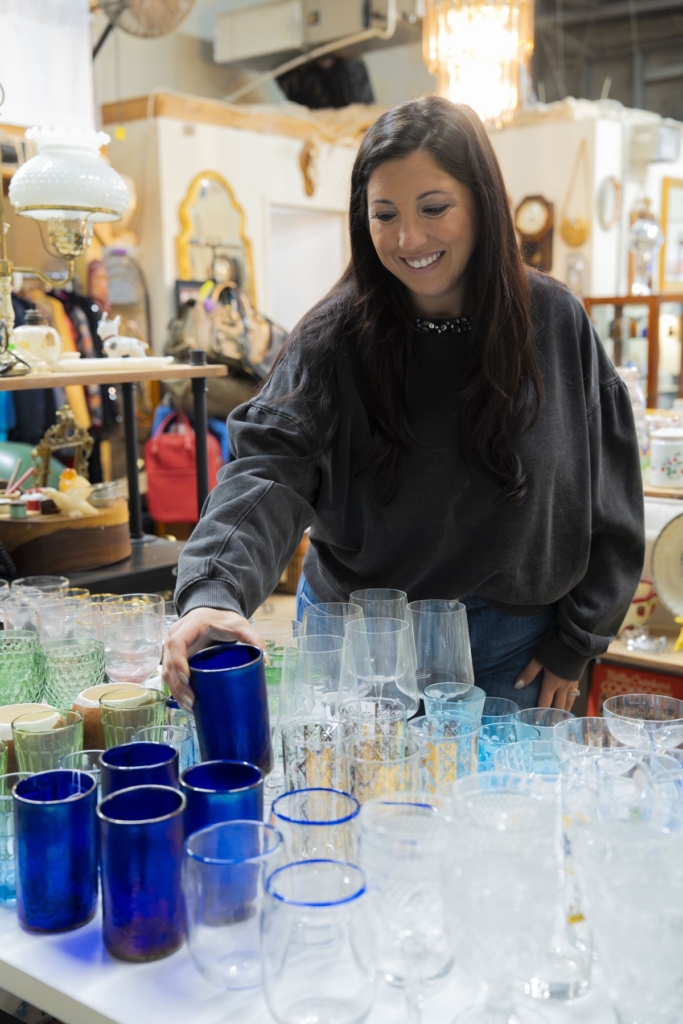
Cortney Petrillo-Heine in her warehouse in Blackwood.
One of the things I noticed early on is how uncomfortable estate sales can feel if they’re not done well. I’ve been to estate sales where no one greets you, people working the sale are sitting on the couch, and you’re just wandering through someone’s house alone, not really sure what you’re supposed to do. It can feel awkward. I didn’t want that. With Thee Perfect Sale, we greet people at the door, walk the space with them if they want help, and actually think about how everything is set up. Each room has a purpose. We merchandise things, almost like sections in a store, so it’s easy to move through. It should feel natural, not like you’re digging through someone else’s life.
When I first meet with a client, they’re usually overwhelmed before we even start. It’s always tied to something bigger, emotionally speaking, and they don’t know where to begin. I tell them to focus on personal paperwork, photos, and anything truly sentimental, and to ignore everything else for the time being. We take over from there.
We go through the house, organize everything, price it, and stage it so it makes sense when people walk through. Pricing is a mix of research and experience. If it’s something I don’t know, I’ll bring in someone who does, whether that’s for jewelry, art, or furniture, to make sure we’re getting it right. We’ve sold everything from Baccarat crystal and fine china sets to Milo Baughman couches and higher-end furniture pieces for thousands of dollars. Even things people might overlook, like vintage Coach handbags or older toys, can become some of the most in-demand items.
Staging is a big part of it. We don’t just leave things where they are. We’ll group items together so they make sense, like creating a section for handbags, a table for kitchenware, or pulling all the artwork into one area. If someone walks into a bedroom, it should feel like a bedroom where everything happens to be for sale, not a house that’s been picked through. It helps people actually see how something could work in their own space.
After the sale, we handle what’s left, whether that’s donations, working with organizations locally, or a full cleanout. A lot of what doesn’t sell is donated through nonprofits we work with, like TRU Partnership, which places clothing, household items, and furniture directly with families in need in Camden and neighboring areas. It’s really about taking something that feels like too much and breaking it down into more manageable steps.
We also have a warehouse that’s become part of how we handle what comes through a sale. When people hire us for a cleanout, they expect certain things to be removed, and not everything is meant to be thrown away. If something still has value, we’ll bring it back there and find it a new home. In some ways, it’s a working space, and in others, it’s a collection of things I’ve held onto over time. I keep reference books there, things I’ve used to learn the business, and we use the space to stage pieces and figure out where they should go next. It’s not open like a traditional retail store, but we’re starting to use it for small events and looking at ways to let people shop what moves through the space.
Over time, this business has become more about the people than I ever expected. We have regulars who come to almost every sale, and we know them by name. We know what they’re looking for, what they collect, what they get excited about. Some people come in for their own homes, people who run Airbnbs come in looking for furniture or dishes, and others who resell items online. You start to recognize faces, and it doesn’t feel like strangers walking through a house anymore. It feels familiar, like a community. A big part of that is the team I work with. My crew is almost entirely made up of family and close friends, people I can trust to be in someone else’s home and treat it with the same level of care and respect as I’d expect in my own home.
There’s also a more emotional side to the work that people don’t always anticipate. Most clients have never gone through this before, and it’s often tied to a loss or a major life change, whether it’s the death of a loved one, downsizing, or a divorce. Early on, I learned it’s best if clients aren’t present during the sale. It can be too difficult to watch items leave the home. Part of what we do is create a little distance so the process feels more manageable.
One sale that has stayed with me didn’t have anything to do with what we sold. We were working in a home for over 100 hours, and there was a cat named Caesar who couldn’t go with the owner to their next place. Over time, he became part of our routine. Every morning, we’d say hello to him before getting to work. Finding him a new home became just as important to me as the sale itself. In the end, we were able to place him with someone genuinely excited to take him in. It’s not technically part of the job, but it ends up mattering just as much.
A big part of how I think about this work is where everything ends up. I don’t look at what’s in a house as junk. It might not mean anything to one person, but it will to someone else. We try to make sure as little as possible gets thrown away. If something doesn’t sell, we donate it or find another way to get it to a useful place. Most things just need the right person to come along.

