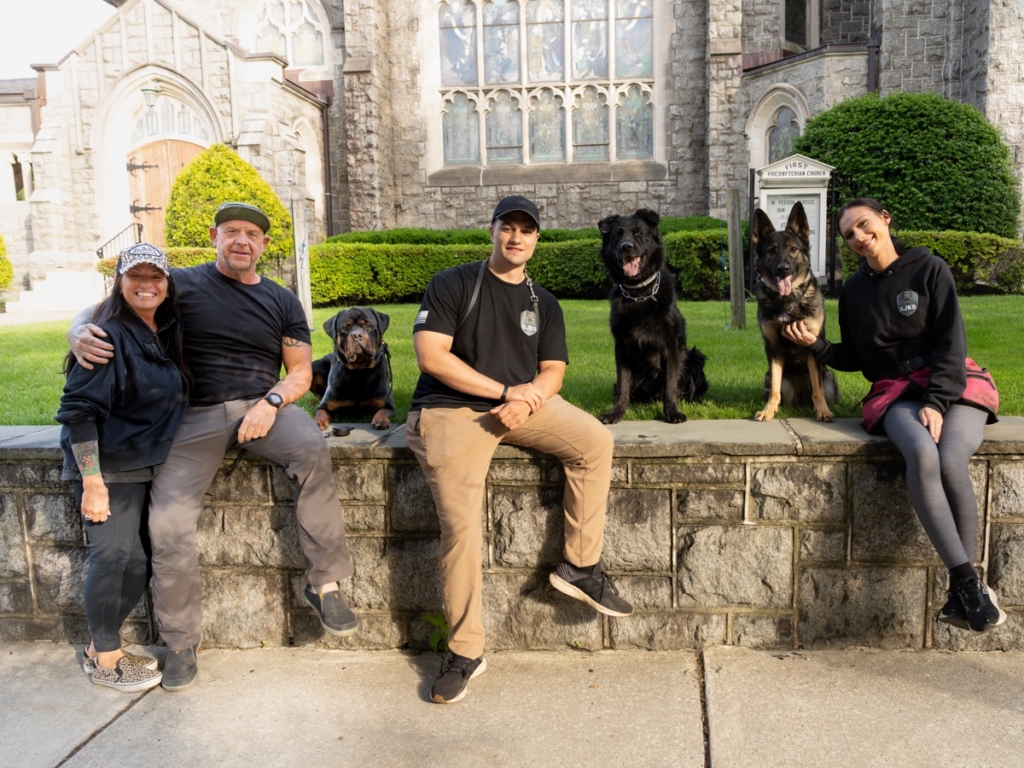
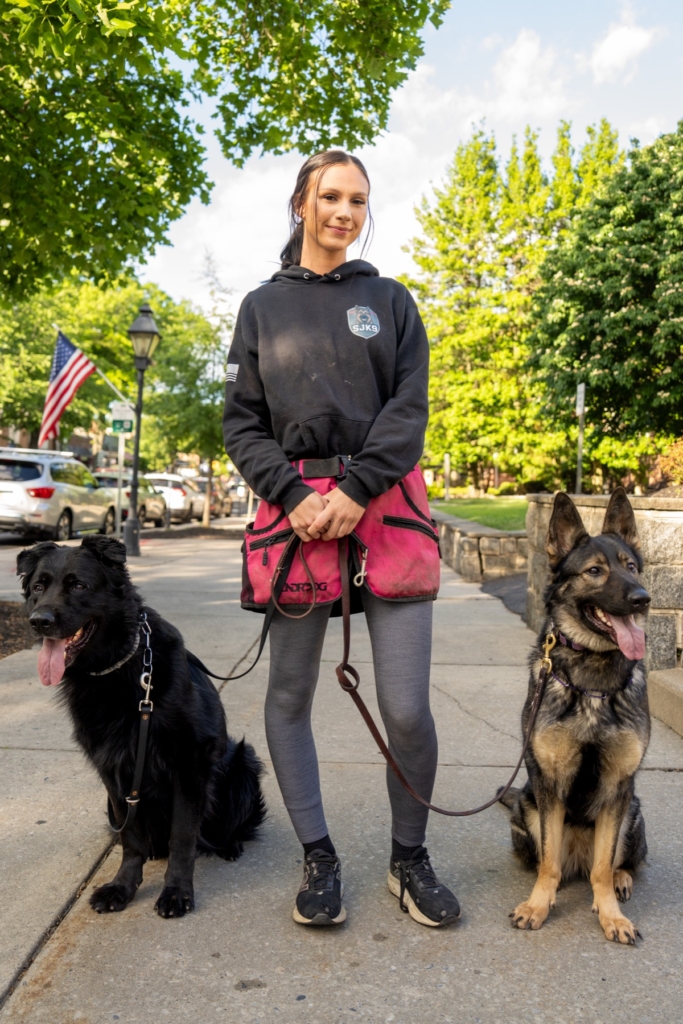
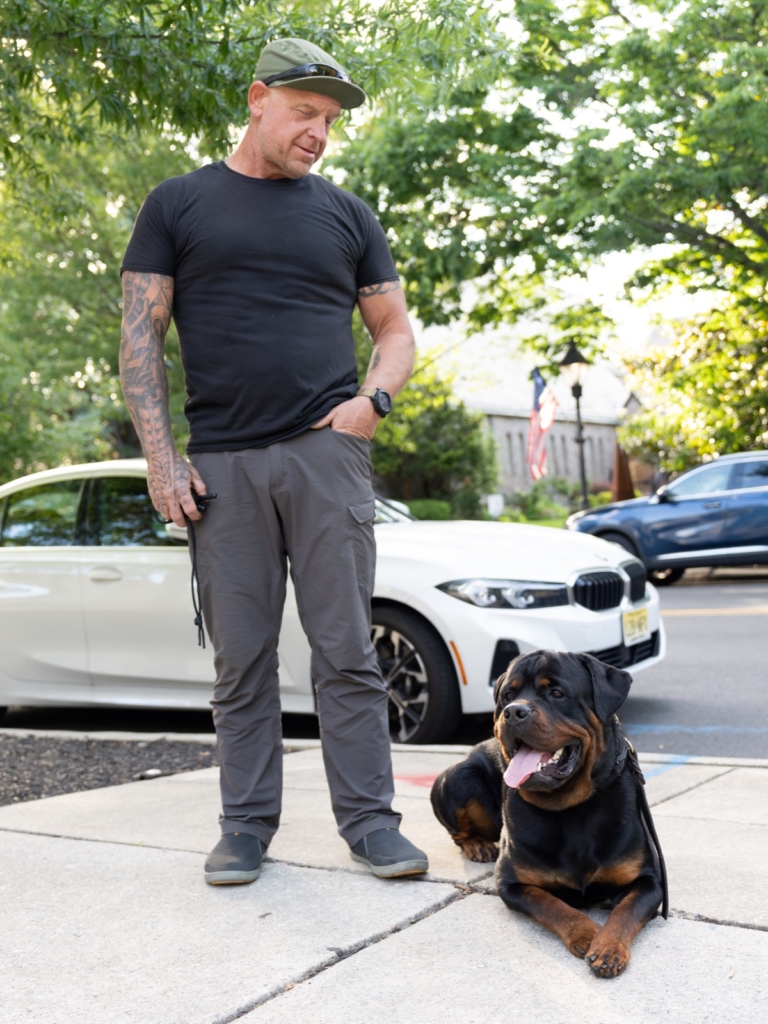
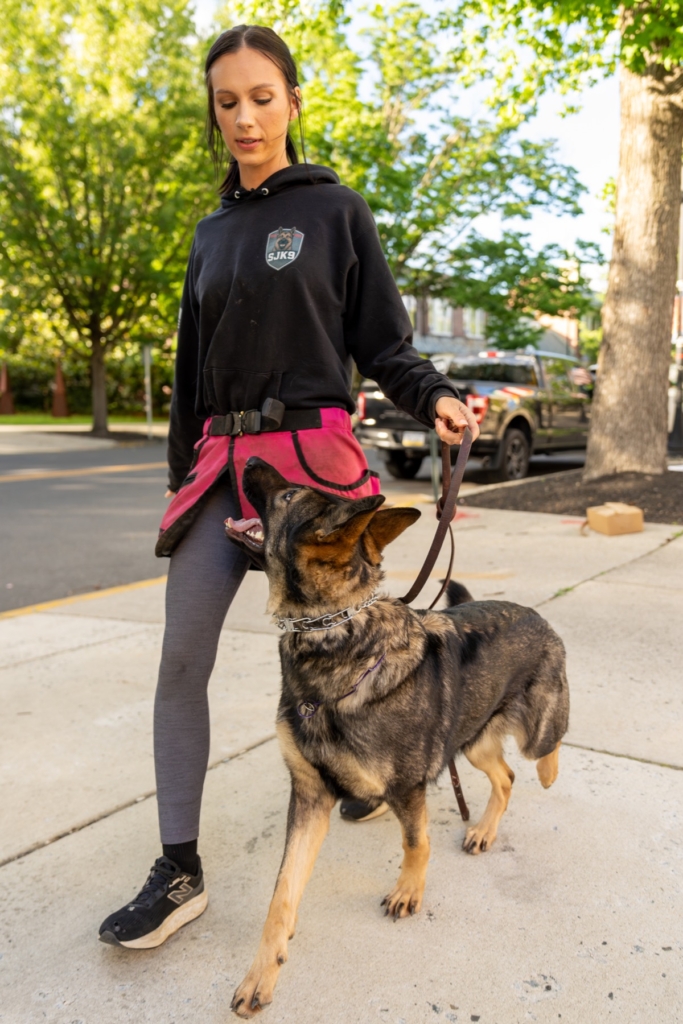
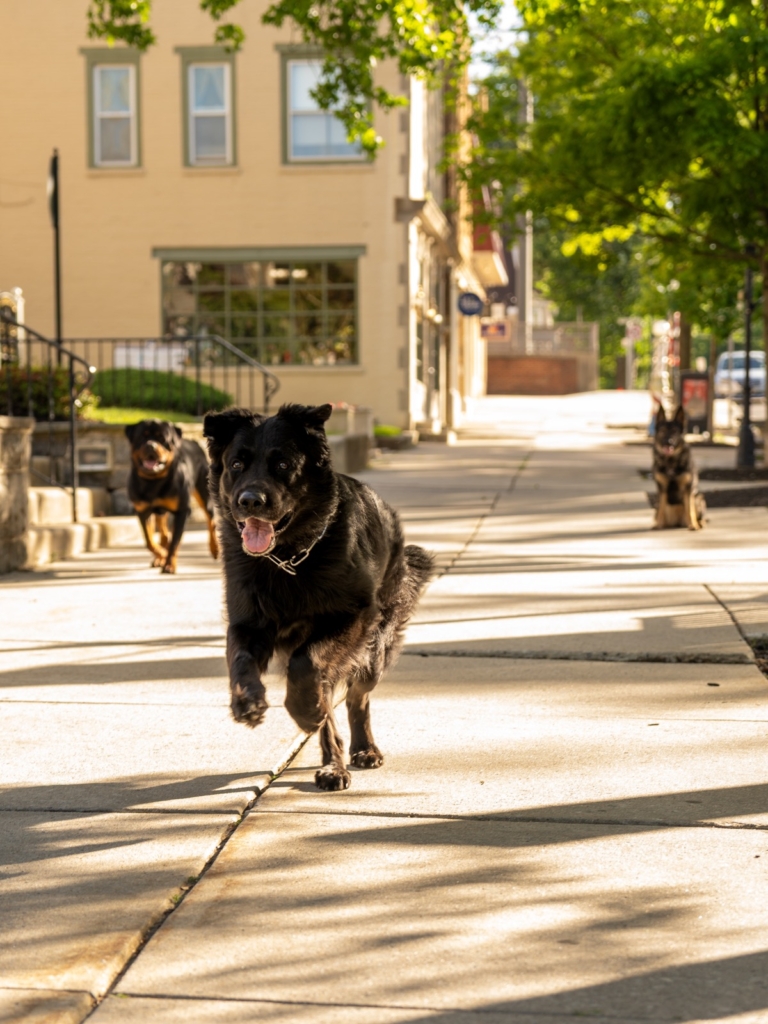
As the co-owner of South Jersey K-9, which she runs with her partner, Antonio Masi, Madisson Fowler works with dogs in the places where their good or bad behavior actually matters: homes, parks, sidewalks, shopping centers, and group classes throughout South Jersey, including Haddonfield.
Through their real world-based training, Fowler and Masi teach dog owners and pets how to communicate, focusing on psychology and behavior modification. Dogs need to understand how to listen to their owners, and equally important, owners need to understand what their dogs are trying to communicate, especially when those dogs are anxious, scared, or reactive.
Below, Fowler shares how a childhood rescue dog sparked her interest in training, why South Jersey K-9 trains dogs outside of a facility, and what she wishes more owners understood before giving up on a difficult dog.
I grew up with Rottweilers, pit bulls, Labs, and Rottie mixes, so I always had dogs and was always around them. One of my dogs was actually a shepherd mix growing up, and her job was basically to protect me. She wasn’t aggressive or anything like that, but she definitely took it to be her job, which was pretty cool to see growing up.
The dog that really sparked my interest in training was a pit bull we got from ACCT [Animal Care and Control Team] Philly when I was about 12 or 13 years old. My mom, her ex-husband, my younger brother and sister, and I all went down to the shelter, and we were just going to get a small dog, or something easy, like the Lab we had before.
Then we stumbled across this one dog, and she had nothing in her kennel but a police report. No name, no information about the dog. She was basically skin and bones and covered in mange. It was heartbreaking to see.
Obviously, we took her home, not knowing anything about her or her history. Her name was Tiffany, but we called her Tiffy. She got healthy very quickly, but once she got comfortable in the house, she showed a lot of behavioral issues. She would chase my mom’s ex-husband around, and she nipped him a few times. I was like, ‘Wow, we’ve never had a dog that did this before. We should do something about it.’
I took the initiative to start researching and training. I taught myself everything from the jump using my own research, YouTube, and books. At the time, I was 12 or 13 years old, so I didn’t do the best job with the pit bull we had. There’s no crazy recovery story. But there are a lot of dogs like Tiffy where I look back and think, ‘I wish I were a little bit older, and I was where I’m at now, because I could have helped that dog and helped her live her best life.’
My first job landed me in a dog boarding facility, like a dog daycare or dog kennel. I started doing that when I was about 15 years old, and I just took it up myself ever since because I knew that was something I wanted to do forever.
I also went to school for business management and marketing, so I had that background, and I had some graphic design background. I took my love of dogs from growing up, and took it upon myself to start training and run a business on my own.
Before my boyfriend Antonio and I started South Jersey K9, we worked at different training facilities and were part of a dog training club. We started to realize which methods were effective and which weren’t. For me, what I’m most interested in is the behavioral side. How can we modify the behavior? Because at the end of the day, if you don’t have any equipment on the dog, that dog still needs to understand how to listen.
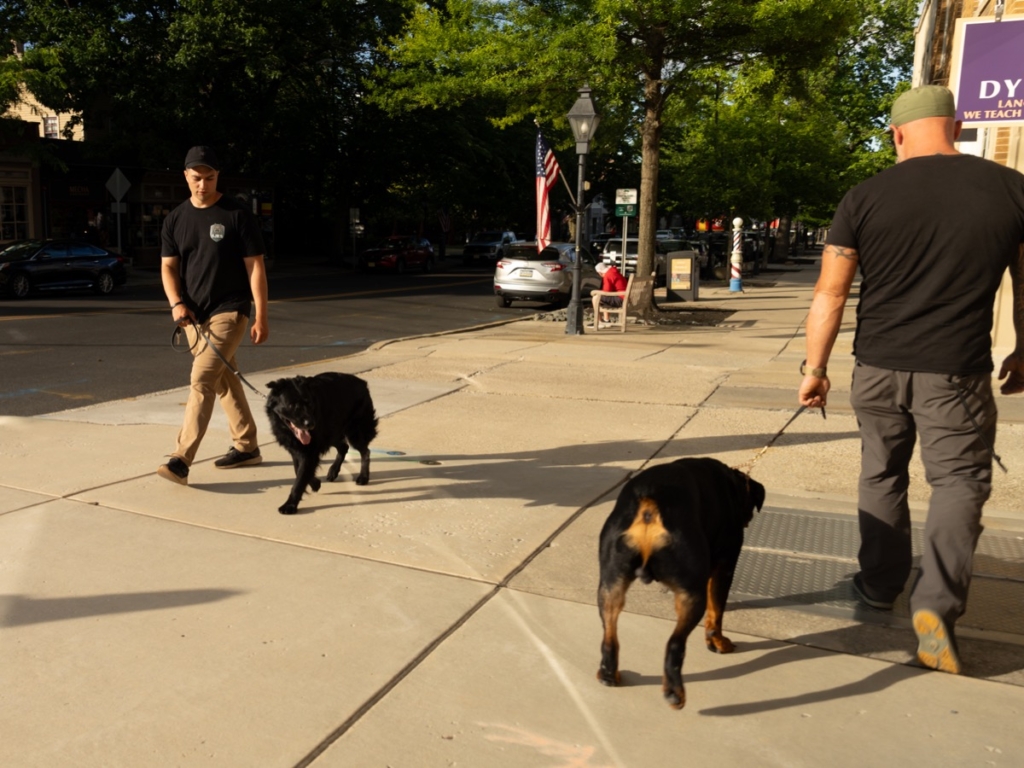
That’s why we wanted to focus on in-home and real-world training. I don’t want a dog to get used to just training in a box or a warehouse, because I’ve seen all the training fall apart as soon as it comes outside. We take our dogs everywhere, and they are amazingly well-trained, so we wanted the same for our clients.
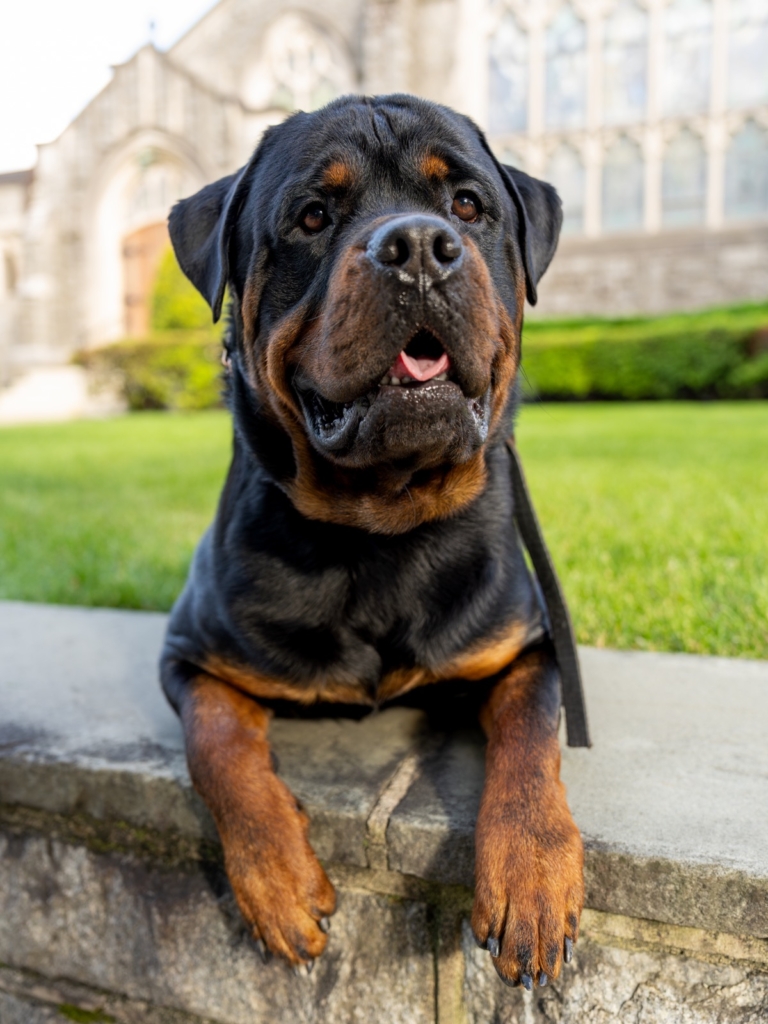
We do different locations. We’re in Haddonfield a lot, but we’ll also do the Gloucester Outlets or Cooper River Park. The dogs benefit from it so much, and they really open up. My goal is that clients can have a dog they can take anywhere and everywhere with them.
A lot of people will say we take the bad dogs. Clients will say, ‘You guys always get the bad dogs,’ and I’m like, no, they’re just misunderstood.
A lot of the time, the dogs that seem the worst, like basket cases or super stubborn, turn out to be the smartest. It takes patience, and you can’t be reactive yourself. They feed off your energy, and that definitely comes through the leash.
We do more of the behavioral modification side of it, the psychology side of it. I’ve had clients say, ‘You guys do mental karate with the dogs.’ But we always pair that with things like positive reinforcement, and it’s so dependent on each dog. You can’t apply the same training methods and structure to every single dog. You really have to look at the dog in front of you.
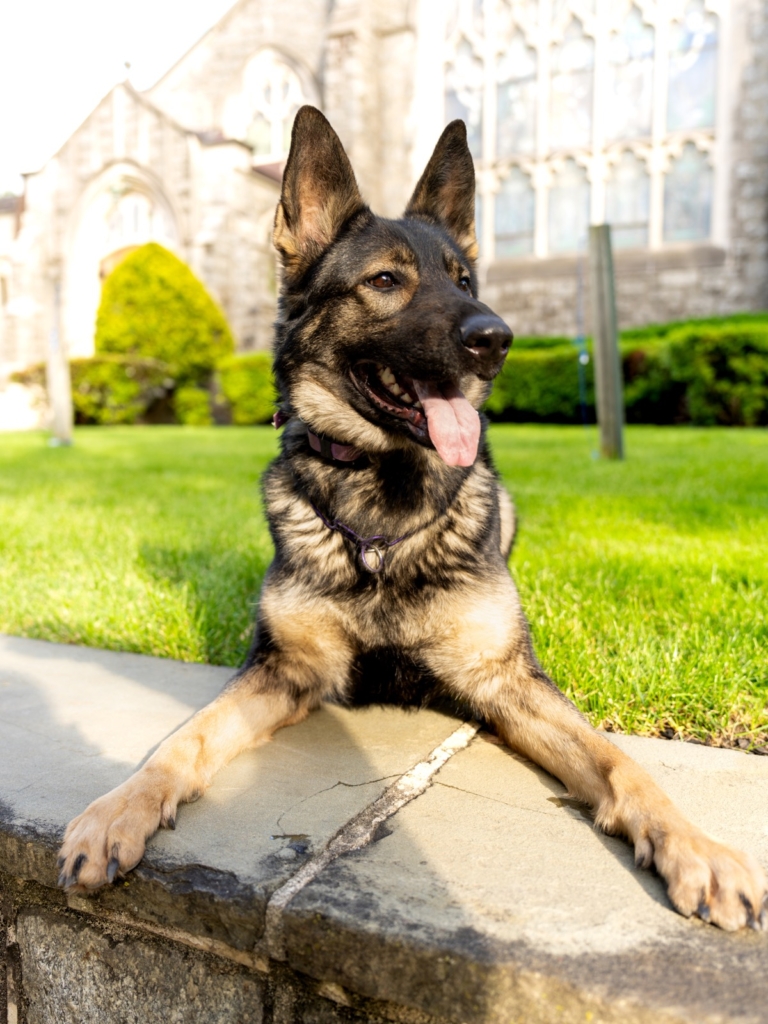
One dog that comes to mind is Woody, a German shepherd who was rescued from Char-Wills [German Shepherd Rescue]. His owners had rescued shepherds their whole life, and when they got him, they were like, ‘This one’s a little different.’
He was reactive. They would take him out on walks, and he would lose his mind at other people and other dogs, mainly other dogs. They were kind of at a loss, and they love their dogs, so they wanted to make sure they made the right choice for training.
When we saw him, we were like, ‘Okay, yeah, he’s spicy.’ Our dog would just sit there during his training session, while Woody barked and lunged. But his owners were so committed. We picked him up for many-day training sessions, took him out to different environments, and let him socialize. We let him see that it was okay and that there was no reason to defend himself.
He picked it up very, very well. Now they can hike with him. Perfect recall, no worries in the world. And the dog is so much happier.
A lot of people think dog training is just ‘Sit, down, stay.’ We focus on the behavioral side. At the end of the day, you can make a dog sit, but does the dog actually enjoy sitting? It can actually be fun for the dog and for the owner, and the results can be effective.
One common mistake I see is dog owners not seeking out help — trying to do it all themselves.
I also see them accidentally praise the dog or pet the dog when they shouldn’t be. A treat isn’t always the reward. Rewards come in many forms, petting and praising being one of them.
A lot of people will pet their dog when they’re scared or they’re barking, trying to calm them down. It just makes it a lot worse. If you’re petting them, you’re rewarding the behavior.
A lot of people try to DIY it, especially with these big powerful breeds or even some of these small dogs. My advice would be: Just look at the dog in front of you. Look at the breed in front of you. A lot of them aren’t super working dogs anymore, but they still have genetic tendencies that they’ll show. A lot of times you can’t fight genetics. You just have to know how to work with them.
A lot of people also think training is only for big or difficult dogs, but I don’t look at it that way. I’ve trained chihuahuas, dachshunds, Great Danes, and Saint Bernards. Every dog should have the right to be trained. Every dog should be able to experience that fulfillment and enjoy off-leash freedom so they can live their best life and be part of the family.
Even with the small ones, a lot of people don’t train them because they can pick them up and put them in a purse, or because they’re little, so it’s not a big deal. But they deserve to be trained, to be comfortable and confident. Just because they bark and they’re small, a lot of people think it’s funny, but they have the same mindset as a big dog.
Dog training is absolutely as much about training the owner as it is about training the dog. I’ll take them from the owners, and I’ll make sure they come halfway through the program and show up for group classes. We’re not going to come over to your house or take your dog out somewhere and work the dog the whole time. The dog will listen to us just fine because we know how to communicate with dogs.
We teach the owners how to communicate with dogs. We’re basically coaches at the end of the day. We’re training them to be dog trainers themselves — or mini versions of dog trainers.
My goal for every single dog is to be a family companion they can take anywhere, so they can be part of the family, go out with them, and not have to sit in the house.