
Without a doubt, baby elephants, with their big, floppy ears and long, adorable trunks, are endearing. These lovable traits, so unique to elephants, are captured in a piece at the Children’s Sculpture Zoo in Haddonfield.
“Ndotto,” a life-size sculpture of a baby elephant, is modeled after one found in East Africa in 2014. According to the married artist couple Gillie and Marc Schattner (who create art as Gillie and Marc), the piece was inspired by an orphaned elephant who was found alone as a newborn in the Ndotto Mountains. He was rescued by the Sheldrick Wildlife Trust in Kenya, after being separated from his mother in human–wildlife conflict.
The bronze sculpture, which is 52.7 x 38 x 43.3 inches, weighs approximately 400 pounds.
“His scale is designed to invite people to stand beside him, to connect, and to experience his story in a physical and emotional way,” Gillie and Marc said. Ndotto — which means “to dream” in Swahili — sits with his trunk held up and his body seated in a playful way. He is welcoming to visitors at Haddonfield’s Children’s Sculpture Zoo, a one-of-a-kind children’s zoo which opened in 2019.
“Like many of the animals represented at our zoo, “Ndotto” serves as a vital reminder that these majestic creatures are endangered in the wild today,” said Joseph Levine, vice chair of the Haddonfield Outdoor Sculpture Trust.
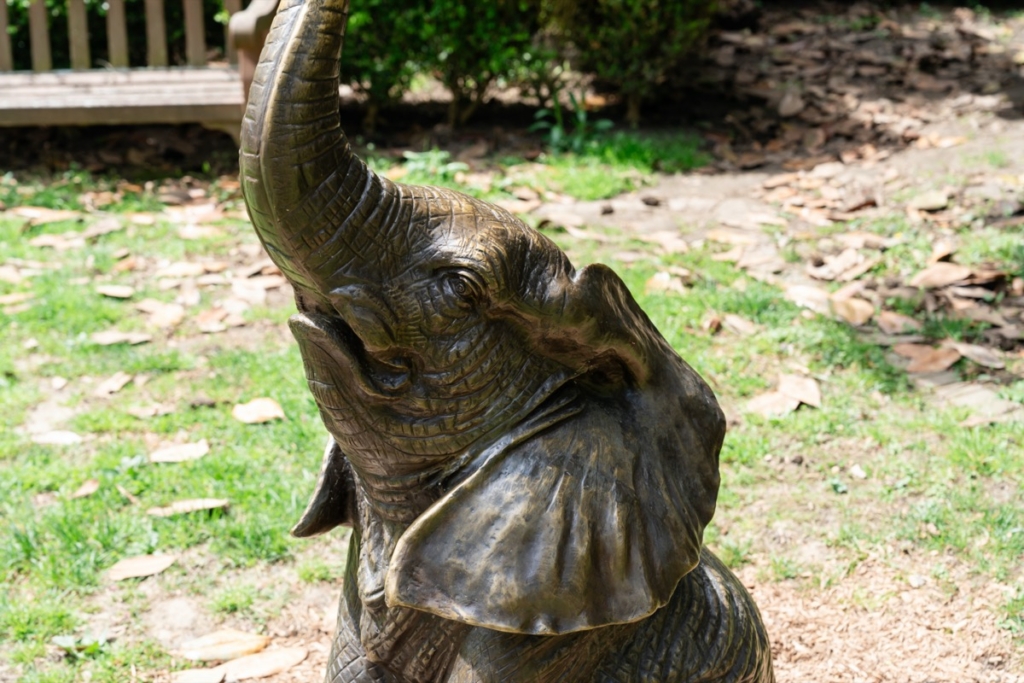
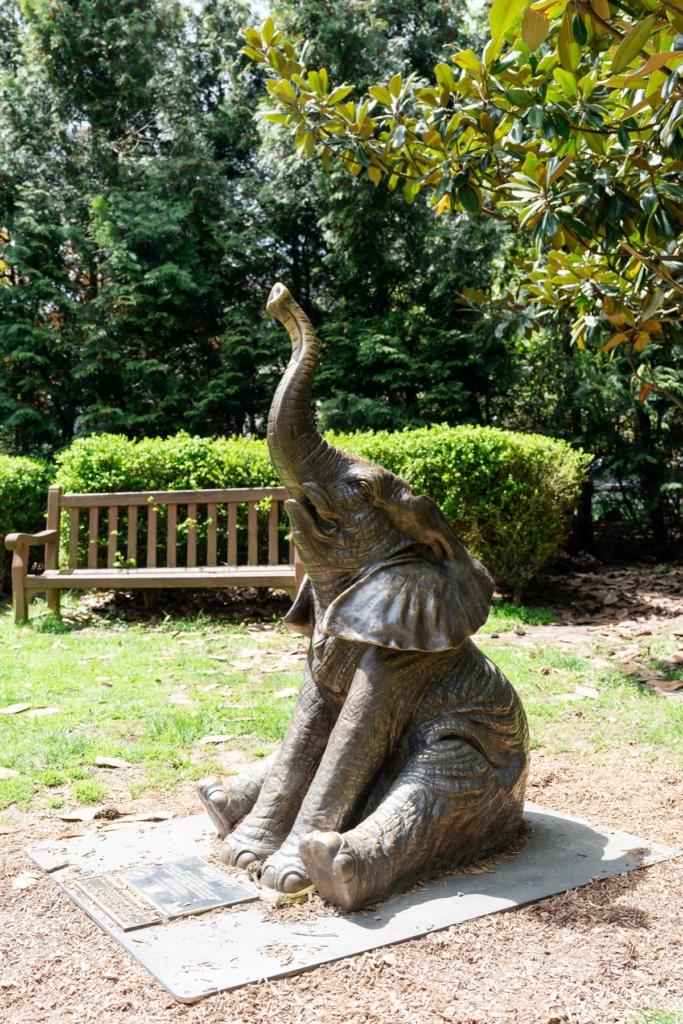
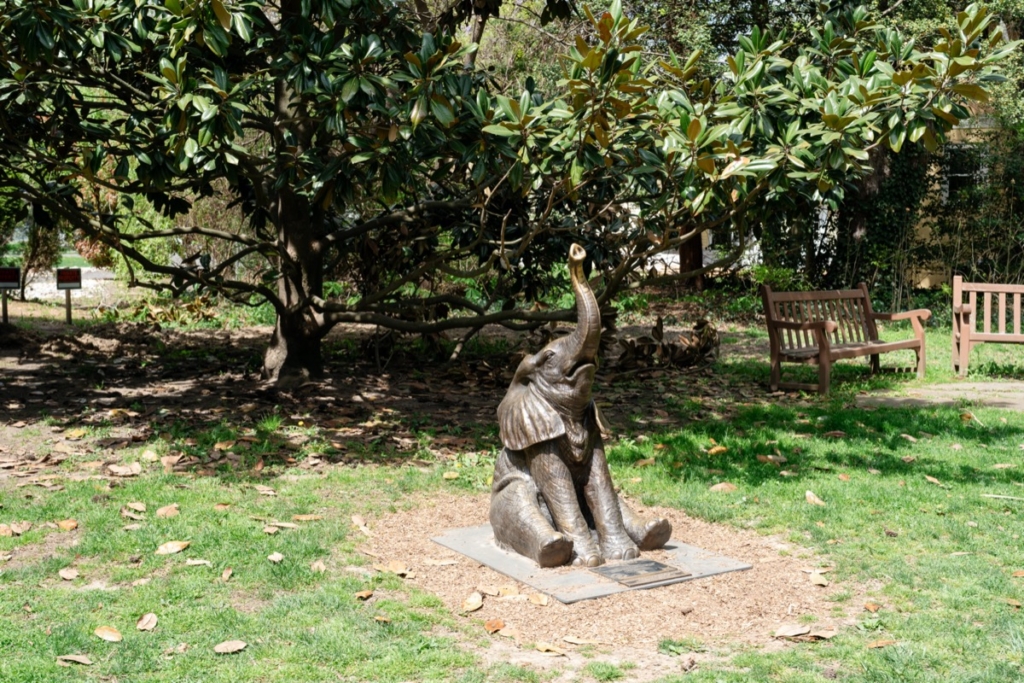
“Ndotto,” a life-size bronze sculpture at Haddonfield’s Children’s Sculpture Zoo, was inspired by an orphaned baby elephant in Kenya that was rescued by the Sheldrick Wildlife Trust. The artwork represents innocence, resilience, and wildlife conservation.
“We hope that all the residents of the Children’s Sculpture Zoo inspire an awareness of the beauty, challenges, and vital importance of protecting our world’s wildlife because they bring us so much joy,” he added.
“Every sculpture begins with a story,” said Gillie and Marc, explaining their process for sculpting the baby elephant. “For “Ndotto,” we spent time understanding his journey — the landscape he came from, the circumstances of his rescue, and the personality he’s grown into under human care. We were fortunate enough to visit him in Nairobi at the Sheldrick Wildlife Trust, which made the experience deeply personal and shaped how we approached the sculpture.”
From there, they photographed, sketched and then sculpted the elephant, “focusing on emotion first — the tilt of the head, the softness in the eyes, the vulnerability, but also the quiet strength.”
Once the form felt right, they worked with their foundry to cast the sculpture in bronze, “refining every surface so it feels alive and touchable,” said the duo.
“We always design our works to invite connection — so people don’t just look at “Ndotto,“ they feel something for him,” they added.
The Sheldrick Wildlife Trust, founded in 1977, is best known for its Orphans’ Project, the first and most successful elephant orphan rescue and rehabilitation program in the world, according to the organization’s website.
“Ndotto” made his home at the Children Sculpture Zoo in August 2021, but getting to that point was a little complicated.
Crafted in China in early 2021, he was scheduled to arrive in Haddonfield in April 2021, according to the Haddonfield Outdoor Sculpture Trust website. The pandemic created shipping delays as the sculpture made its way across the globe from Asia to South America and finally the Port of New Jersey. From there, it was shipped to Philadelphia and, at last, Haddonfield.
There are two other “Ndotto” sculptures — one in New York and one in London.
“I love knowing that one of only three “Ndotto” sculptures in the entire world resides in Haddonfield!” said Lisa Wolschina of Lisa Wolschina & Associates Real Estate and a Haddonfield Outdoor Sculpture Trust trustee. “It’s just one of the many reasons this town is so special.”
Having “Ndotto” in Haddonfield “brings a global conservation story into a local community,” said Gillie and Marc, calling the sculpture “a living symbol of hope.”
“Suddenly, a small town becomes part of something much bigger — the survival of elephants in the wild,” they said. “It represents the elephants of tomorrow — those who, thanks to the work of organizations like the Sheldrick Wildlife Trust, will grow strong enough to return to the wild and continue their species.”

