
Living history takes place at Kirby’s s Mill on one Sunday of every month from July to November. That’s when a small group of dedicated volunteers operates the grist mill for the Medford Historical Society’s Milling Days at Kirby’s Mill. The grist mill, which dates back to colonial times, would grind grain into flour back then, but today it grinds corn into cornmeal. The milled corn can then be used as bird or squirrel feed, John Hines, Kirby’s Mill Museum Director, said. Visitors to this historic demonstration have the opportunity to learn about the past as the water wheel turns and stones grind in real time. “Milling Days take place at one of Medford’s most idyllic natural and historic locations and give visitors a sensory-filled glimpse of what was once a staple of Medford’s historic past and that of the surrounding areas,” Mike Gallagher, vice president of the Medford Historical Society, said.
Located at 275 Church Road, Kirby’s Mill was purchased by the Medford Historical Society in 1969. The mill dates back to 1778 when it operated under the Haines family, Hines said. Grain for the Continental Army was processed at Kirby’s Mill, and the mill became a center of commerce and information in the surrounding communities from the 18th through early 20th centuries, according to the New Jersey State Historic Trust. “Mills were essential to daily life and were about as frequent as convenience stores are now. In addition to grain, Kirby’s and many other mills had additional water powered equipment to mill wood and press cider, adding to the essentials they provided the communities,” Gallagher said. In 1877, William Kirby purchased the property and operated it with his brother, Charles, according to the Medford Historical Society. Kirby’s Mill was the last commercial water-powered mill in New Jersey. “The mill (Kirby’s Mill) was not running when the society (Medford Historical Society) bought the building. It was the goal of the society to save the mill since there used to be a number of mills no longer in the area. It took all this time to raise the funds to do the restoration. By 2018 the mill was able to run and grind corn,” Hines said. Kirby’s Mill was declared a State Historical Site in 1971. “Visitors to the mill are always amazed that it runs without electric and that it can still function after 200 years,” Hines said.
Across from Kirby’s Mill, a working blacksmith shop operates during special events. “Tools once used to work the serene farmland throughout Medford are on display. During special events, volunteers demonstrate various occupations with the museum’s tools – complete with a blacksmith,” Gallagher said. Daniel Massimiano is a blacksmith shop volunteer. He uses his knowledge about blacksmithing techniques during demonstrations for visitors. Making s-shaped hooks during the demonstrations, Massimiano said the hooks have a twist in the middle and can be used for hanging flower baskets. “They’re about 6-7 inches long and incorporate three different techniques. I make these because they’re quick to make and it holds the visitors’ attention,” Massimiano said.
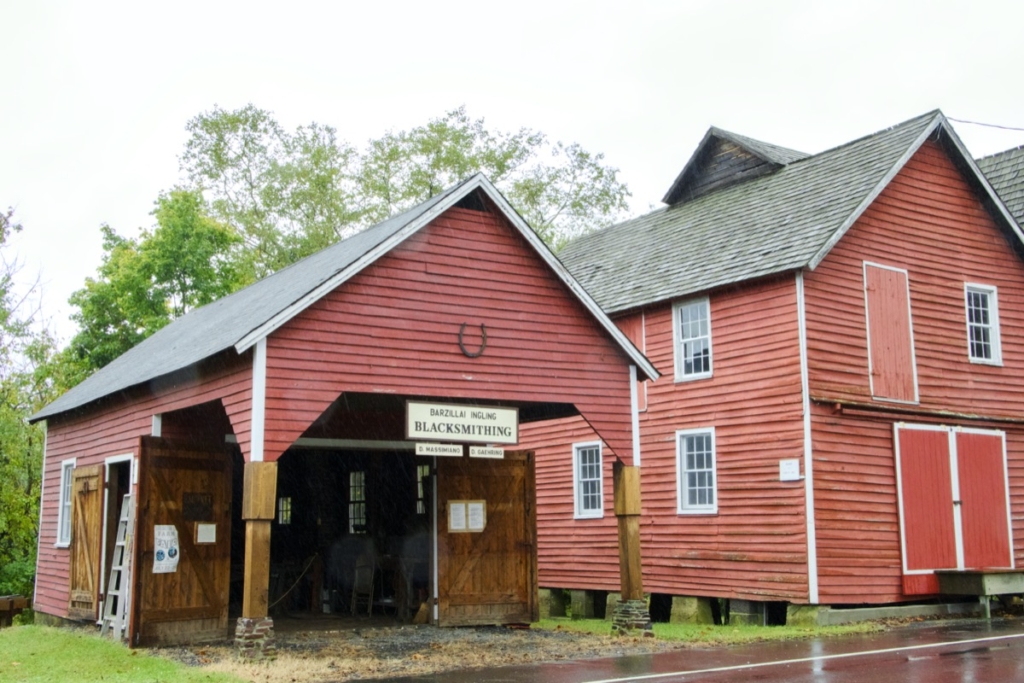
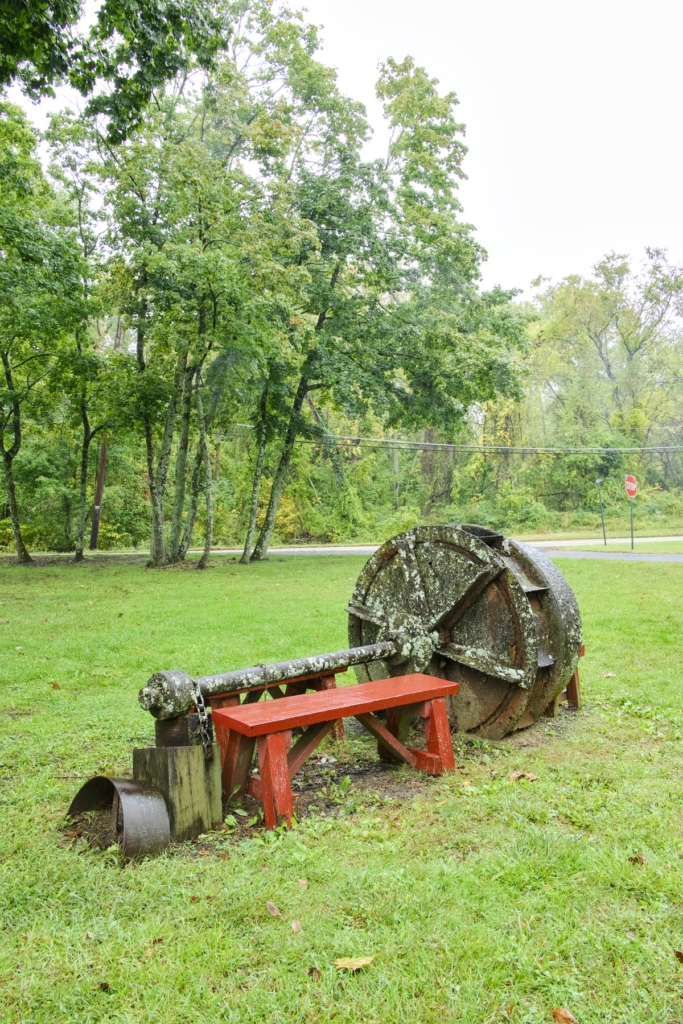
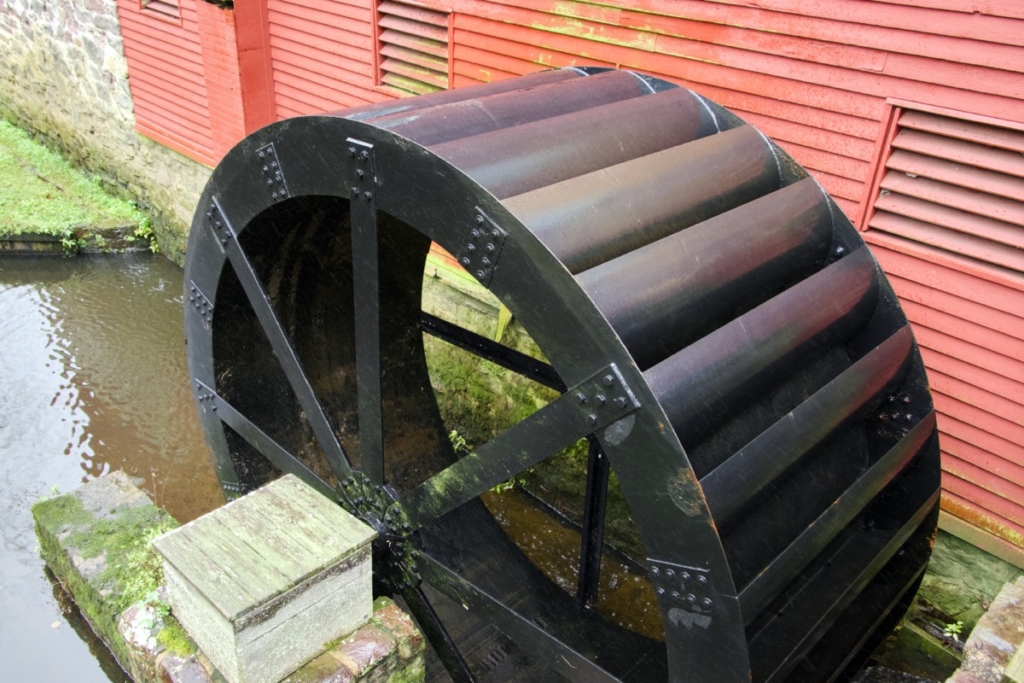
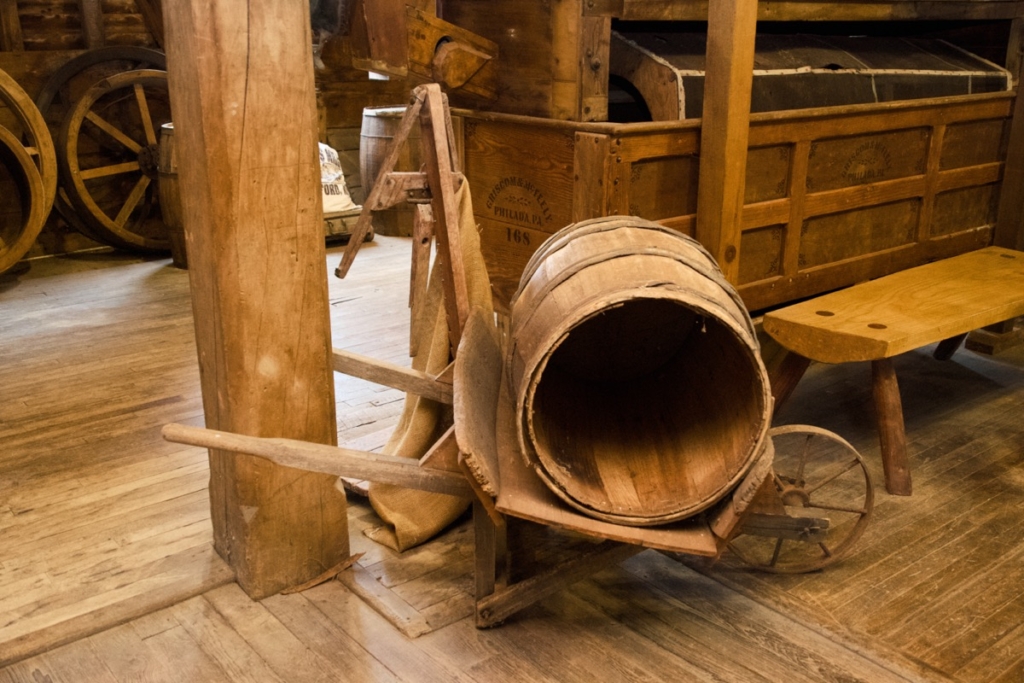
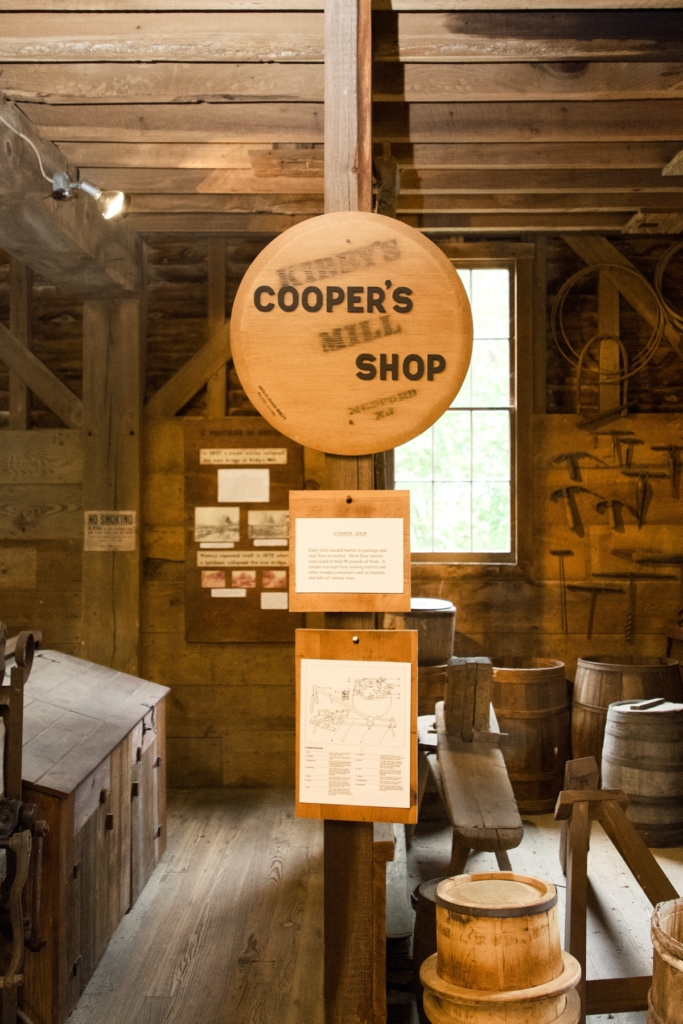
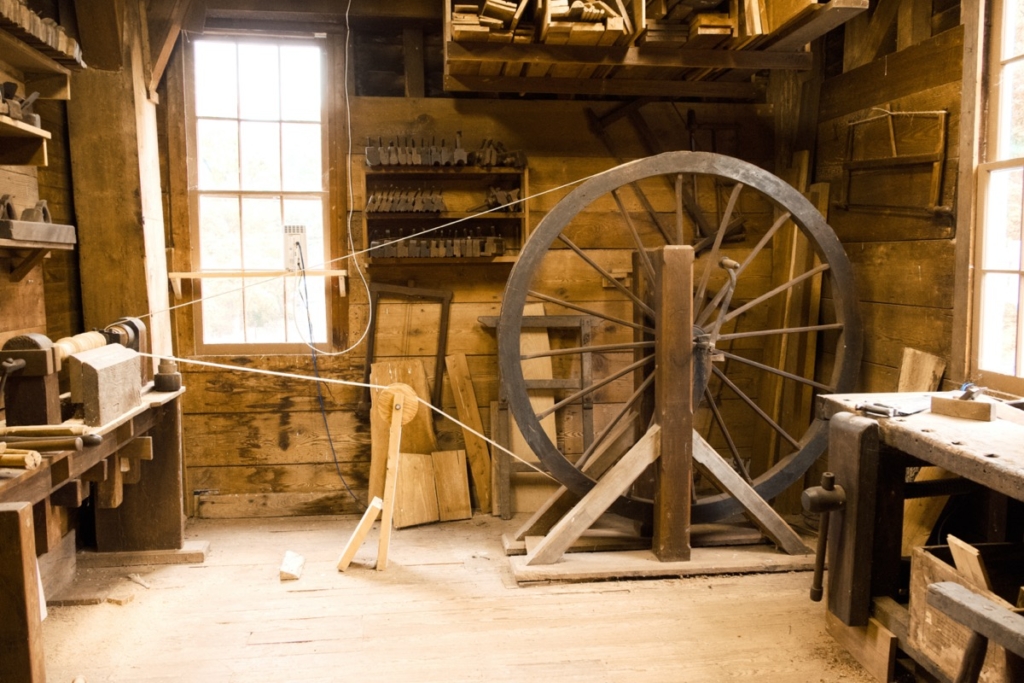
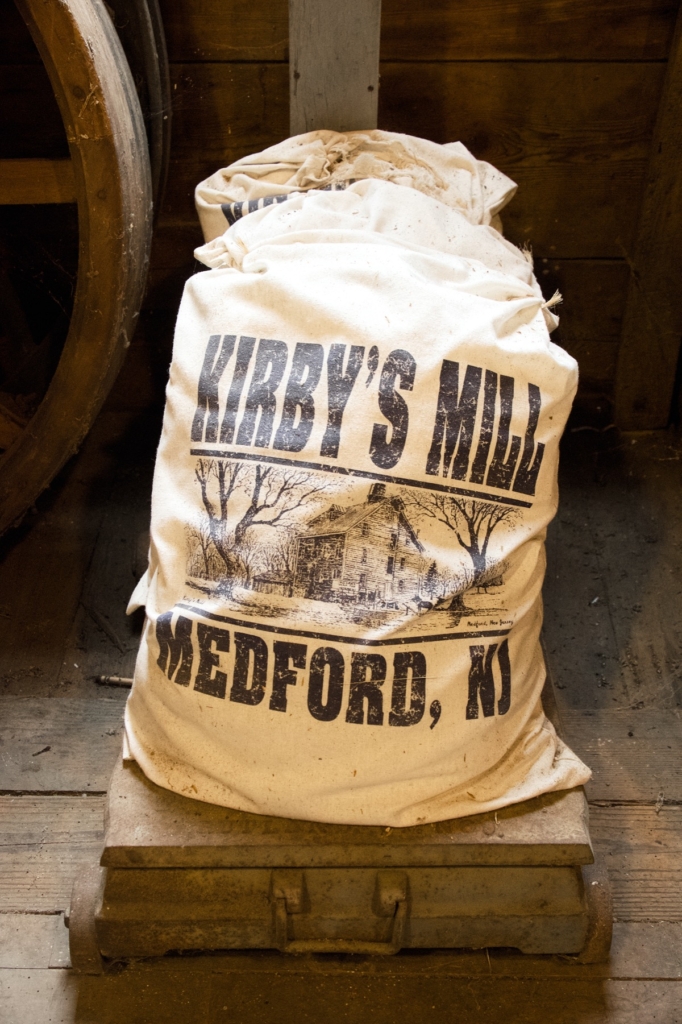
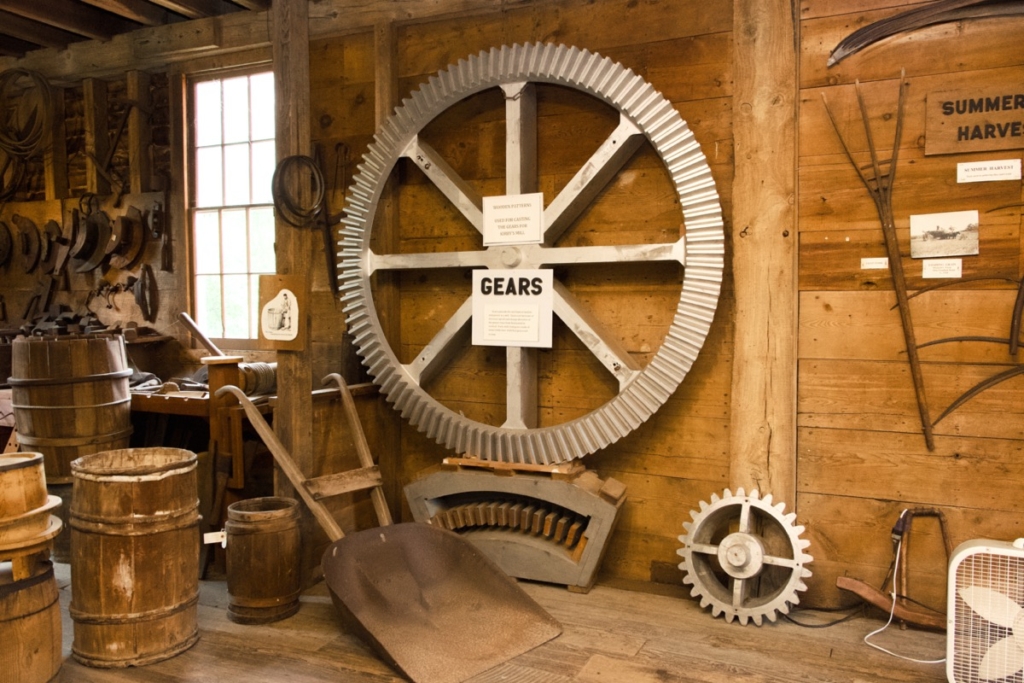
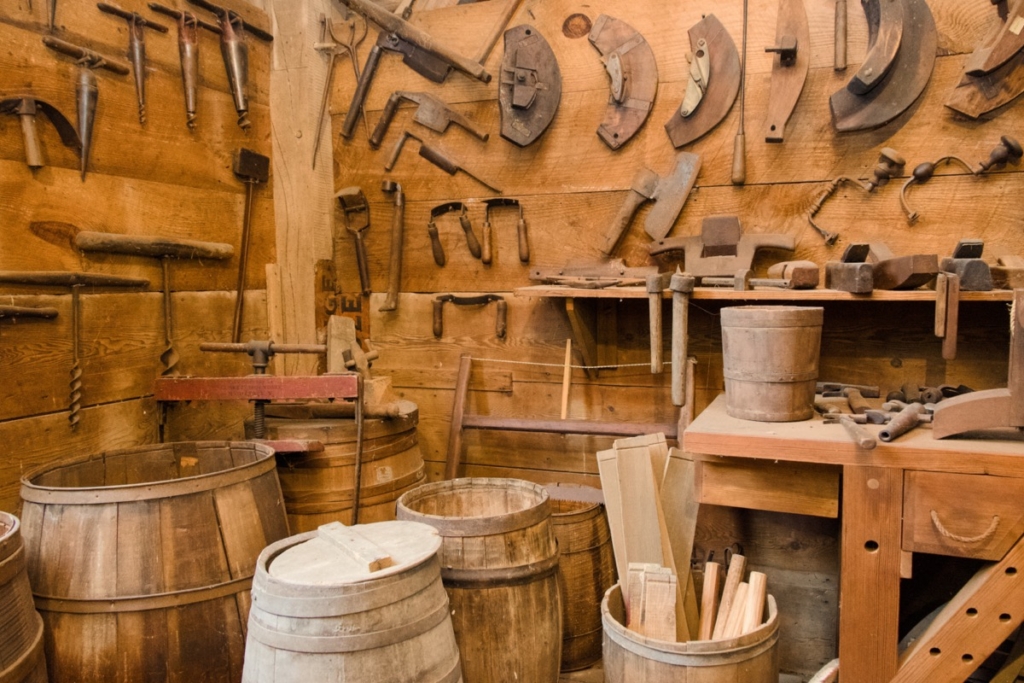
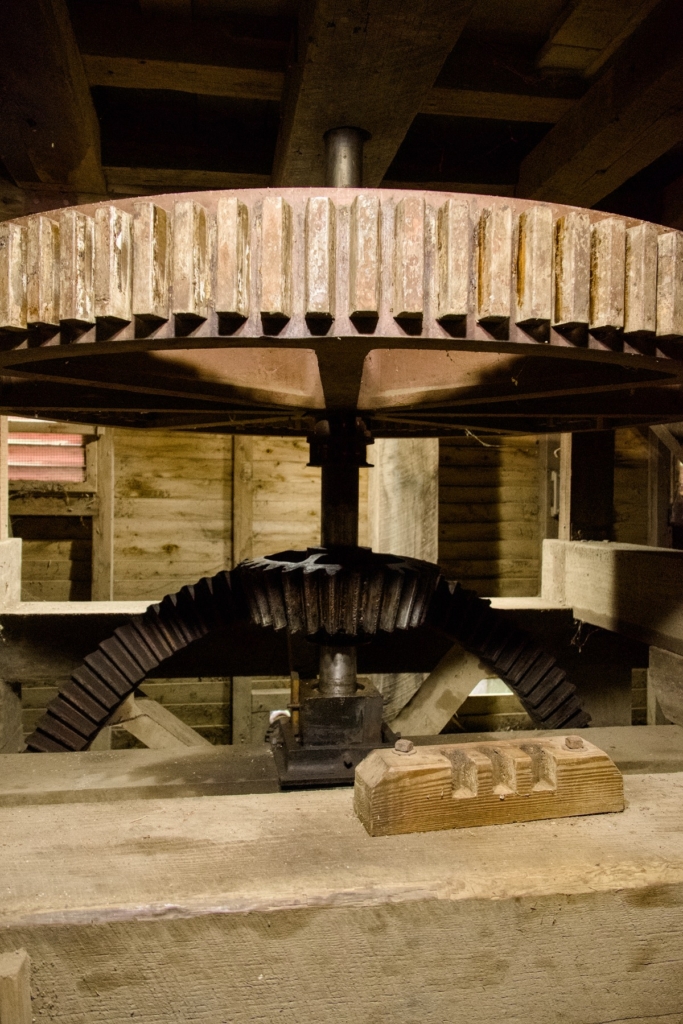
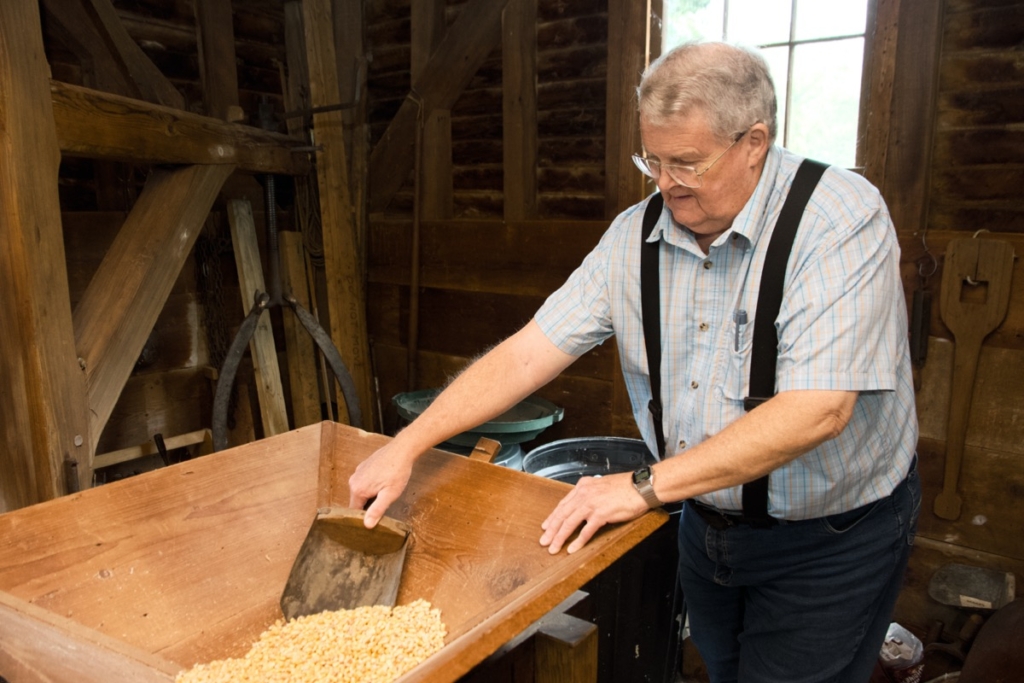
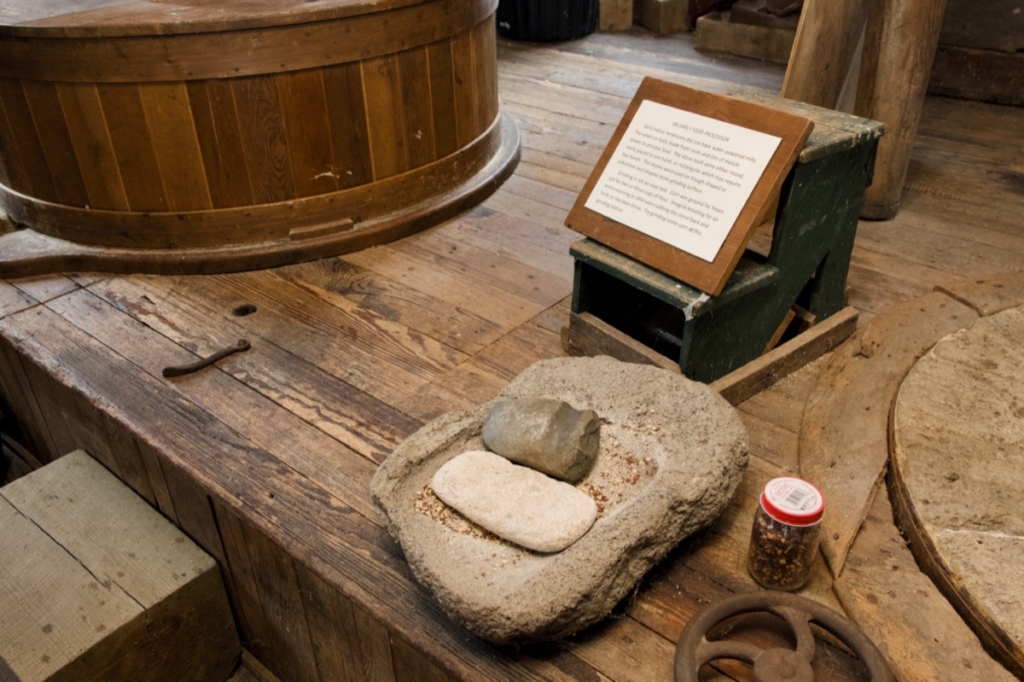
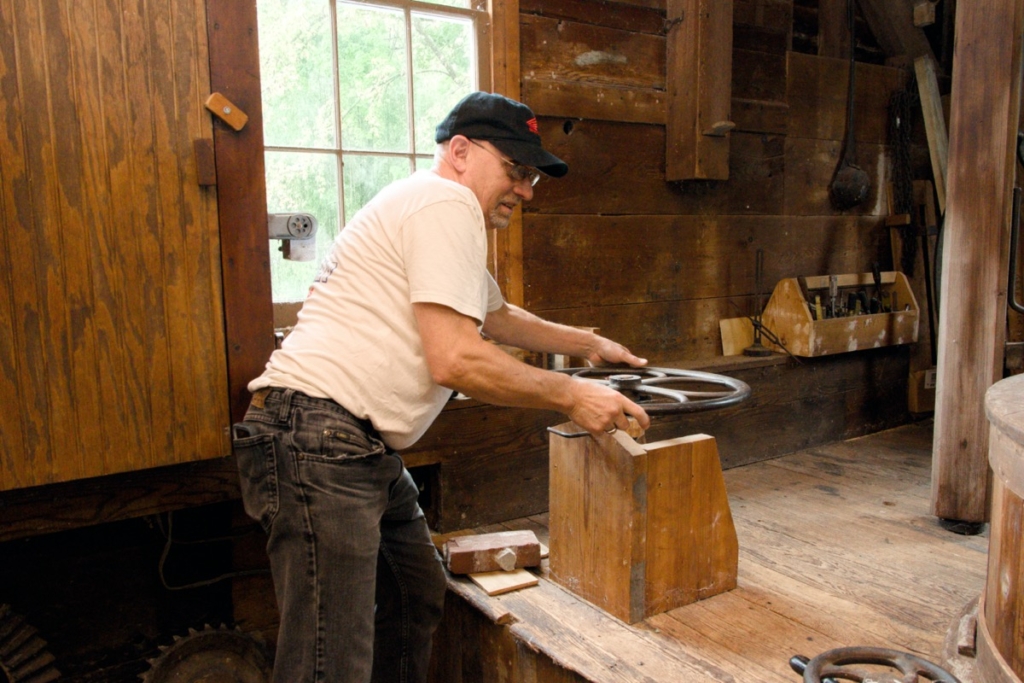
Dating back to 1778, Kirby’s Mill in Medford comes to life during monthly Milling Days, when visitors can watch the historic water-powered grist mill grind corn into cornmeal. The demonstrations offer a glimpse into the essential role mills played in everyday life centuries ago.
The blacksmith shop played an important role in colonial times. “The blacksmith did more than shoe horses. All the metal hardware needed for buildings, wagons and buggies was made by the blacksmith. In addition the blacksmith made all the repairs for broken metal items,” Hines said. The blacksmith shop is part of the Kirby’s Mill Complex, which also includes the Sawyer House Barn.
“The Medford Historical Society remains completely volunteer operated and relies on donations and its events for fundraising to provide free history experiences and tend to the continual maintenance and restoration needs of historic buildings” Gallagher said. From the mill to the blacksmith shop, it’s the time from local community members that makes this living history so meaningful. Hines emphasized the need for volunteers to continue milling days. “Four people know how to run the mill,” Hines said. He added that operating the mill takes patience and dedication. After all, Hines said, it was a volunteer, Bill Pflug, who convert the mill to a geared-control system so the water on the waterwheel could be controlled better.
“Today, in an era where electricity and artificial intelligence offer simplicity and convenience, milling days at Kirby’s Mill museum remind us of other simple technologies and power sources that can be elegant and rely on the landscape for power and solutions rather than the power grid and the internet,” Gallagher said.

