
For many Hammonton public school students — and their parents and teachers — learning a string instrument is an absolute highlight of their school experience, and the district’s program boasts a particularly inspirational story.
Paul Enuco, who spent 40 years teaching music in the Hammonton School District, including 16 years as high school band director, recalls the launch of the district’s first string program in the 2015-2016 school year when the school rented some violins.
It began with lessons for first graders, 100 of whom participated during recess and performed a recital for their parents. Since the class size was 160, the enthusiasm among students was striking.
In 2017, the PTA gifted the program those violins.
“Research suggests that learning to play an instrument at the earliest age possible provides the most neurological benefits,” Enuco said, who is now retired. “The instruments are sized for their little hands, and the program was modeled after the Suzuki Method” — so “as they grow, the violin grows with them.”
Developed by Shinichi Suzuki, the “mother tongue” method likens learning music to learning to speak as a child. Students learn by ear first, rather than by reading music. The internationally recognized technique – which emphasizes regularly reviewing and refining pieces that are already in your repertoire — is designed for learners of all ages and abilities.
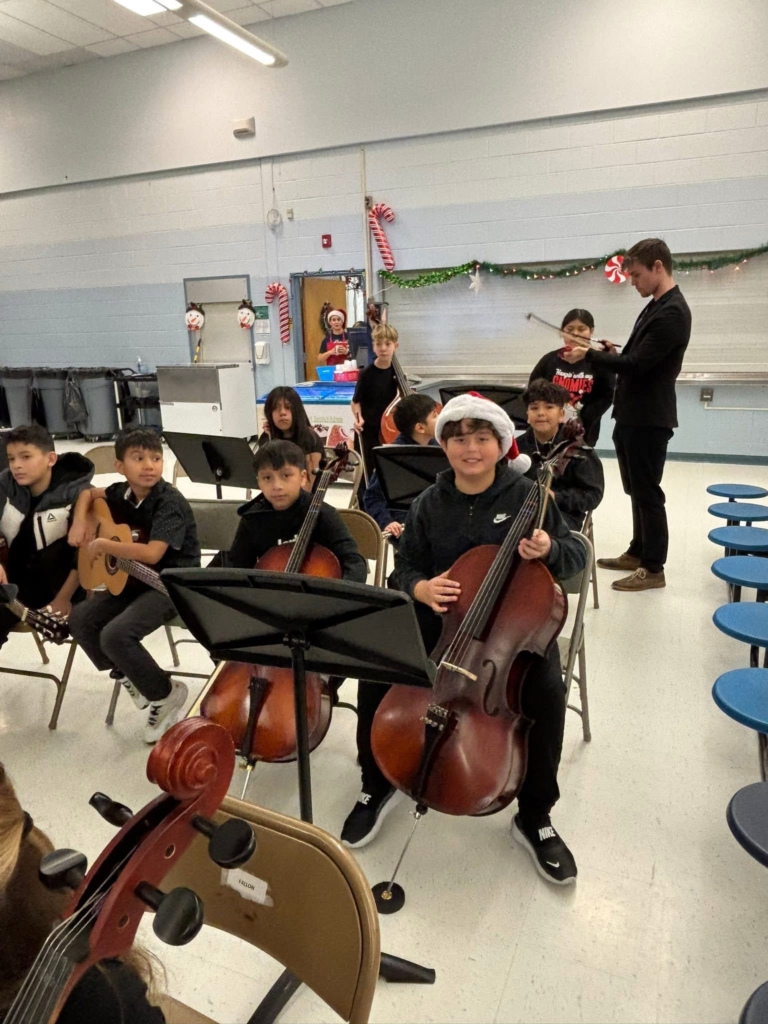
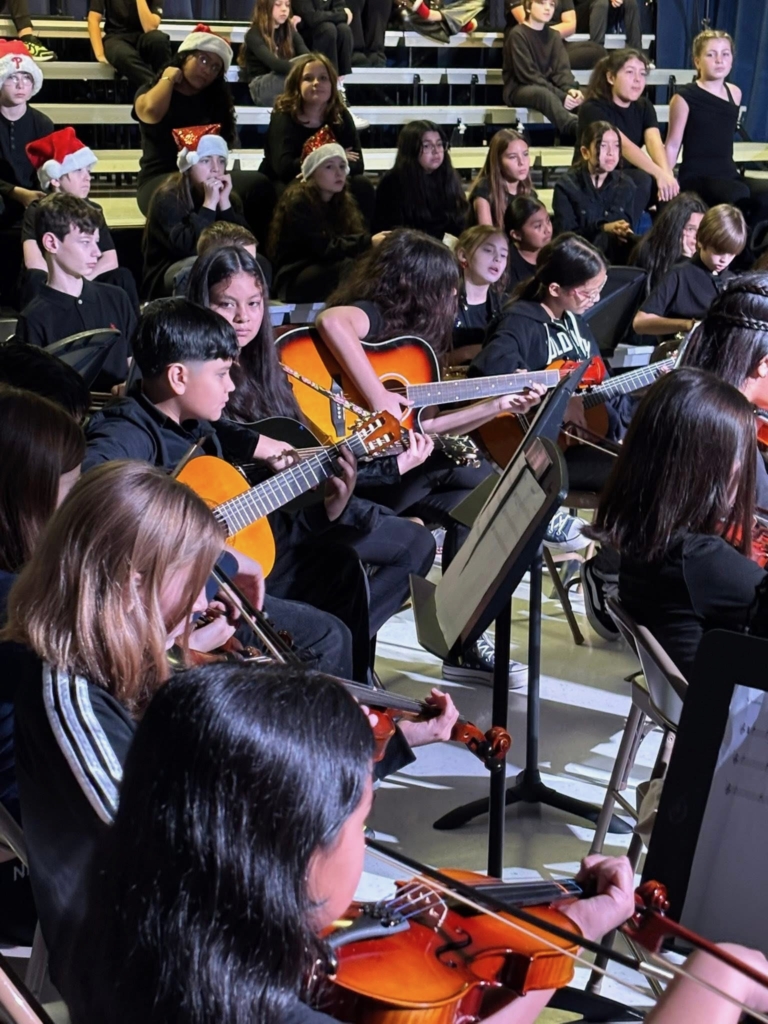
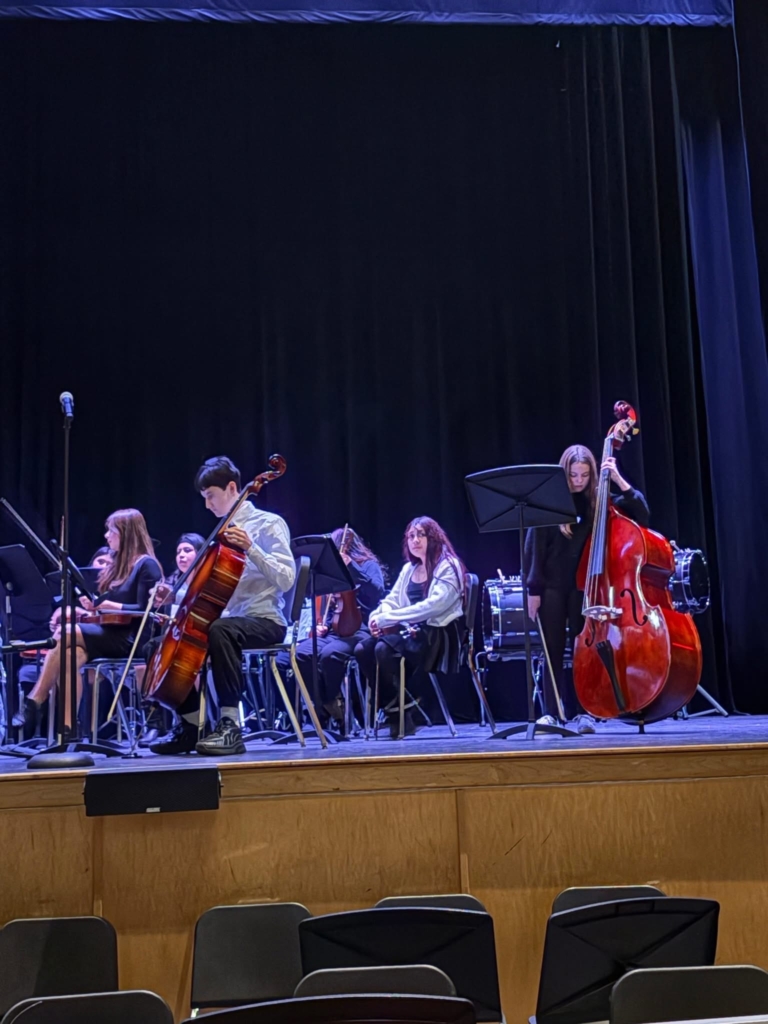
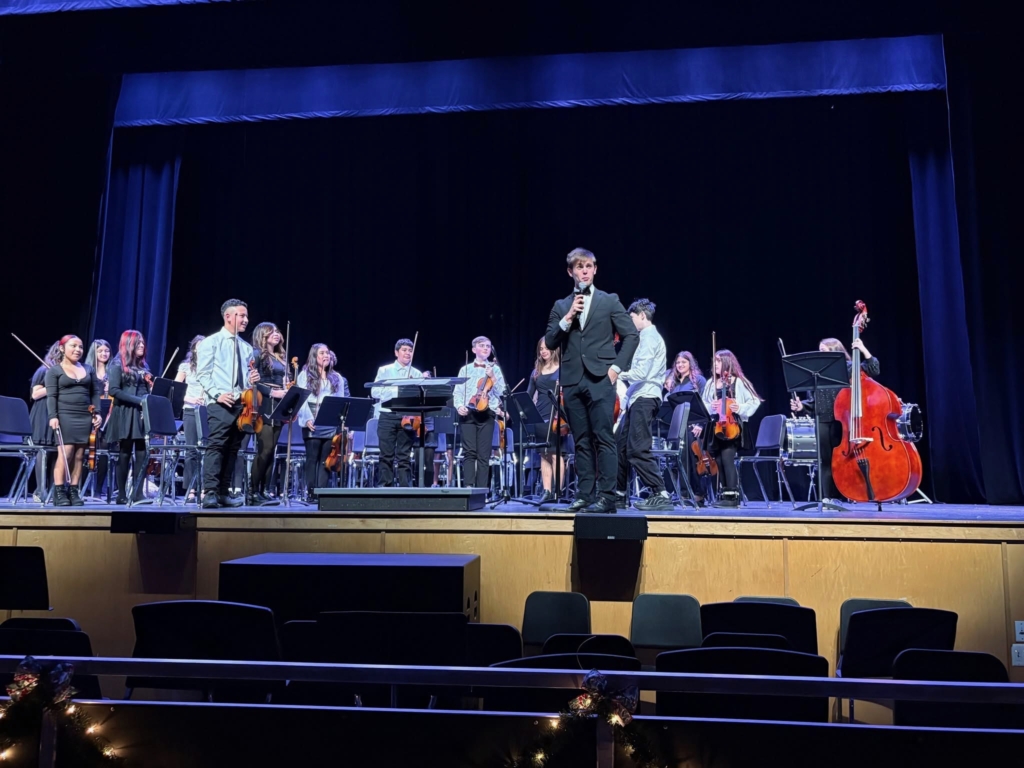
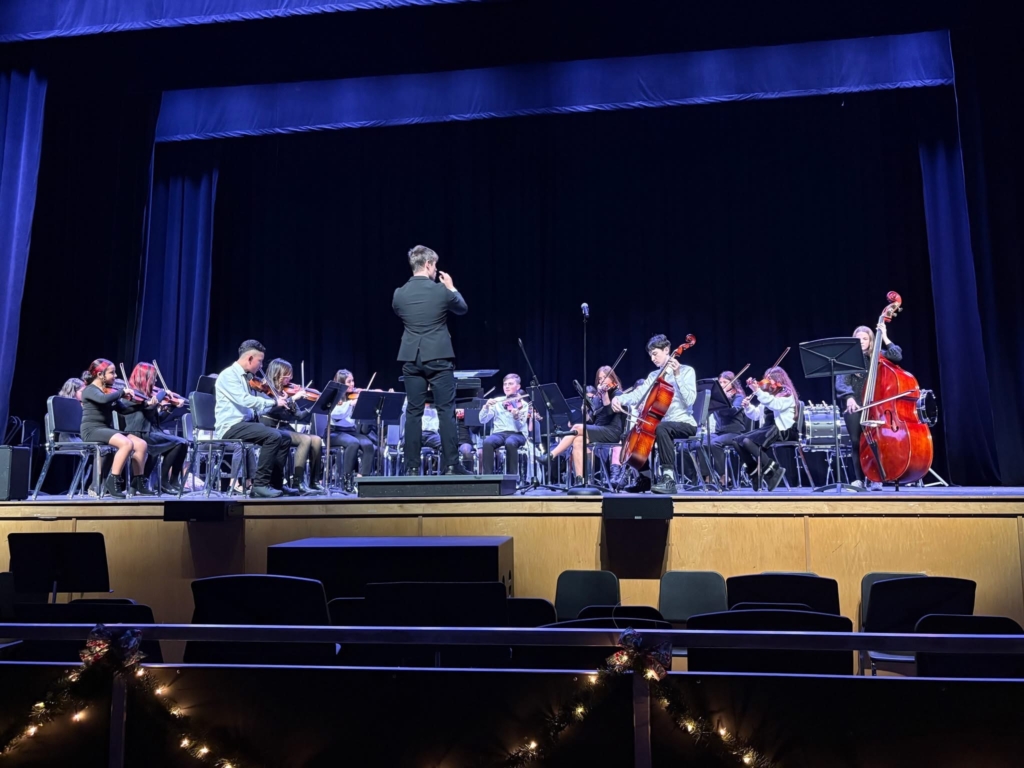
Due to strong enthusiasm from students and families, the program expanded into after-school offerings for second and third graders. Although the COVID-19 pandemic disrupted its momentum, the district modified the program upon students’ return to school. Since then, string instruction has been offered to fifth graders — serving about 70 to 80 students annually — with violin, viola, cello, and bass. (As of this school year, 13 fifth graders have been enrolled in a new instrument, classical guitar.) The program continues in middle school through the After-School Academy. Seventh and eighth graders can take orchestra as an elective class.
At a time when many districts nationwide are reducing or eliminating arts education, Hammonton’s commitment stands out.
“In this country, for some reason, we think that academics are of the most benefit when it comes to the future of our students,” Enuco said.
“The idea of public education is that everyone gets the opportunity to find out who they are, regardless of their socio-economic background, and there are numerous studies that show the tangible benefit of playing a musical instrument from a young age.”
The effect, he added, is unmistakable. He has seen the change in current and former students.
A Former Student’s Perspective
That positive impact is evident in the experience of Tristan Rodriguez, a 2024 Hammonton High School graduate. As a fifth grader, Rodriguez told his teacher he wanted to play the cello. Although a formal string program did not yet exist, he was invited to play with the band.
In high school, Rodriguez helped mentor younger cello students in a new orchestra program. “It was gratifying to help kids have this experience,” he said. “I enjoyed teaching them and helping them be a part of an orchestra.”
Now a 19-year-old sophomore at Rowan University studying law, justice, and history, Rodriguez still plays cello, piano, and drums. Music was his version of sports, he said. “It connected me with friends and a unique music community. Also, during each recital, the students were so excited to show off what they were learning and have their parents see what they were working so hard on. All of this stays with me!”
A Lasting Impact
School Board member Kelli Fallon, herself shaped by music education in Hammonton, has seen its influence across generations.
“Music education teaches more than notes,” Fallon said. “It teaches teamwork, the importance of practice. It’s a common language, it builds self-confidence, has been proven to enhance academic achievement, and sometimes can be a haven for a child in difficult situations or circumstances,” Fallon said.
She also emphasized the joy it brings. Expanding the music program by offering strings for fifth through eighth graders has placed more than 90 instruments into students’ hands. “That’s 90 kids plus their families engaged in learning a wholesome and fulfilling interest that doesn’t involve a screen,” Fallon said. “When other districts are cutting arts education, Hammonton is expanding it.”
Expanding Electives Districtwide
Joseph C. Martino, supervisor of Instruction, Technology, and Arts for Hammonton Public Schools, said the district is currently experiencing a period of “vibrant growth,” fueled by strong community support.
“We are particularly proud of our expanding initiatives in the visual, performing, and practical arts,” Martino said.
With the introduction of the String Orchestra program at the Warren E. Sooy Jr. Elementary School, as well as a thriving full-year String Orchestra class and after-school String Academy at the Middle School, the district is experiencing a plethora of new arts offerings. The district has also introduced new electives such as eighth-grade culinary arts through Foods and Nutrition, along with expanded high-school offerings, including Wind Ensemble, Small Engine Repair, Drawing and Painting, Pottery and Sculpture, and Robotics.
Building a Foundation for Lifelong Success
“It is truly an inspiring time to be part of the Hammonton educational community,” Martino said. “We are driven by the belief that every child deserves a learning experience that is both exciting and deeply meaningful. By meeting students where they are, we aim to identify the unique spark that motivates them.”
Whether students find their passion on the athletic field, in a music classroom, a kitchen lab, or a trade shop, Martino believes engagement is the key to success.
“While music students master the art of listening as well as performing within an ensemble, all students benefit from the spark these elective programs provide,” Martino added. “Research and experience show that when students are engaged in their interests, school attendance improves and academic performance rises. We aren’t just teaching arts and trades; we are building the foundation for lifelong success.”
Despite national trends toward cutting arts programs, Martino believes that expanding student options has multiple benefits. He is optimistic about the growth of the district’s electives in the coming years, particularly within the Robotics, Small Engine Repair, and Fine Arts programs.
“We believe every child excels at something,” he said, and the school’s mission is to help them discover it. He is grateful for the school’s String program. “We are providing our students with truly extraordinary avenues for learning,” he said.
A New Era
After Enuco’s retirement in the spring of 2025, Sean Duffy became the strings instructor. He appreciates how Hammonton values the arts.
His job includes recruiting fifth graders to play string instruments for orchestra. About 70 fifth graders were already enrolled in the band, so Duffy’s recruitment of 40 of their classmates to play strings was a great success. He did a show-and-tell and went to the fifth grade classrooms to show them the violin, viola, cello, bass, and classical guitar. Every single kid got to test out instruments. (The bass is particularly impressive to fifth graders.)
Because Duffy speaks Spanish, he gave his instrument presentation in Spanish for ESL students.
He is proud that he’s been able to provide a school instrument to every single student who has wanted one.
A large portion of his students are Hispanic. “I think that it’s because orchestra and strings are actually more highly valued in Hispanic communities than they are in American culture,” Duffy said. “Quite simply, these stringed instruments like the violin and the guitar are very much embedded into their cultural and musical styles.”
It’s also noteworthy that the Warren E. Sooy Jr. Elementary School is one of the only schools in the state of New Jersey to offer classical guitar, especially at a fifth grade level.
Duffy said he is currently developing a small-group Mariachi band that will play with the orchestra at the next concert. They even have Mariachi instruments, the guitarron and vihuela, in the fifth-grade classroom for students to learn. “This is very much a student-driven project and many of our Hispanic students are very excited to learn about their own cultural and musical heritage,” he said. Their next concert, tentatively planned for May 28th, will feature Mariachi and other Mexican-influenced music.

