
Starting in 2001, the Asbury Park Public Library housed a collection of Bruce Springsteen fan memorabilia and related materials, consisting of hundreds of pieces.
Now that collection is part of the Bruce Springsteen Center for American Music at Monmouth University in West Long Branch, which officially opened on June 13 with a celebration that included two sold-out “Music America: The Songs that Shaped Us” concerts at the OceanFirst Bank Center on the Monmouth campus on June 4 and 5.
The performances for those shows featured not only Springsteen himself, but also famous fellow Jersey musician Jon Bon Jovi and a host of other artists.
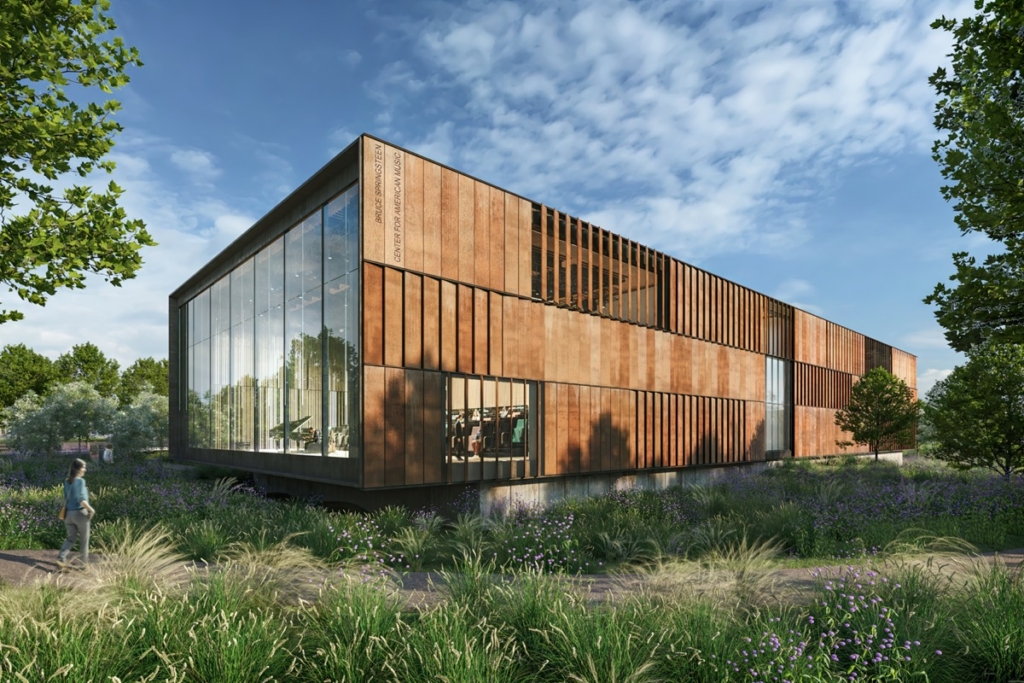
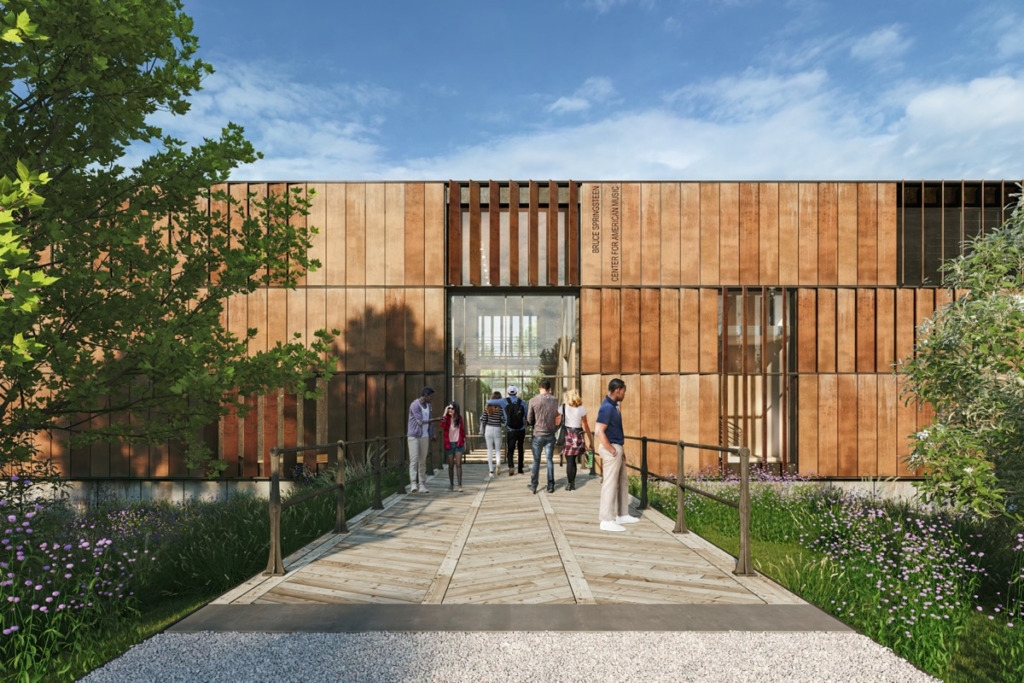
At the heart of this new $50 million cultural destination is a 241-seat, two-floor soundstage outfitted with Dolby Atmos audio technology. Designed to provide an immersive experience for guests, the space will host performers, lecturers, and music industry figures. Springsteen attended the Center’s ribbon-cutting ceremony on June 6.
Every visitor, including K-12 students, will view a special film created by Emmy- and Grammy-winning director and producer Thom Zimny that introduces the Center and its exhibits.
Back to the fans.
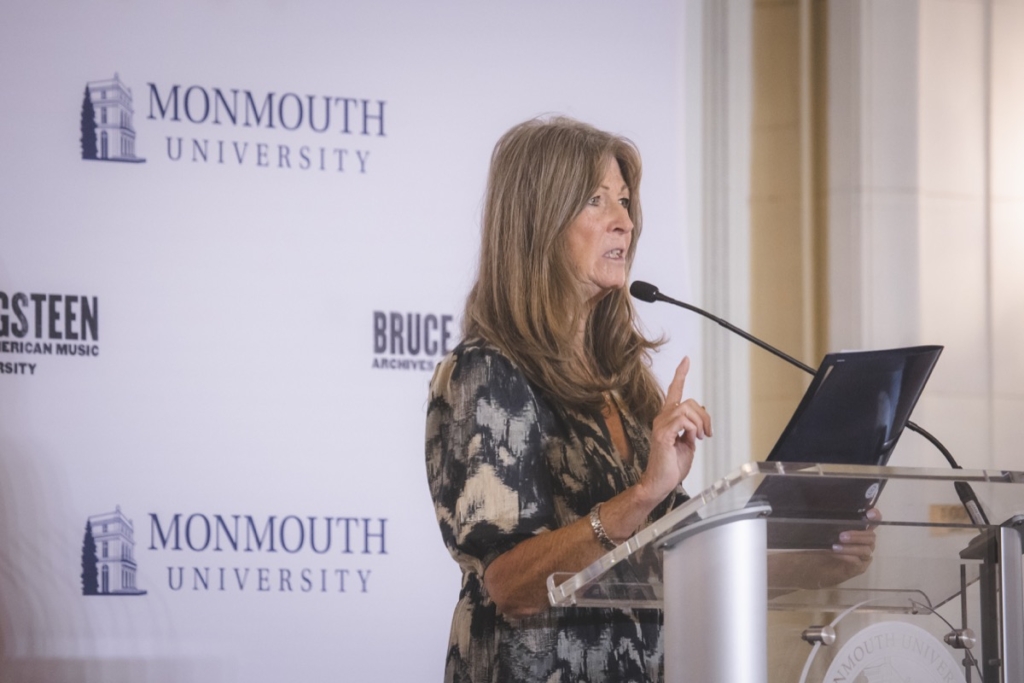
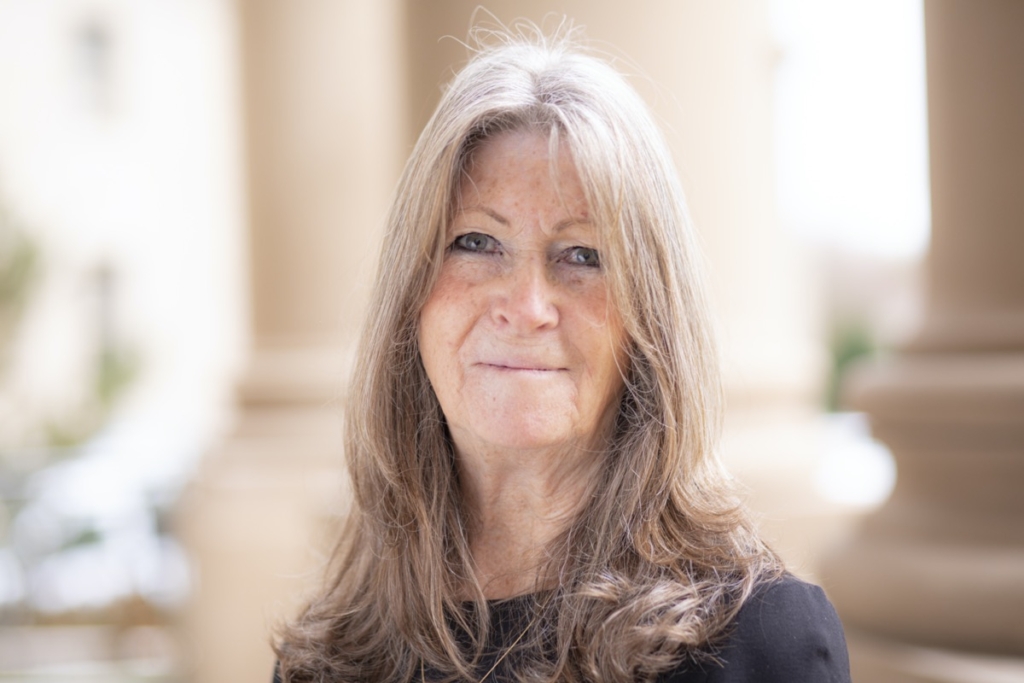
“There was a [magazine] publication called ‘Backstreets,’” recalled Eileen Chapman, the director of the Bruce Springsteen Center for American Music, speaking about the fanzine that had covered the singer and his E Street Band since 1980. “It had an international reach.”
“Backstreets” ceased publication in 2023. The closure announcement on social media quoted a lyric from the Springsteen song “Nebraska,” “For a little while, sir, we had us some fun.”
“After 43 years of publishing in one form or another, by fans for fans of Bruce Springsteen, it’s with mixed emotions that we announce ‘Backstreets’ has reached the end of the road,” publisher and editor in chief Christopher Phillips wrote in a note at the time. “We are immensely proud of the work ‘Backstreets’ has done, and we are forever grateful to the worldwide community of fellow fans who have contributed to and supported our efforts all these years, but we know our time has come.”
In 2000, Phillips and his team at “Backstreets” put out a call for fan donations. Their goal was to create an archive that would ultimately become accessible to the public, according to a 2024 article in “New Jersey Monthly.”
With support from fans across the United States and around the world, the Bruce Springsteen fan collection was established at the Asbury Park Public Library.
In 2010, while working at Monmouth’s Center for the Arts, Chapman learned of the growing archive.
“As Bruce began to tour and artifacts kept coming in, [the archive] quickly outgrew that space,” Chapman said, who was instrumental in bringing the archive to Monmouth University in 2011.
The Center strengthens Monmouth University’s academic profile by providing unparalleled primary sources for teaching, research, and experiential learning. Students gain access to a world-class collection, internships, and real-world opportunities in archival studies, public history, music industry, and the arts.
Several Monmouth courses incorporate the collections, exhibitions, or staff expertise, and faculty often collaborate on curriculum development and research initiatives.
In 2017, “long story short,” Bob Santelli, who is the founding executive director of the Center, approached Springsteen about donating his personal papers to Monmouth.
“And so Bruce jumped on his motorcycle,” Chapman said, “came on over, looked at what we had and said ‘yes, let’s do this.’”
Santelli is an American music historian, curator, music journalist, and a Grammy Award winner. He has written more than a dozen books on American music and is the winner of the 2022 Deems Taylor/Virgil Thomson Award for “Woody Guthrie: Song and Art, Words and Wisdom,” which he co-authored with Nora Guthrie.
Before becoming director of the Bruce Springsteen Center for American Music, Chapman served as the associate director of the Center for the Arts also at Monmouth University. She is also an Asbury Park councilwoman and has lived in the city for 42 years.
“Living in Asbury Park, it’s expected,” she said of always being a Springsteen fan.
Watching the fan collection outgrow the space in the Asbury Park library “seemed unbelievable,” Chapman said. “It started off with a collection of 700 pieces. By the time it came here to Monmouth University, it was 15,000 pieces.”
And it continues to grow.
“The Asbury Park collection sort of jump-started what was starting to become a much larger archives and collection,” Chapman said. “With the first conversation with Bruce, he had said to Bob, ‘I don’t want this to be all about me.’”
The Bruce Springsteen Special Collection evolved into the Bruce Springsteen Archives and Center for American Music and then the Bruce Springsteen Center for American Music.
“The collection grew and expanded to also include American music and artists that influence Bruce Springsteen or artists that he impacted,” Chapman said. “It has been an incredible experience, an exciting experience.”
The Center preserves the legacy of Bruce Springsteen while celebrating the history and diversity of American music.
As the home of the Bruce Springsteen Archives, the Center serves as the official repository for materials related to Springsteen and the E Street Band, including photographs, historic memorabilia, oral histories, and more. The Center also explores American music more broadly by producing exhibitions, concerts, and educational programming that interpret and honor its cultural impact.
“Monmouth [University] was very generous in providing a small Cape Cod[-style] house for the collection seeing the significance, the importance of keeping this collection here in Monmouth County,” Chapman said.
The building itself is 30,000 square feet and sits on the corner of Norwood and Cedar avenues.
It once served as the Monmouth University police station.
Now it’s home to “The Boss.”
After all, Springsteen is a born-and-bred Jersey boy. He grew up in Freehold. His first studio album was called “Greetings from Asbury Park, N.J.”
He first assembled the E Street Band on the state’s beaches and boardwalk clubs, according to the Center’s website.
“Opening up this building to the public and providing all of these opportunities for fans of music, I don’t even have words for it,” Chapman said. “It’s just going to be really amazing.”
A small amphitheater outside the building will host outdoor shows and programming during the summer months.
A robust schedule of activities is planned for the fall, Chapman said.
“It’s important to know we really planned this building to ensure that there’s something for everyone here between the theatre and interactives and exhibits,” she said.
“We feel everyone is going to be excited about what they see.”
The museum features artifacts from Springsteen and the E Street Band alongside exhibits exploring American music across genres and generations. Visitors can follow the chronology of Springsteen’s career, explore themes in American musical traditions, and take part in immersive interactive experiences — including opportunities to play guitar, drums, and keyboards — that reveal the artistry behind songwriting, recording, and performance.
For more information, visit springsteencenter.org.

