
It was an unseasonably warm late-February day at the Batsto Village Historic site in Wharton State Forest in the midst of a harsh winter.
A perfect day for a Maple Sugaring Day, according to Judith Vogel, director of the Stockton Maple Project.
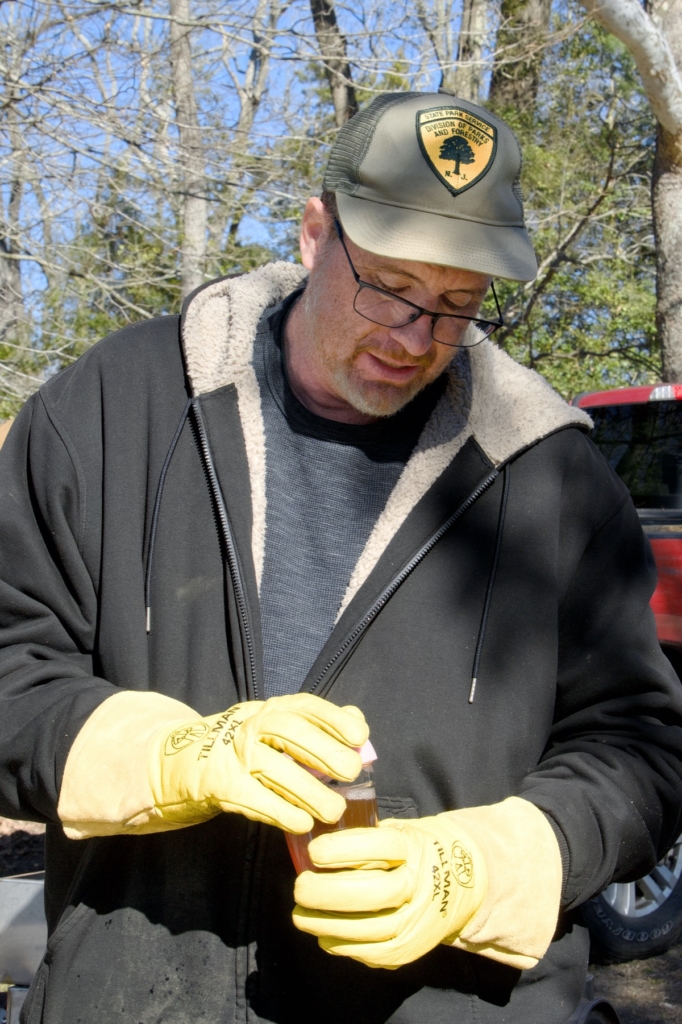
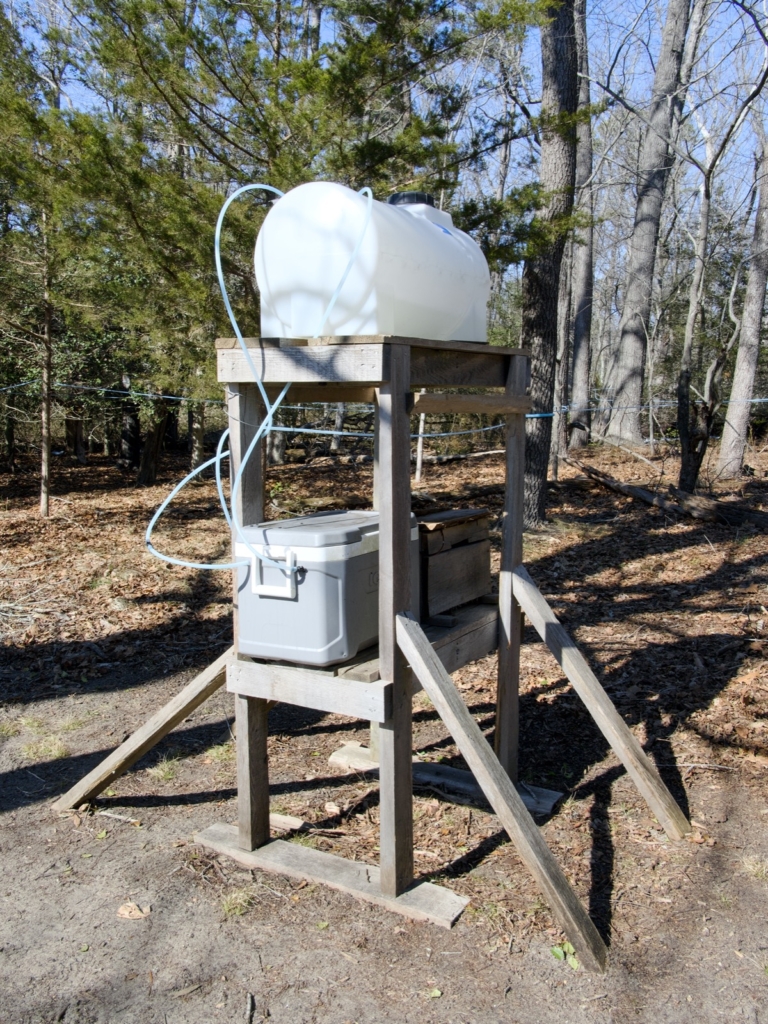
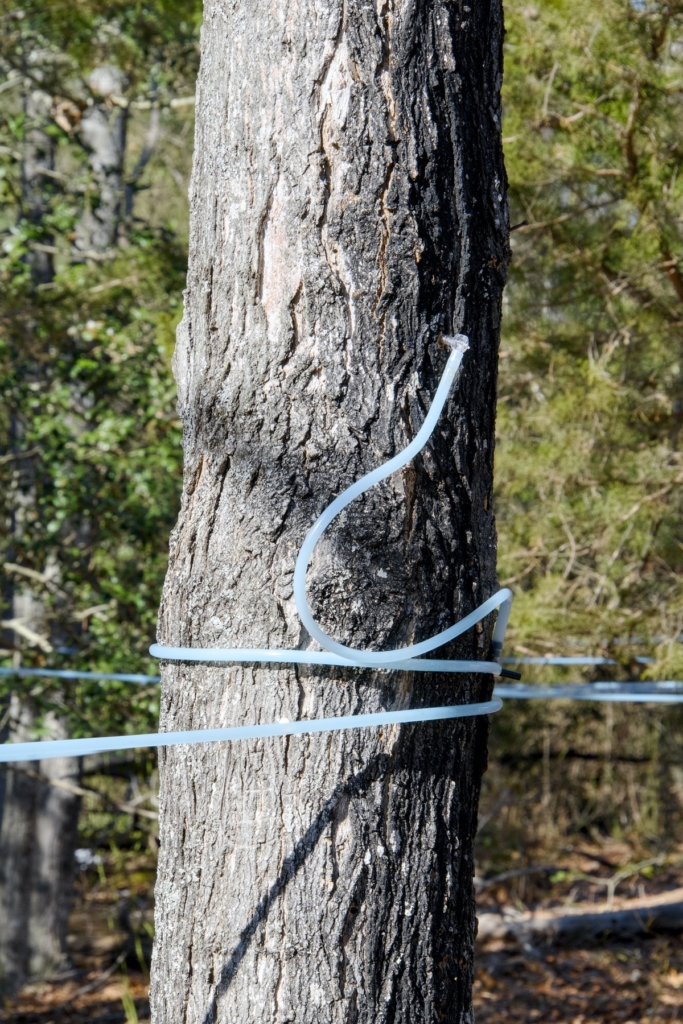
People of all ages watched as sap was collected from the grove of sugar maple trees throughout the village with just a line and a pump.
(An interesting tidbit: Sugar maple trees are not indigenous to the area like red maple trees are. At some point during the Batsto Village history, someone made the decision to plant sugar maple trees.)
The sap was then evaporated to produce genuine Pine Barrens maple syrup.
Vogel — a professor of mathematics at Stockton University — loves maple syrup. So much so that her parents joked she was made in Vermont and has maple syrup in her veins.
Vermont is the biggest producer of maple syrup in the United States, she noted. The biggest producer in North America is Canada.
Her love for maple syrup led her to ask her husband a serious question one winter: “Could we make maple syrup?”
Within two days, her husband bought the supplies to try.
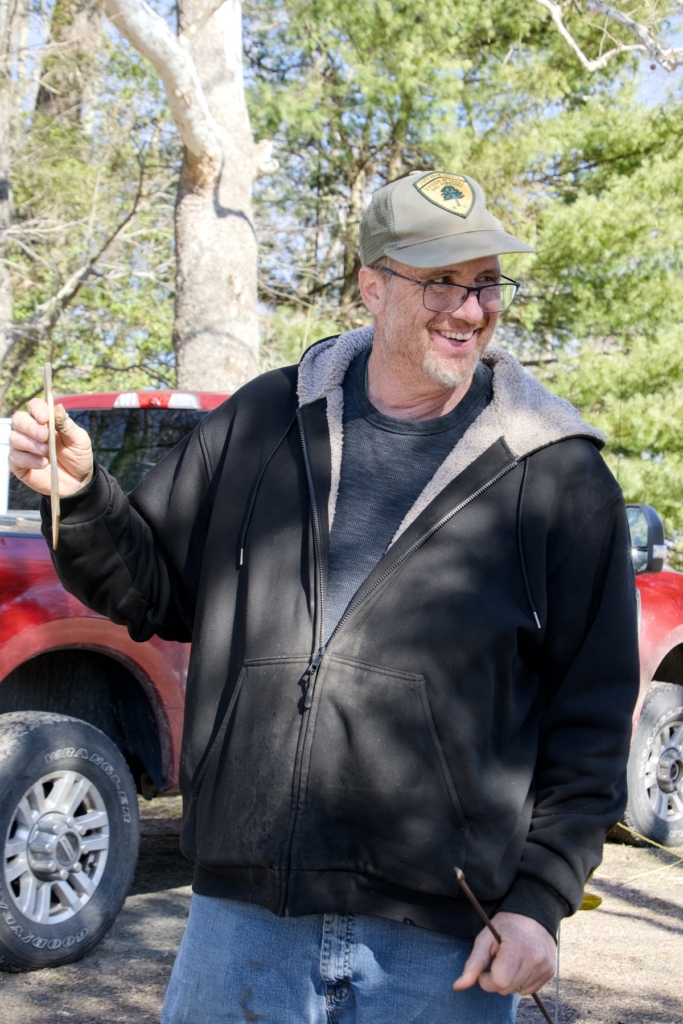
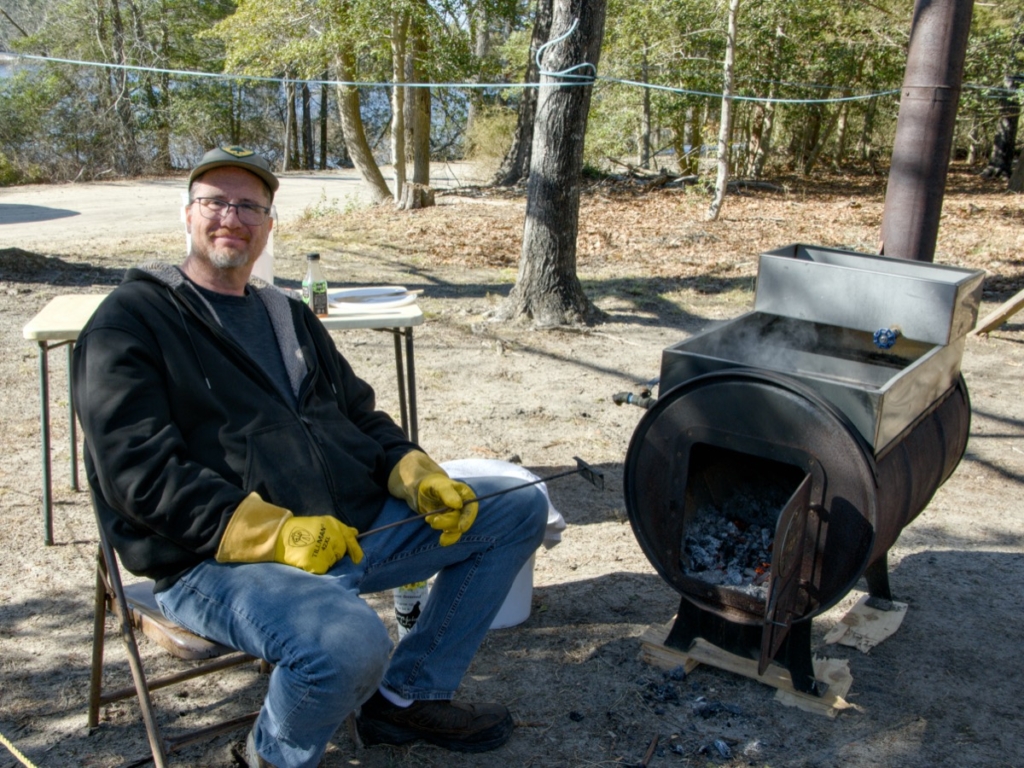
“I’m a math professor. Here I am, on a Saturday out in the woods, talking about maple syrup production,” said Judith Vogel, director of the Stockton Maple Project. “Not just because it’s fun, not because it’s sweet and I get to put it on my pancakes, but because it’s a real educational mission.”
“We stumbled upon the most perfect ‘magical’ season to do it in New Jersey,” Vogel recalled. “A [late winter to early spring] season with a hard, hard freeze and a long freeze thaw.
“We put caps in the tree and we got maple sap.”
For a tree to produce sap, there need to be cold, cold nights — the colder the better — and warm days — the warmer the better, she said.
“Sap flows from the tree’s roots to crown,” Vogel explained. “Only during this time of year do we get this positive and negative pressure.
“That pressure gives us sap.”
The presentation at Batsto was part of a partnership between Stockton University and Batsto Village. There were crafts for the kids and samples of maple sugar syrup to try.
“It started with a small internal grant at Stockton,” Vogel said, noting Stockton’s support from the very beginning.
Now the project is in its third full grant cycle of the United States Department of Agriculture (USDA) Acer Access and Development program.
“Our first USDA grant was awarded in September 2019,” she said. Even with COVID, “we were working outside, so we didn’t have the same restrictions with our research that so many other research initiatives faced.”
“We had a lot more freedom to continue our work … [and were] allowed to keep doing research in the face of some pretty really enormous external concerns.”
The first grant was focused on addressing whether the use of modern technology could increase the yield of sap among the 600 red maple trees on campus.
The second grant was built on partnership building and community engagement.
“Getting people other than us to produce in their backyards,” Vogel said. “Encouraging a hobby [to become] a maple syrup producer.
“There was funding involved to get them things such as a small evaporator, and supplies to do a tubing system.”
An engaging education component is important to Vogel, who lives seven miles down the road from Batsto Village with her husband and three daughters.
“Batsto to me has always been just this beautiful gem where you blend history, science and environmental studies, and sustainability,” she said, noting its beautiful setting to exercise and enjoy the outdoors.
“At that time I approached the superintendent of Batsto and he was on board,” Vogel recalled. “It has been a beautiful cooperative partnership.”
In addition to Batsto Village, Vogel has visited about 100 schools.
With the third grant, the team is working on marketing and partnering with Vermont maple producers.
Vogel said New Jersey is not capable of keeping up with the demand for maple syrup that Vermont is, so the team is seeing how collaborating with the country’s leading maple syrup state can help.
Representatives from a Vermont farm they partnered with visited New Jersey during the last maple syrup season.
“They introduced us to a sector-based tubing system where, if a tree falls, we can cap it off while we repair it and we can still run a pump on the remaining [trees],” she said.
This became important with the snowstorms during the winter.
“We had 50 trees go down in our grove and we could fix a certain sector and keep it going while we were working on the rest,” Vogel said.
The goal as presentations continue at the historic Batsto Village is to keep producing maple syrup in South Jersey — no matter what.
“I’m a math professor. Here I am, on a Saturday, out in the woods, talking about maple syrup production,” she said. “Not just because it’s fun, not because it’s sweet and I get to put it on my pancakes, but because it’s a real educational mission.
“Stockton is a university that, from the beginning of its inception, has nurtured interdisciplinary learning.
“It’s because of that component of Stockton that this grant even exists and it nurtures that curiosity and learning outside your discipline.”
On one of sunniest days during the harsh winter, the sugar maple trees at Batsto Village produced sap in their roots. The sap flowed from its roots to the crown and dripped.
“We call that maple rain,” Vogel said.

