
While working for Merriam-Webster, Kory Stamper stumbled across peculiar definitions of colors in Merriam-Webster’s Third New International Dictionary. The meaning of “begonia” stood out to her, as it described a color with other colors she had never heard of:
“begonia (n.): 3 -s : a deep pink that is bluer, lighter, and stronger than average coral (see coral 3b), bluer than fiesta, and bluer and stronger than sweet william — called also gaiety”
It didn’t mean too much at the time, but then more obscure color definitions would pop up while she was proofreading definitions from the Third, one of her essential tasks as a lexicographer — a professional who writes and edits dictionaries.
Her curiosity about these definitions of colors advanced. The Third was notably supposed to be a dictionary of straightforward definitions with no frilly language. Yet, words like begonia and sea pink appeared to steer away from that intention.
This discovery led to her writing a second book, “True Color: The Strange and Spectacular Quest to Define Color — from Azure to Zinc Pink,” published by Knopf of Penguin Random House in March. Not only does the book delve into the definitions, curation, and scientific reasoning of colors, it tells a fascinating and unexpected story of the color scientist from the 1930s who worked on these very definitions.
“It’s a story about the making of color terms in [the Third], but it really is a story about all these supporting players and what they did to make these definitions happen, and what happens to them after the Third comes out,” Stamper says.
She has spent the last 12 or so years working on it, all while continuing her work as a lexicographer at Merriam-Webster and publishing her first book, “Word by Word: The Secret Life of Dictionaries” in 2017.
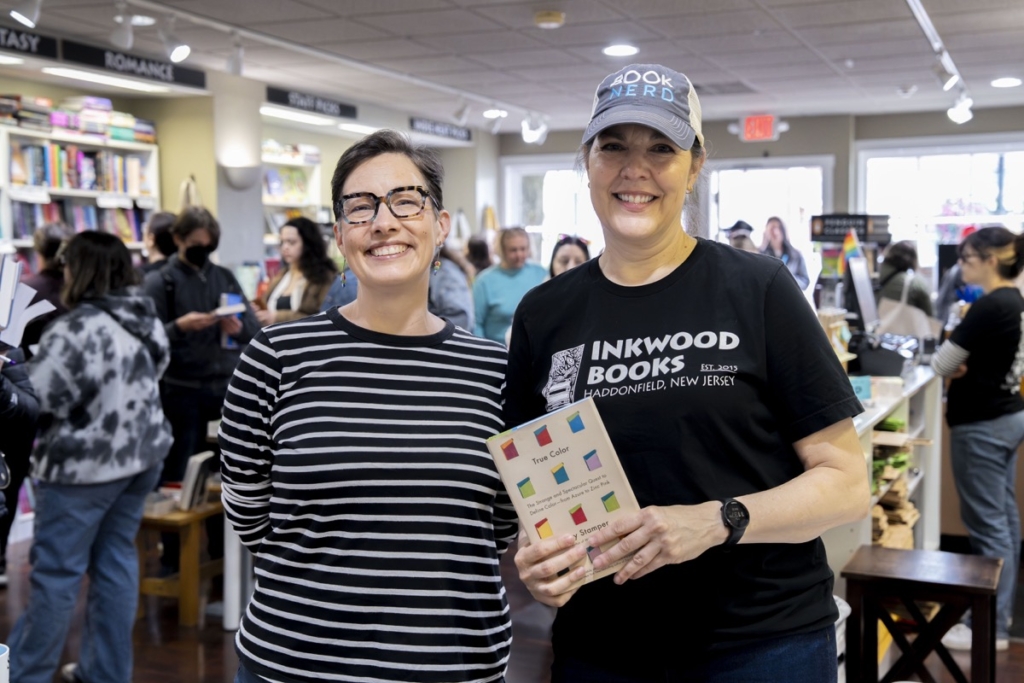
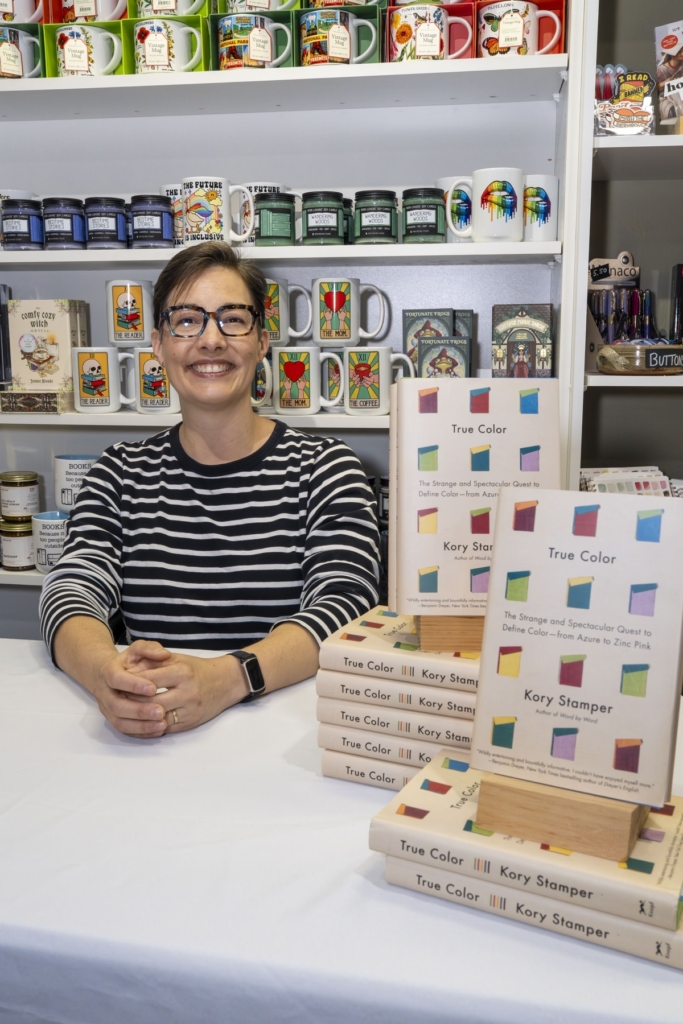

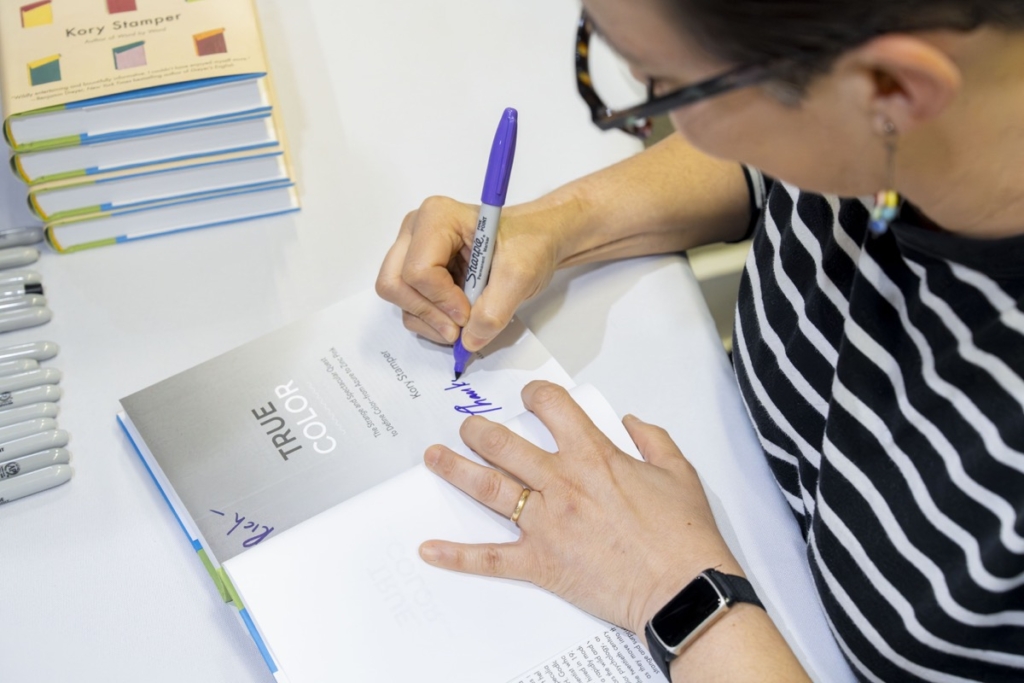
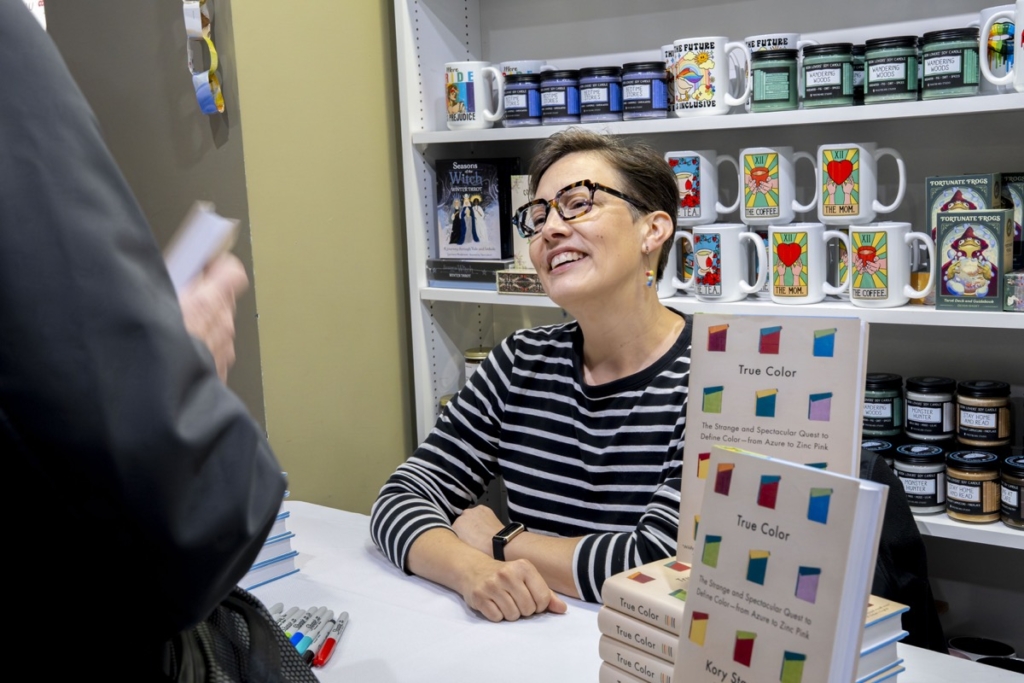
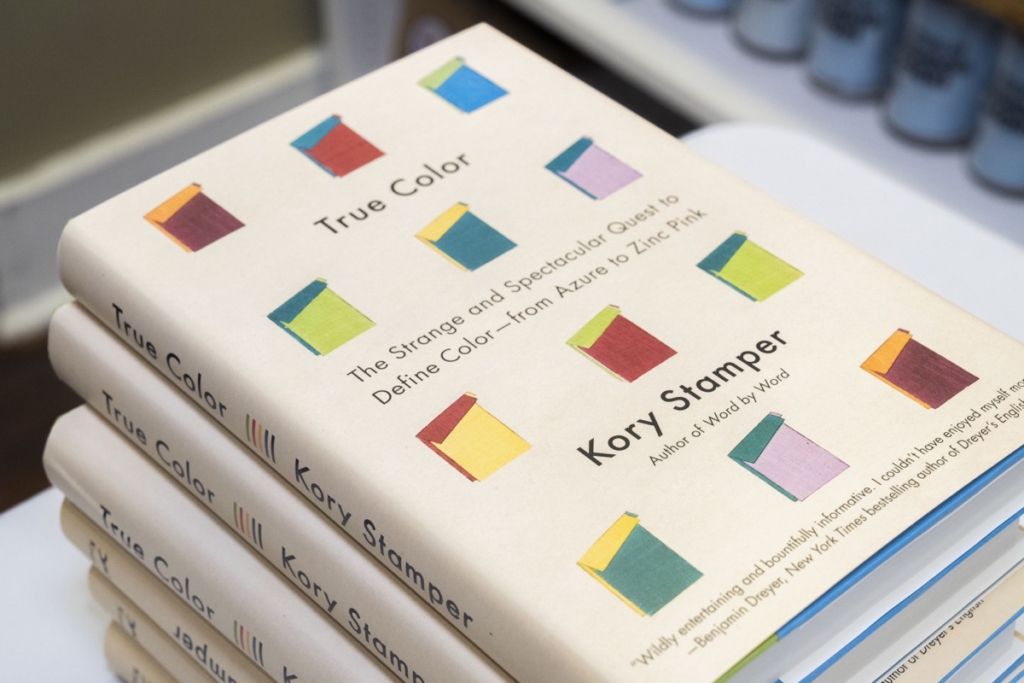



“I’m a high-information person,” explains author Kory Stamper. “I love stories, I love reading all sorts of things.” A longtime lexicographer who has worked at Merriam-Webster and Dictionary.com, Stamper has written two books about language and meaning.
However, Stamper never really intended on being a writer. She never really intended on being a lexicographer either, yet some things seem to align in the most perfect ways.
Stamper, a longtime Collingswood resident who now lives in Oaklyn with her family, grew up in Colorado’s Denver Metro area. She says she always was “a massive nerd and an obsessive reader” who spent most of her time indulging in any information she could get her hands on.
“I’m a high-information person. I love stories, I love reading all sorts of things, but there is something about just absorbing information. I want to know everything that there is to know,” she says.
She wasn’t a sporty kid, and her family didn’t have the financial means to go on trips on the weekends. So, staying in as a kid and teen reading through books from the library or her family’s collection is how she spent most of her time. And as a deeply curious person, she quickly became fond of more than just traditional stories.
“My mom had worked as a nurse for a long time, so we had some medical encyclopedias. And then we had the World Book Encyclopedia, you know, the one in the ‘80s that was sold door to door. I would read those,” she says.
She mentions that she just came across a picture of her younger self on her 13th birthday. “I’m the most awkward looking teen,” she says. “And I’m so excited. I’ve opened up a birthday present, and it’s a Roget’s Thesaurus.”
Despite this telling backstory that inadvertently connects her to a career of lexicography, Stamper ended up going to Smith College and studying pre-med. She was the eldest sibling and a first-generation college student, so there was pressure to be something big, like a doctor or lawyer. But medicine wasn’t for her.
She eventually switched her major to medieval studies with an emphasis in language and literature after taking a class on the medieval Icelandic family saga and falling in love with it.
“When I graduated, I had all of these dead languages under my belt that are completely useless for anything except writing word histories and etymologies. So then I was like, ‘Well, I guess I’ll go into publishing,’” she says.
In 1998, shortly after graduation, she found a job listing for an editorial assistant at Merriam-Webster in a newspaper in Massachusetts, where the company is headquartered. Once she got there, “it was so clear” this is exactly where she belonged.
“This is a place that collects people who are ravenous readers,” she says, “and people who are very detail-oriented and not particularly social.”
Stamper spent twenty years at Merriam-Webster, where she started as an editorial assistant and worked her way up to an associate editor role, primarily focusing on general vocabulary terms. Her main task was defining words, and it is not as simple as it may seem. She says the job of a lexicographer is split into two parts.
The first part is quite literally reading any materials with words on it: magazines, newspapers, books, takeout menus, labels, media, something that she did as a child — “I was the kid that would read the cereal box, read the milk carton, then read the cereal box again,” she says — and continues to do, out of habit.
Lexicographers don’t read for content; rather, they look for interesting uses of words, whether that be new words they don’t recognize, new uses of old words, or something in between. Those words then get marked.
The second part is defining the words and revising definitions. The lexicographers use the words marked in the databases to dissect their contextual definitions in their new uses and in previous definitions. Many words have several meanings, so after all definition categories for a word are separated, the lexicographers work to write the actual definition, and they must adhere to a very specific and rigorous style guide.
“You also have to determine if there’s enough evidence for the word to enter the dictionary. It needs to have widespread use geographically, tonally, and lots of different sources. It needs to have sustained use over a number of years, because English is a really flexible language,” Stamper says.
Over her career at Merriam-Webster, Stamper contributed to definitions for tens of thousands of words. Some of her most notable, attention-grabbing definitions include “god” (lowercase), “f***,” and a series of words that begin with “sh**.” In 2021, she was even featured on Netflix’s “History of Swear Words” to share her expertise. Creating some of these definitions — especially these more complex ones, which are given to more experienced editors — can take months to complete.
Stamper delves more into this in her first book, “Word by Word,” which discusses how dictionaries get made, the history and resilience of the English language, and things lexicographers think about, all wrapped in her engaging, at times snarky narration style (she describes herself as “the lexicography class clown”). She wrote the book while still working at Merriam-Webster, and by the time it was released in 2017, she was already working on her recent release “True Color.”
In 2018, she left Merriam-Webster, and while still working on her own writing, she picked up roles at Cambridge Dictionary and then served as the editor-in-chief of Dictionary.com for seven months before being laid off in 2024 when the company was acquired. Since, Stamper has been doing freelance and volunteer lexicography, plus working a day job as an editor for a research firm.
Now, while still basking in the post-release bliss — like attending author signings at nearby bookstores, including Inkwood Books in Haddonfield on Indie Bookstore Day — she plans on reviving her blog (korystamper.com) and slowing working on her third book, which is about how women made the English language.
And she’s taking every day for what it is.
“Even if I wasn’t publishing books, I would still be writing. It’s just a thing I enjoy doing,” she says. “Even if all of a sudden, publishing collapses and it’s ‘no more books for Kory,’ I would still write or be blogging.
“I just enjoy it,” she muses. “It just feels like part of who I am.”

