
Inside the Ministry of Awe, a former bank has been transformed into something far stranger — and far more whimsical and personal — than a place that once measured value in dollars and cents. Here, value is reimagined through sensation, humor, memory, and touch. Vaults no longer just hold money; they hold feeling. And tucked beside the building’s grand historic safe, artist Dennis Haugh has built a room that asks a deceptively simple question: What do we actually value?
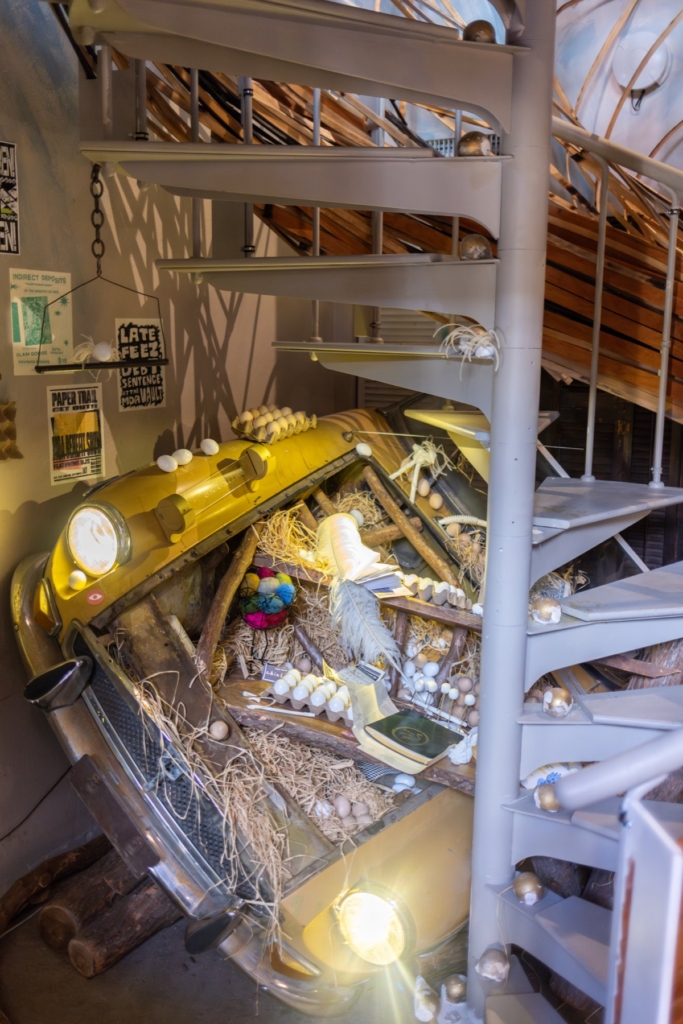
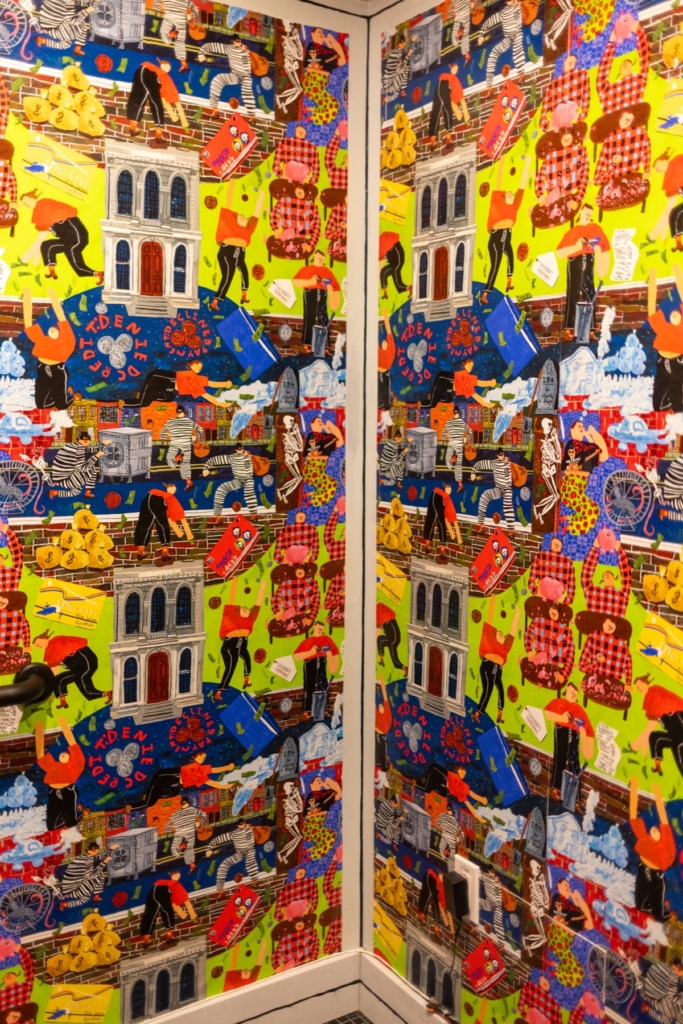
The Ministry of Awe unfolds across multiple levels of what was once the Manufacturers National Bank. Visitors wander from one environment to another, never quite sure what will happen next. A giant nose “sniffs” passersby and delivers playful judgments. Phones ring with mysterious voices offering interactive prompts. Even the building’s plumbing joins the performance — flush a toilet, and the toilet responds, acknowledging your deposit. The experience is immersive and irreverent.
“It’s a building that has six stories,” Haugh explains, “so there’s a lot of different spaces and they’re completely unique and separate from each other. So each time you walk into a space, you’re walking into a whole new world.”
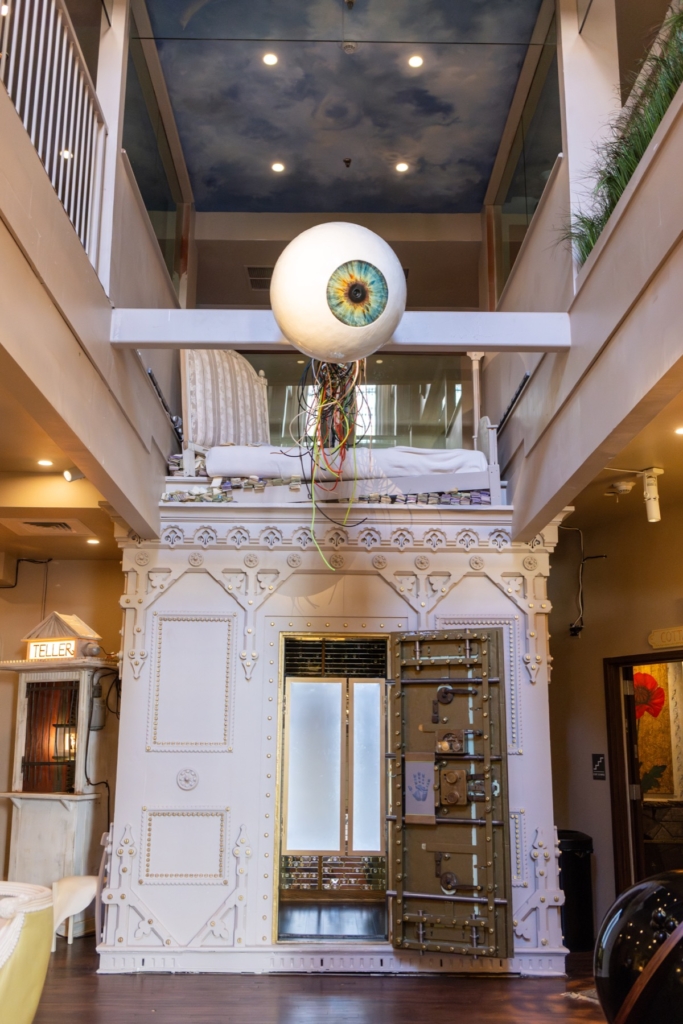
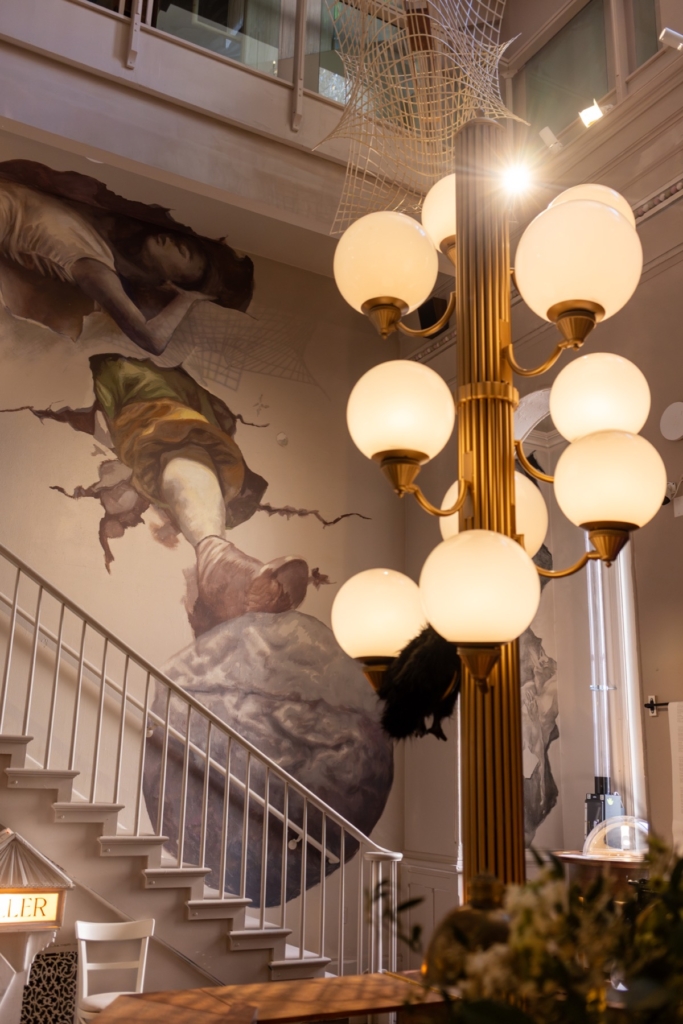
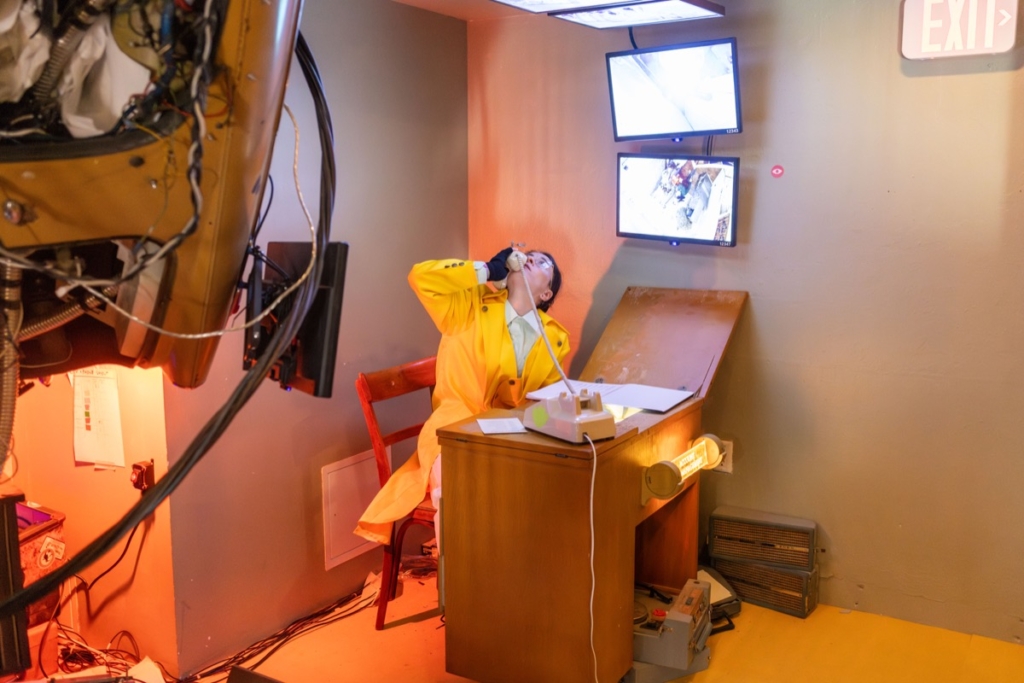
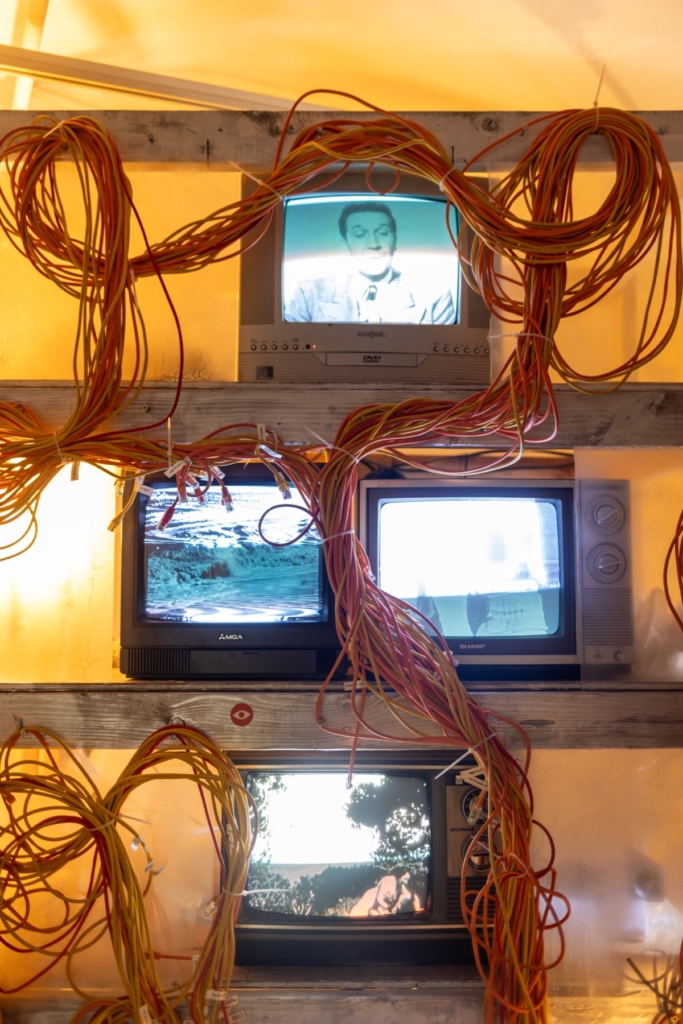
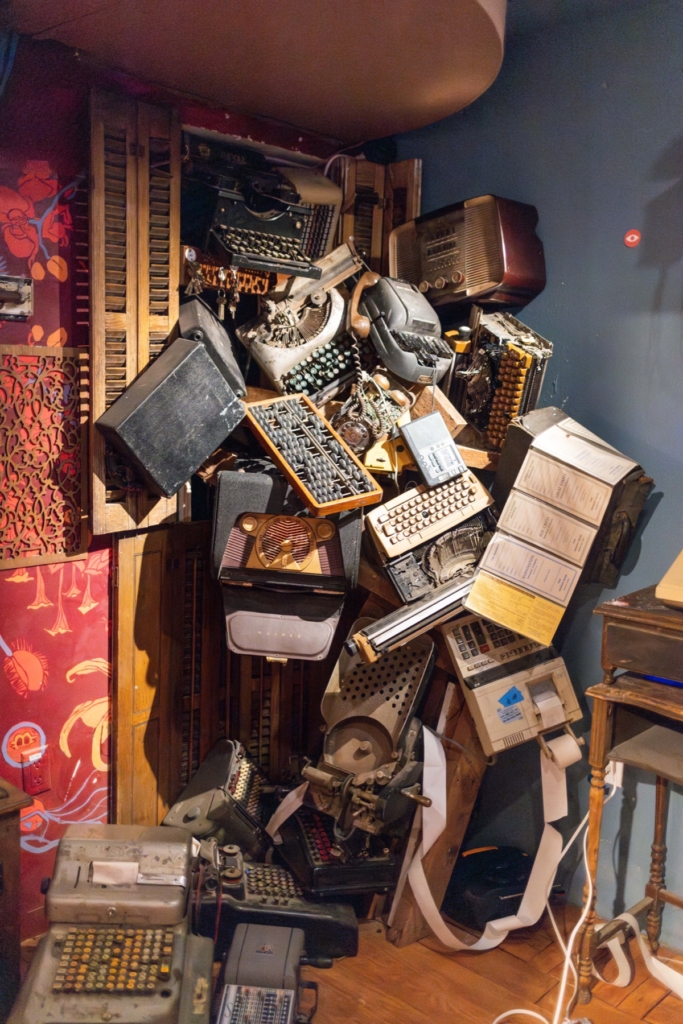
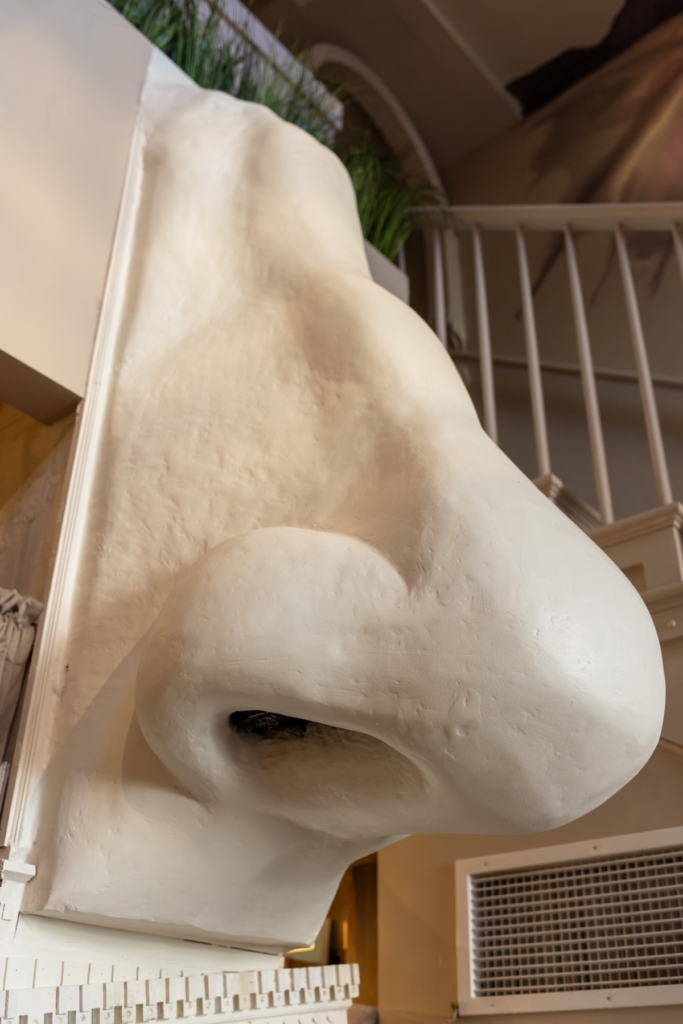
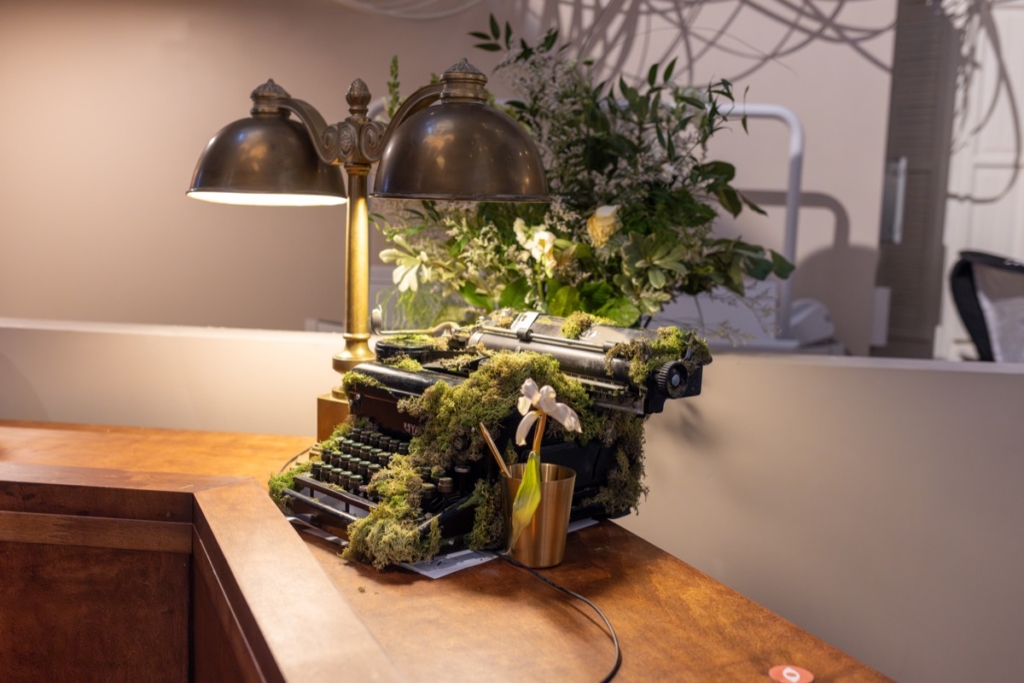
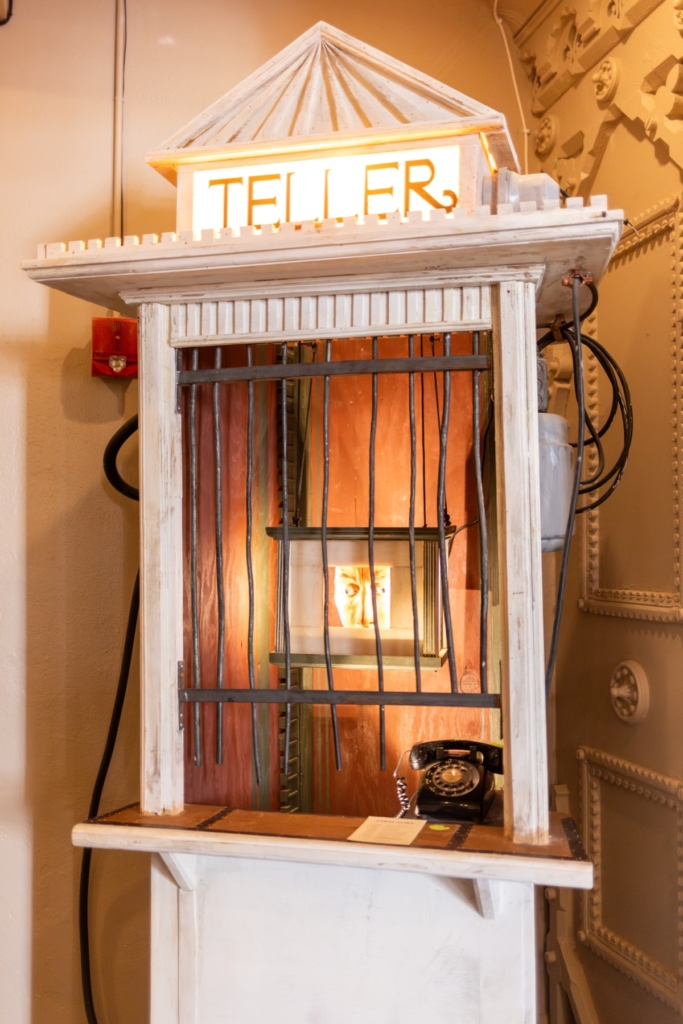
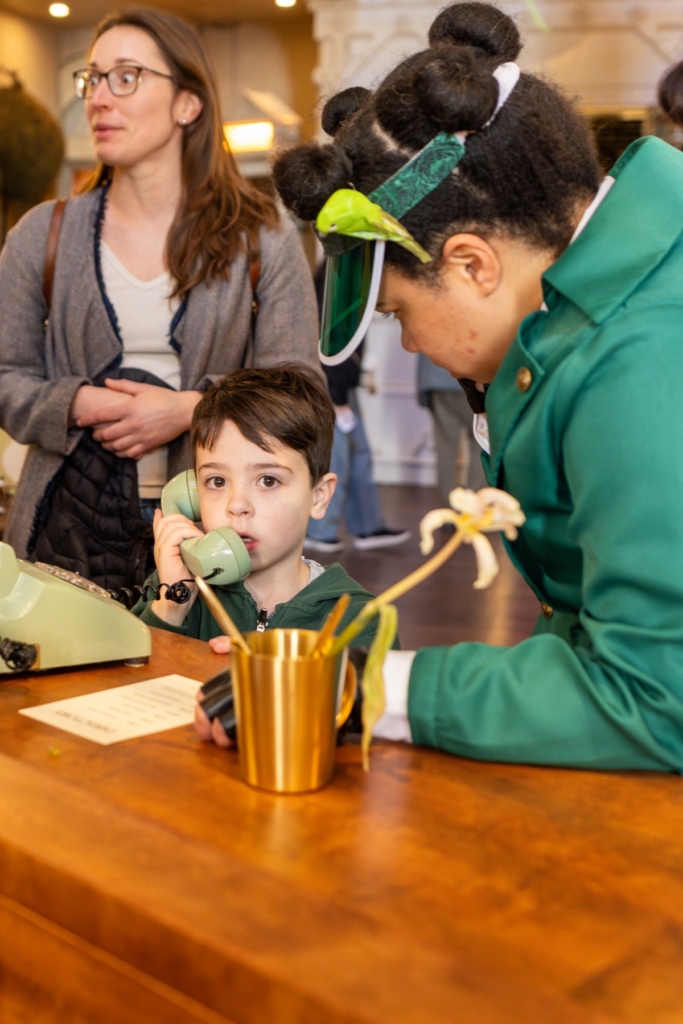
Unlike traditional museums, the Ministry invites real interaction. Performers dressed as vintage bank tellers roam the halls, guiding, joking, and improvising with visitors. “It’s not like your museum guards that are silent,” Haugh says. “It’s much more fun and more interactive in that way.”
That sense of openness extends beyond the finished installation. Before the Ministry even opened its doors, it was already a site of collective work. Weekly co-creation nights on Tuesdays welcomed participants of all backgrounds to contribute to the work itself.
No experience was necessary to take part in co-creation of the Ministry of Awe.
To fully participate, you simply needed to follow some prompts and directions, Haugh says. Some visitors painted sections of murals; others assembled mosaics, tufted rugs, or collaged panels. Some created embroidery.
“Every week was something different,” he adds. “And then each one of these would then be installed into some part of the final installation.”
It’s a process that echoes Haugh’s longstanding relationship to public art in Philadelphia. A muralist by training, he studied at Tyler School of Art before decades of work that spans both public and private spaces — schools, playgrounds, parks, and homes. He owns Dennis Haugh Studio, a decorative and fine art studio.
“My work has been all over the place,” he says, describing how sometimes he might be commissioned to make a mural on a playground wall and sometimes on a living room interior. “More or less wherever people wanted.”
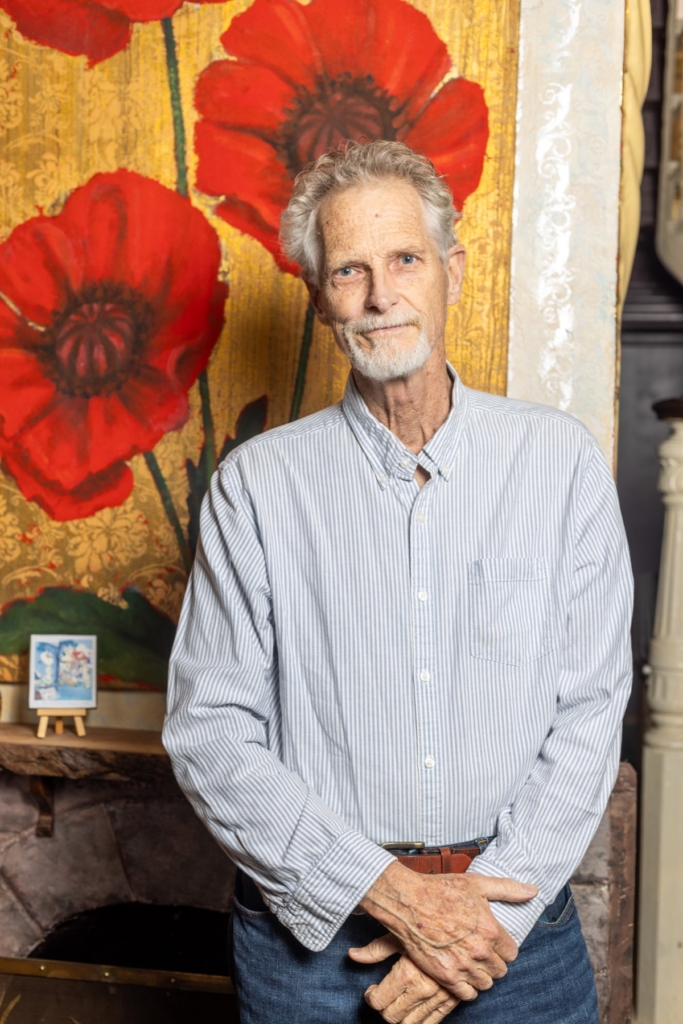
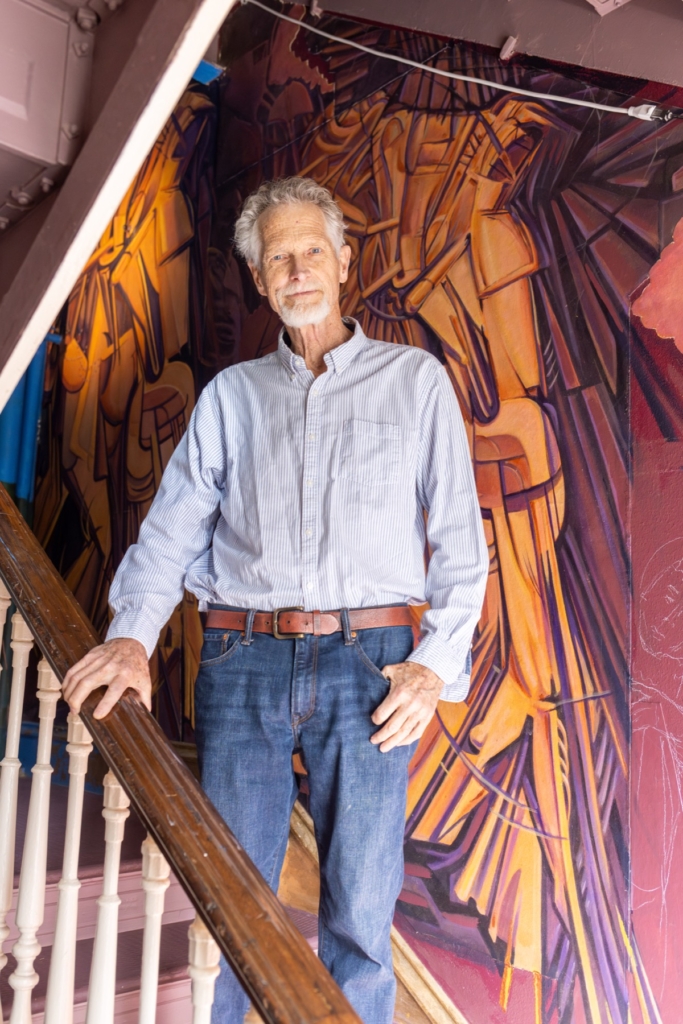
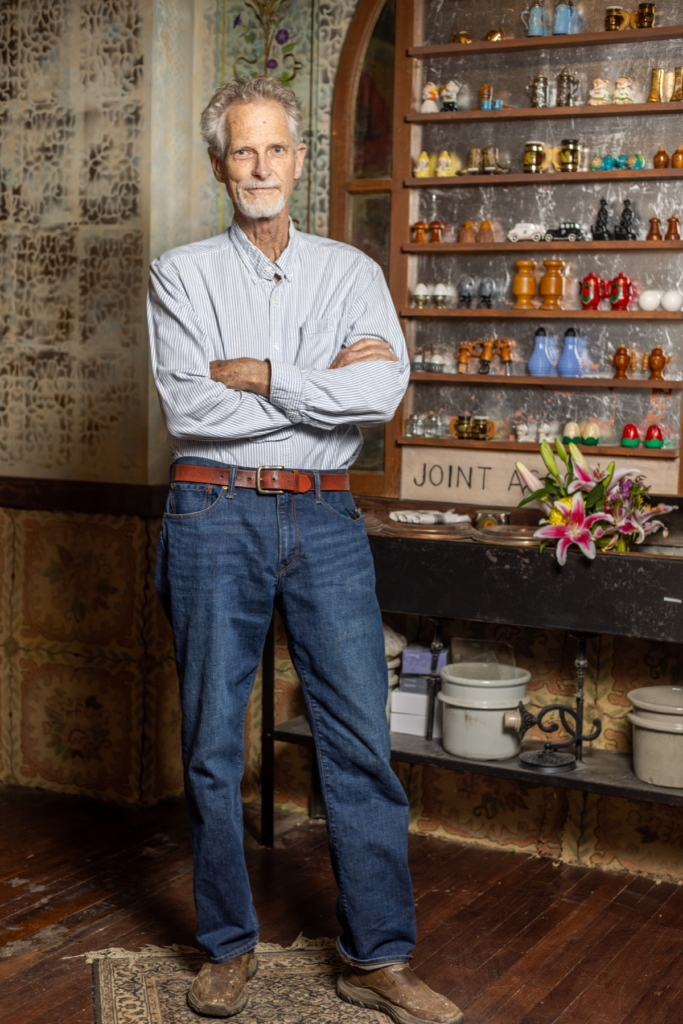
Fine art, decorative painting, hand-painted signs, faux finishes, hand-silvered mirrors are just some of the things Haugh specializes in.
This flexibility — this responsiveness to people and place — finds a natural extension in the Ministry of Awe, and in Haugh’s contributions: “Cottage Vault” in particular.
Positioned just beside the building’s imposing main vault, “Cottage Vault” acts as a kind of counterpoint. Whereas the original bank vault represents institutional value, Haugh’s installation reframes what value really is.
“This was determined to be the cottage vault — which was things that are domestic that are of value or personal things that are valued in the home,” Haugh explains. “The idea was just to create a cozy, warm space in contrast to the fortress-like main vault.”
Inside, visitors encounter a room that feels closer to a living room than a financial institution. A warm fireplace anchors the space. Handmade elements, many created during co-creation nights, line the walls. Salt and pepper shakers of different designs, styles, and shapes symbolize “joint accounts” with the two kitchen utensils side by side.
It’s “a bridge between the financial — the bank — which, to me, is about where we put things of monetary value,” Haugh reflects. “And then… a more domestic thing of what is important at home.”
That sense of value becomes personal in the details. On the mantle sits a photograph of a mural painted by Haugh’s mother when he was a child, depicting classic rhymes like “Old Mother Hubbard” and “Jack and Jill.”
“My mother was a mother of seven kids and somehow she did this mural that just appeared one day,” he says, clarifying that the mural was painted before any of the children could remember. By including it in the “Cottage Vault,” he acknowledges an early, intimate, and valuable encounter with art inside the home.
Haugh’s approach also reflects the broader ethos of Meg Saligman, the Ministry of Awe founder, who, he notes, “totally respects the artist” and attempts to give each one artistic freedom. The result, which features contributions from over 100 individuals, is a space that resists uniformity. “When you see all the different things that different artists have done,” he says, “you get a sense that it’s not overly curated… individuals are able to express their own style.”
Essentially, Haugh says, the Ministry of Awe is about the human spirit — and creativity is the currency.

