
For 81-year-old Pat Alvino, nothing compares to being in a classroom. “You have to be very creative to be a teacher,” Alvino said. “You’ve got to present things that the kids will enjoy and you’ve got to figure out all different ways of doing it. When you retire, you don’t want to give that up.”
Fortunately for Alvino, that wasn’t necessary. She had only been retired a few years following a 39-year teaching career when she pitched a living history program for the Cross Keys Schoolhouse. The schoolhouse is one of four sites maintained by the Medford Historical Society, but the town owns it, and it sits on school property. Alvino recalled that the Medford Historical Society recommended she contact the Medford Township School District’s superintendent, who eventually asked her to come up with a hypothetical lesson plan. In 2010, the school district approved a pilot. The program now serves all third graders in the school district.
Before the program’s first iteration, Alvino was a nervous wreck — the first day of school never gets any easier. But it went well, and now the program is a beloved local tradition and one of the historical society’s most popular programs. Moreover, it is a “godsend” for retired teachers who volunteer as schoolmarms because it gives them a chance to stay involved in education and a sense of community.
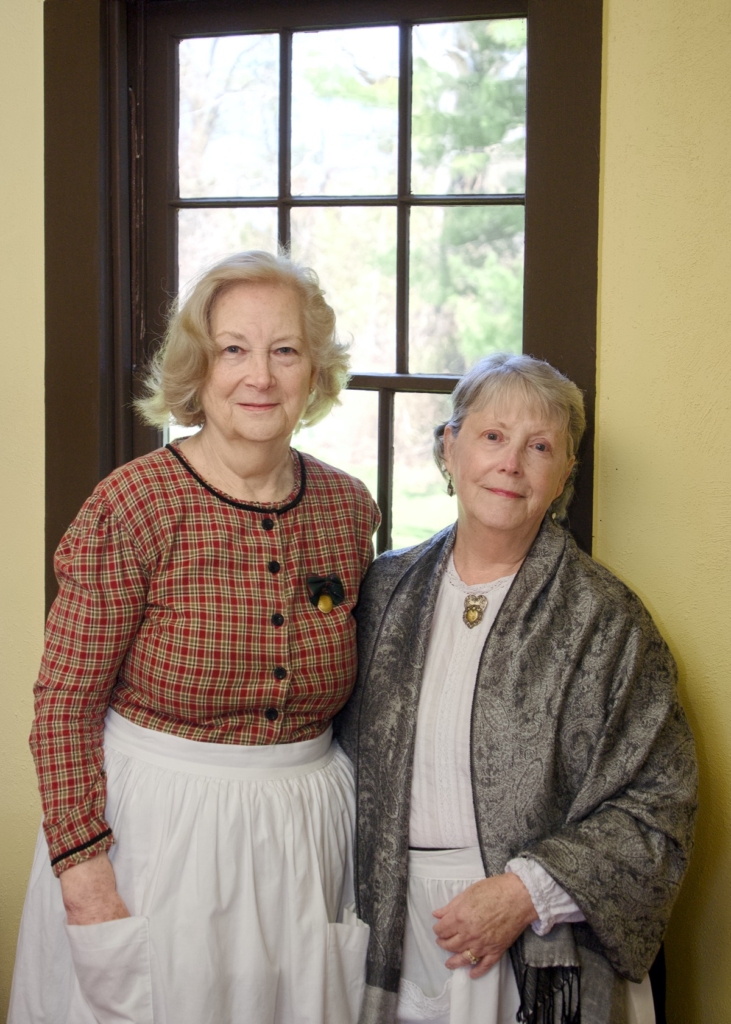
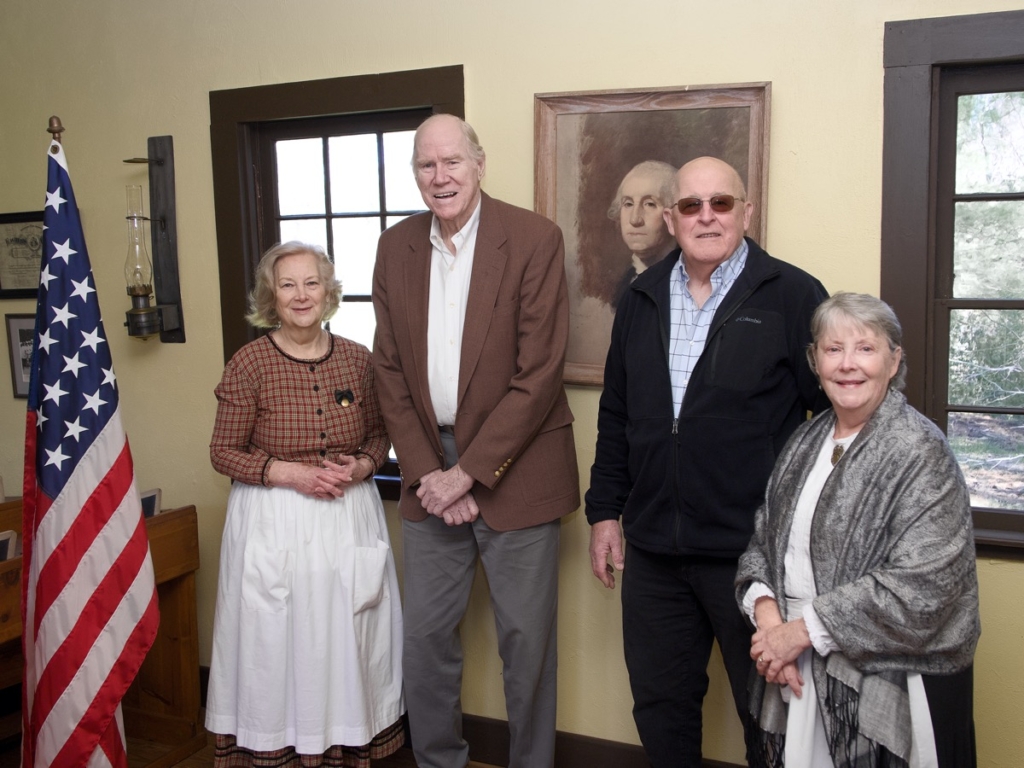
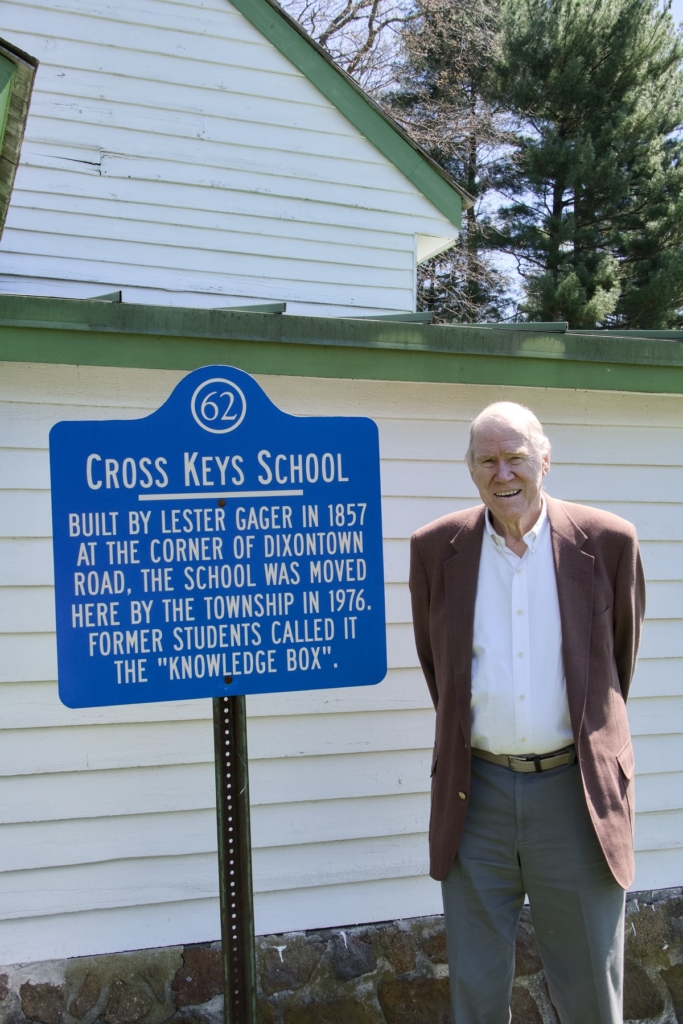
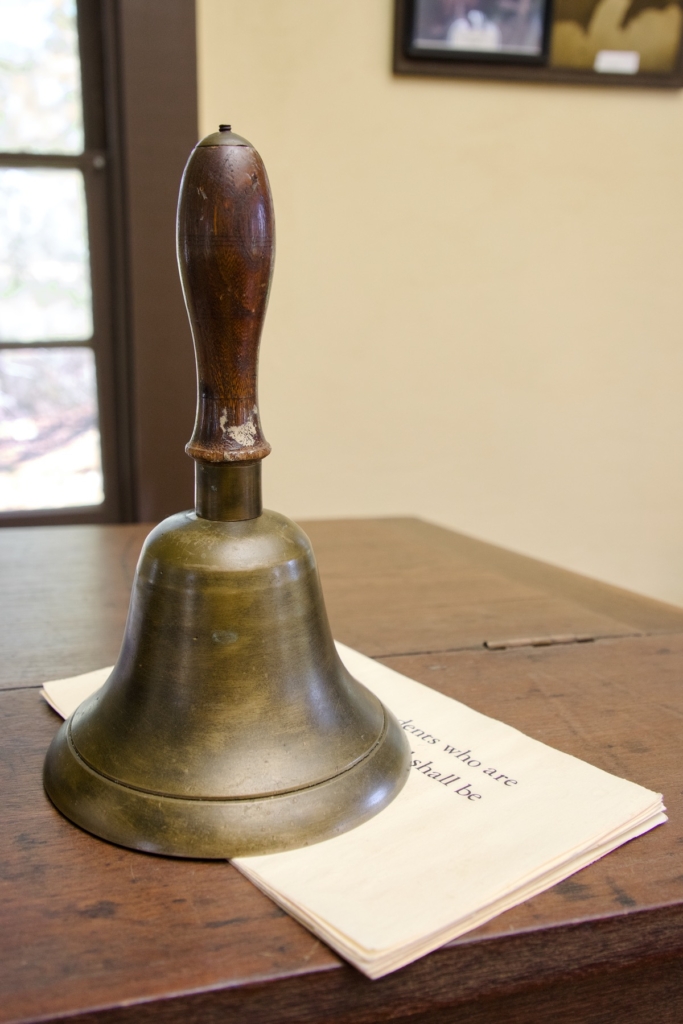
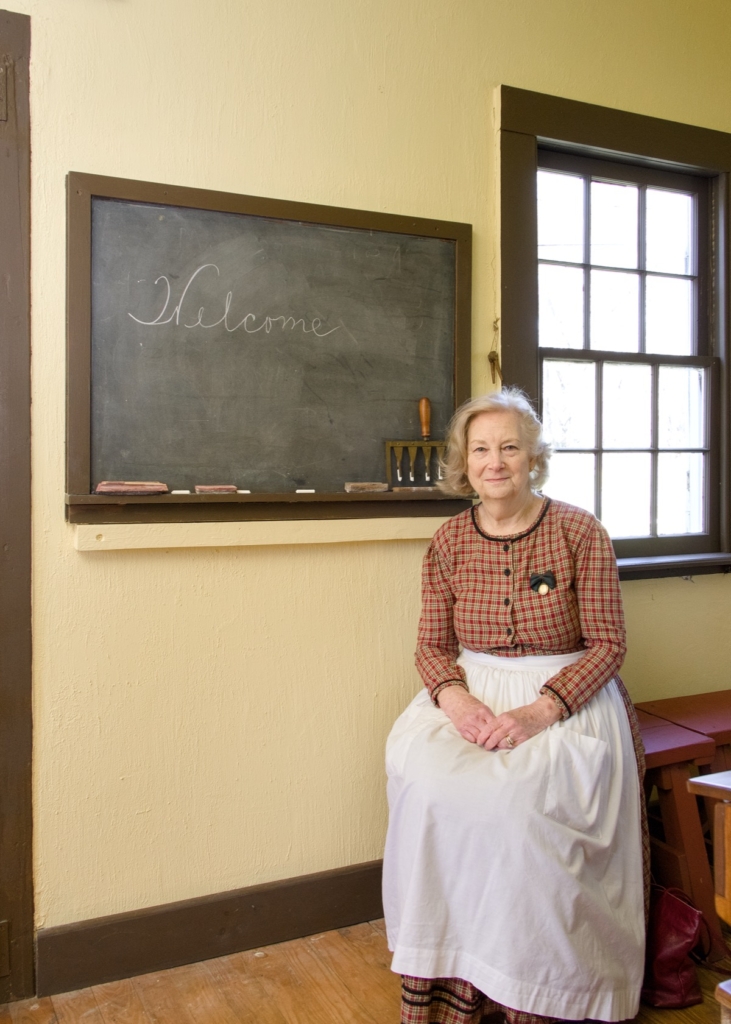
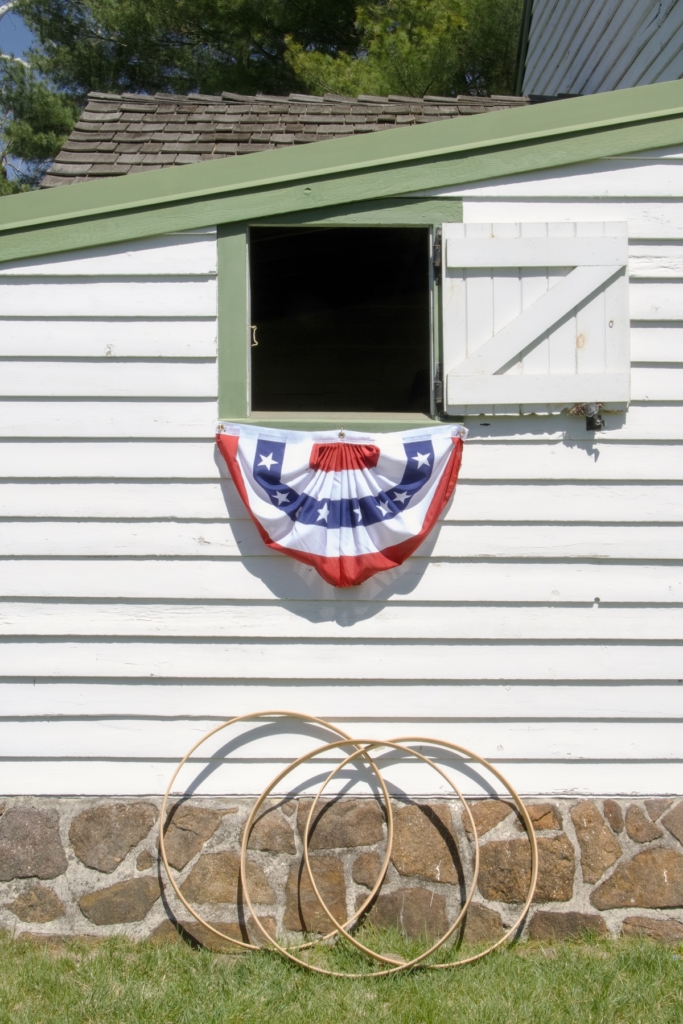
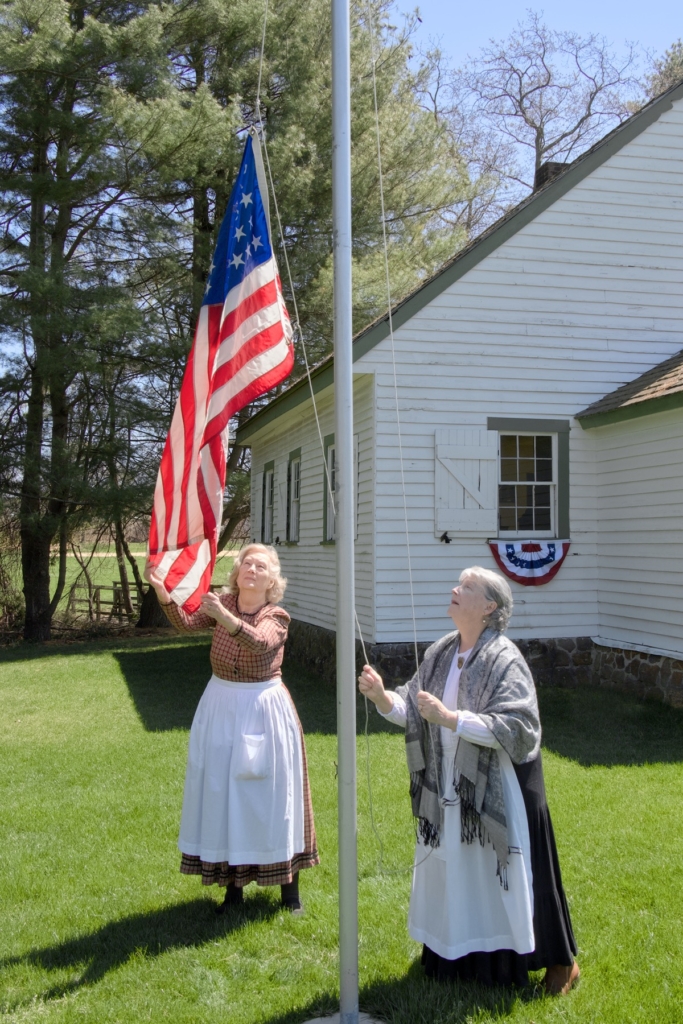
During a recent session of the living history program at Cross Keys Schoolhouse, Pat Alvino, who designed the program in 2010, overheard someone say that it was the best field trip they had ever been on. “I thought, ‘What do [we] do? We sat in the school- house. We did some work. We were running around with hoops,’” she said. And yet, the students are invested in it, Alvino added.
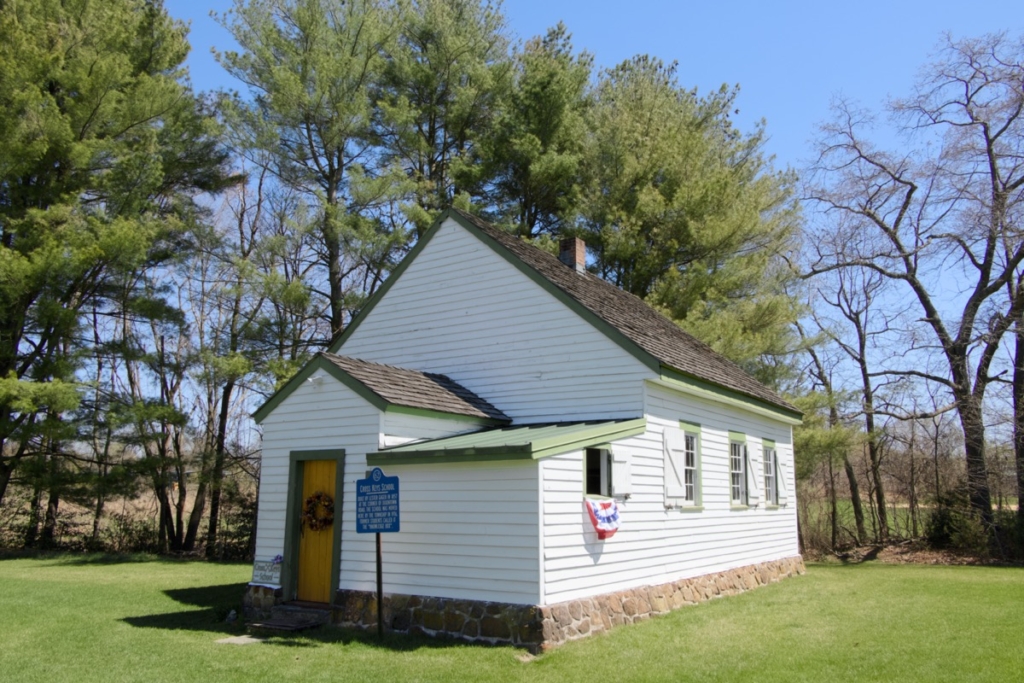
The school first opened in 1857 at the corner of Dixtontown and Stokes Roads. Lester Gager, Samuel Thackara, and Dudley Ballinger founded Cross Keys. “They all had children and they knew that they needed to have them educated,” said Ed Gager, the great-great-grandson of Lester Gager. Indeed, Lester’s children were members of the school’s first class. Children ages six through 13 were taught. Attendance was irregular because farm chores were a bigger priority at the time.
According to Alvino, the schoolhouse’s size and location were in line with the trends at the time. Schoolhouses couldn’t take up too much valuable land and it needed to be accessible to all residents. In the case of the Cross Keys Schoolhouse, Gager said the grounds were full of trees and hence not ideal for farming.
The two-hour living history program that Alvino designed blends what students did at the time with history lessons about Medford. This year’s lessons also focus on the Declaration of Independence in honor of its semiquincentennial.
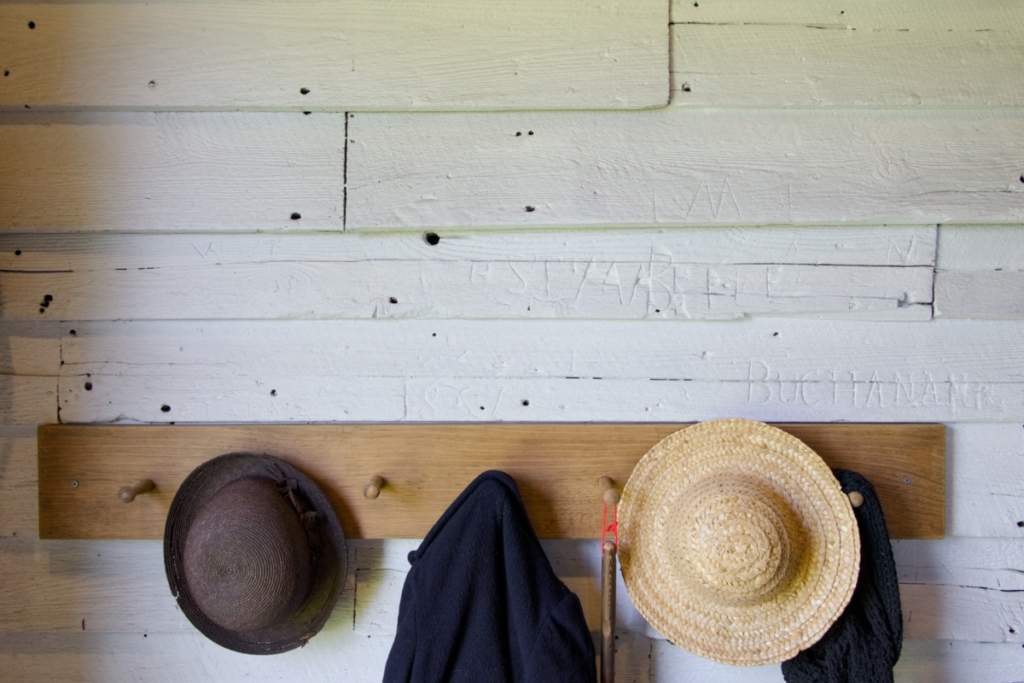
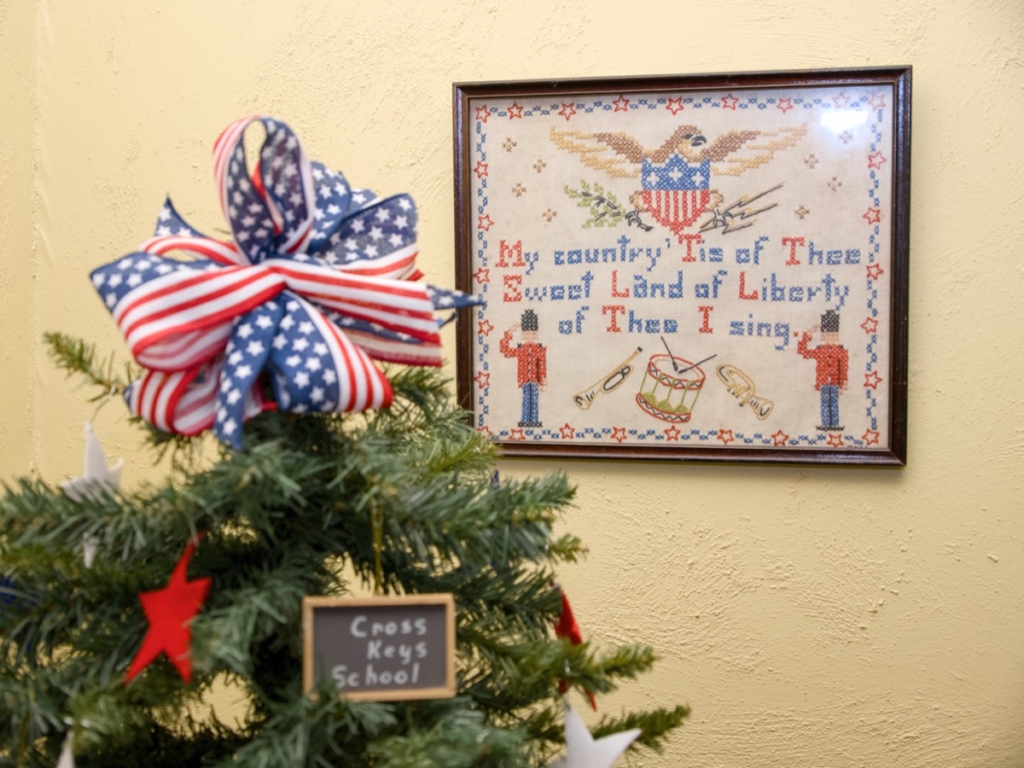
The schoolmarms wear historical clothing, and students are encouraged to do the same, with some really getting into it. The program begins with singing “My Country, ’Tis of Thee” (since the Pledge of Allegiance was not written until 1892). The class then read from the Bible, typically a prophet. “Sometimes the kids will even ask, ‘How come you’re reading from the Bible?’ And I’ll say, ‘Well back in 1857, that’s exactly what they did,’” Alvino said.
After around 45 minutes of lessons, students go outside for recess, where they play games such as hoop and stick and practice performing curtsies and bowing. They take the class picture in the same location as the iconic photo with the class of 1919.
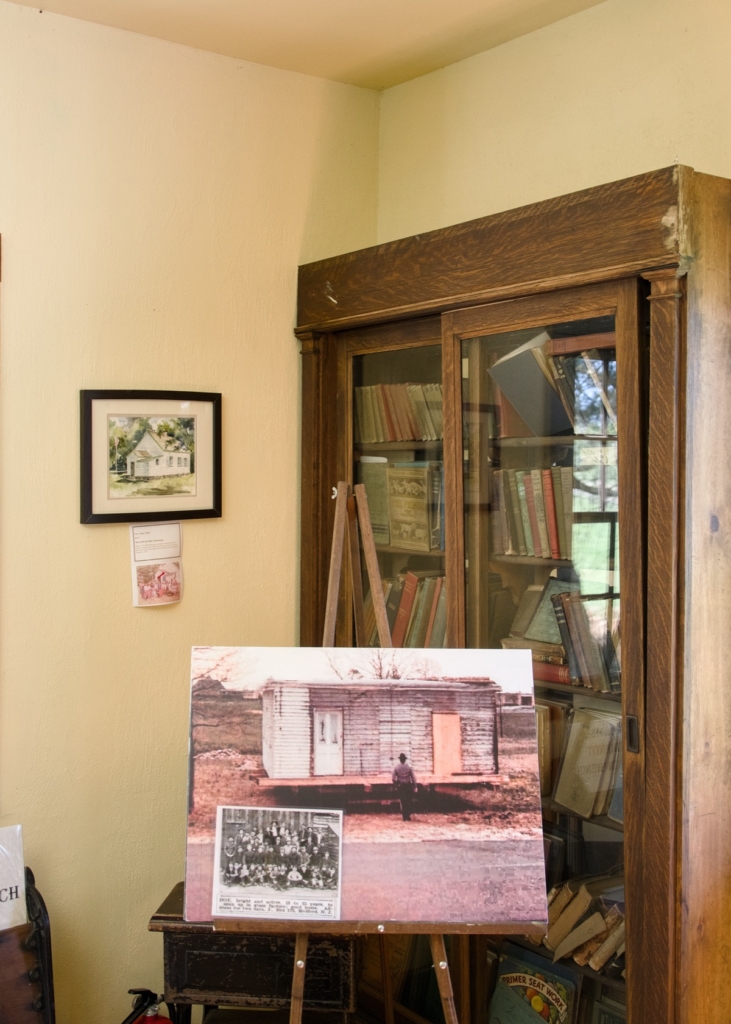
The Cross Keys Schoolhouse is a heavily restored old building that was lifted from its foundation and moved to its current location in 1976. In other ways, Cross Keys today is not exactly like the original — and perhaps that’s for the better.
Today there are no outhouses on the property, and children who need to use the restroom can do so at the nearby Medford Memorial Middle School. But it is clear that great effort was put into making the schoolhouse close to what it was like in 1857.
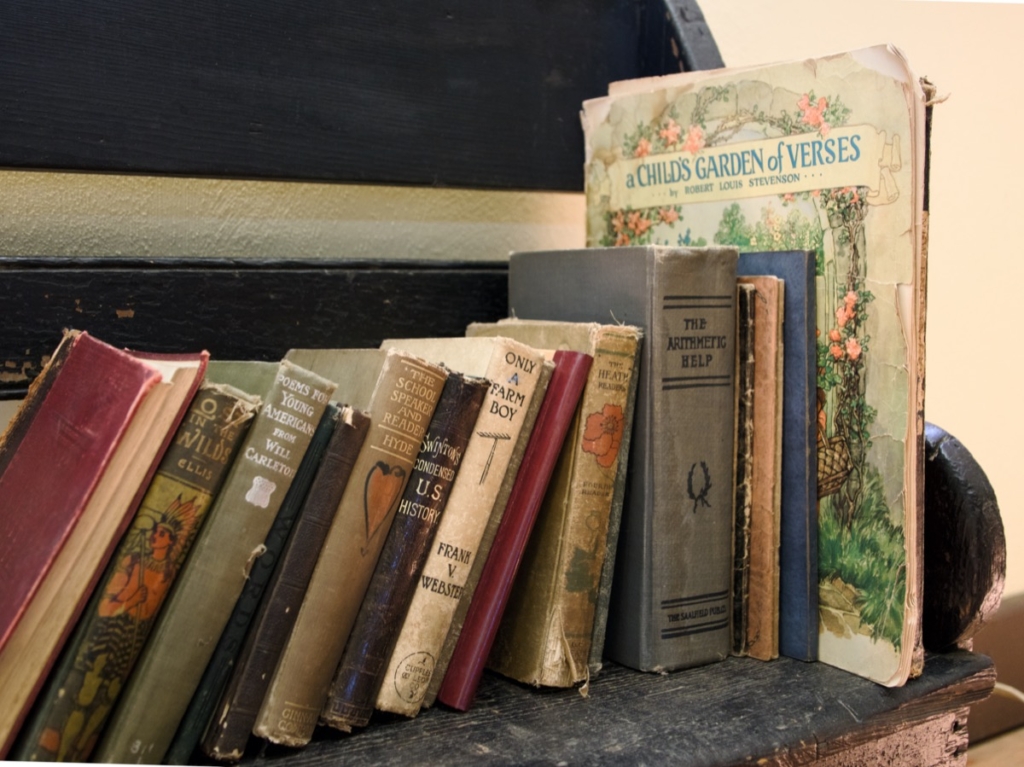
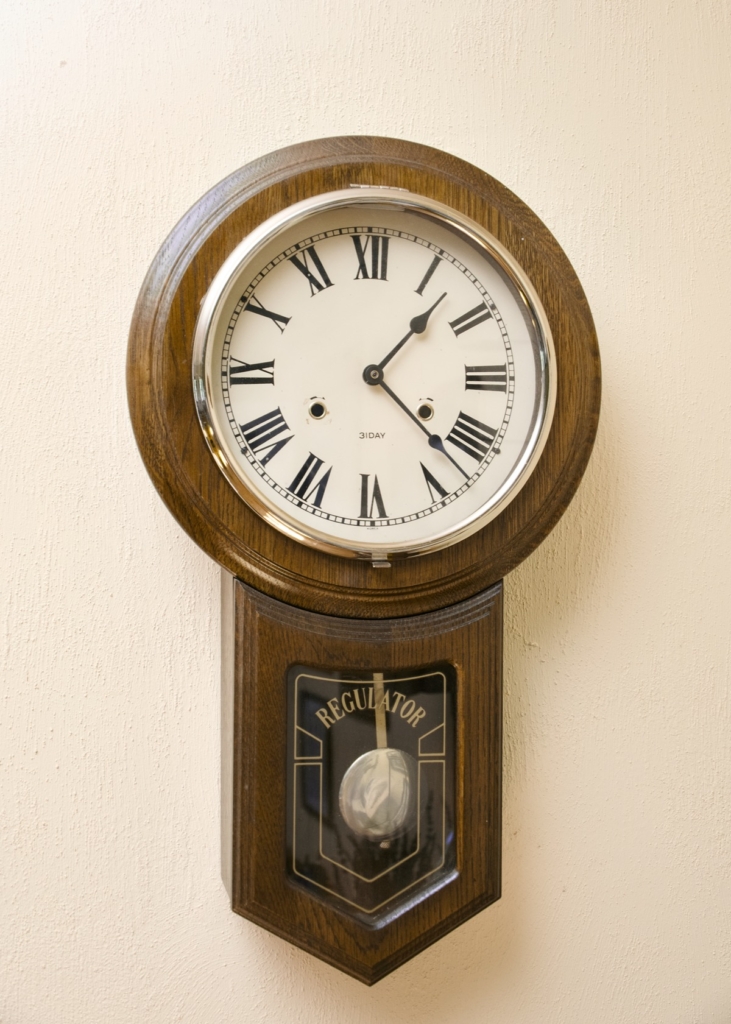
Many windows were needed in the original schoolhouse since the room was heated by a potbelly stove. The American flag only has 31 stars. Photographs of George Washington, Thomas Jefferson, and then-President James Buchanan hang on the walls. (The original picture of George Washington is currently in the possession of Gager’s sister-in-law. “She won’t give it up,” he said.) The school bell was not there in 1857, but was by the time Gager’s father attended. And it was his mother, an antiques aficionado, who later found and purchased the school bell. The only other original objects that decorate the schoolhouse are a pencil sharpener and a little black bench.
There were several other rural one-room schoolrooms in Medford, but only Cross Keys has survived, and it did so by the skin of its teeth. The schoolhouse closed in 1927 due to a diphtheria epidemic, and the construction of Milton H. Allen Elementary School made the closure permanent. For the next several decades, the building was used for a variety of purposes: a residential home, a store, and a produce stand. At one time it sold fish, Gager said.
Then in 1976, McDonald’s purchased the land. By that point, it looked like a garage, with boarded-up windows and no roof. The public demanded it be saved, spurred, perhaps, by the bicentennial. The town acquired the building and then ran into the challenge of finding it a new home. “The school property seemed like a good idea,” Alvino said. In June 1976, the town moved the school to its current location on Mill Street on a flatbed truck, with the building’s new foundation already laid out. Over the years that followed, volunteers worked little by little to restore the building. Once the building was restored, the volunteers received assistance from the NJ Questers in finding historically appropriate objects to put inside.
While Alvino joined the Medford Historical Society when she first moved to Medford in the 1990s, she did not have the time to actively participate. But she visited the schoolhouse soon after she moved to Medford. “For a community to have a schoolhouse and to have it lovingly restored — I was impressed with that,” Alvino recalled.
During a recent session of the program, Alvino overheard someone say that it was the best field trip they had ever been on. “I thought, ‘What do [we] do? We sat in the schoolhouse. We did some work. We were running around with hoops. There’s no computers, there’s no tablets,’” she said.
And yet, the students are invested in the program, Alvino said. “These are precious kids who just enjoy the schoolhouse. What a gift for the community.”
The Medford Historical Society will host open house afternoons on July 12, August 2, and September 20 from 11 a.m.-2 p.m.You can also request a private group tour via The Medford Historical Society’s website.

