
Metuchen has long carried the nickname “the brainy borough,” a reputation built on decades of attracting thinkers, artists, and creative pioneers. A recent exhibition, “Cutting Their Own Path,” celebrated that legacy by spotlighting three women whose work helped shape the borough’s artistic identity.
Presented collaboratively by the Friends of Metuchen Arts (FOMA) and Basecamp Studio & Gallery, the exhibition highlighted the work of three trailblazing Metuchen artists — Joan Arbeiter, Edith Hodge Pletzner, and Helen M. Stummer. Spanning works created from the 1960s through the 2000s, the show explored how they forged distinct artistic paths during a time when female artists often faced significant barriers to recognition.
For the organizers, the partnership between the two galleries offered a way to honor each artist’s individuality while presenting a shared tribute.
“Our curation team agreed that each artist would have preferred their own solo space in this exhibit,” said Robert Diken, owner of Basecamp Studio & Gallery and founder of FOMA, where he served as president from 2020 to 2025. “As the title indicates, they created their own spaces and cut their own individual artistic paths.”
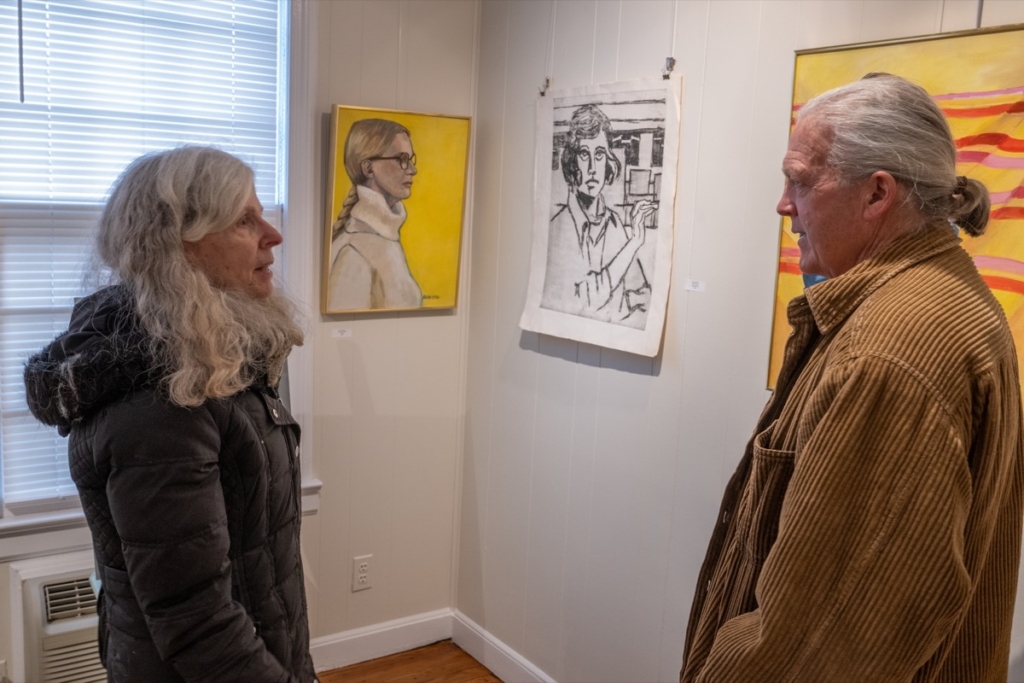
The exhibition was divided between neighboring galleries at 315A Main Street in Metuchen, with a dedicated room for each artist.
According to Grace Shackney, secretary of the FOMA board of directors, the artists began their careers at a time when women were still pushing for recognition in the art world.
“These were women with strong personalities,” observed Shackney, “and even stronger ideas about the direction of their art.
“Those distinct personalities become quite evident as you move through each room.”
Joan Arbeiter
Artist, educator, and feminist Joan Arbeiter (1937–2024) built a career rooted in social engagement and artistic experimentation.
She earned a Bachelor of Education from Brooklyn College in 1959 and later a Master of Fine Arts from Pratt Institute in 1981. Before moving to Metuchen from Brooklyn in the early 1960s with her husband, she taught elementary school in Manhattan. A mother of two, Arbeiter later credited her involvement with the New York Feminist Art Institute with expanding her interest in feminist themes.
Her work frequently examined social structures and the expectations placed on women. One of her most notable conceptual art shows, “CAA Job Search Documentation,” exposed the obstacles women faced when seeking tenured university teaching positions. Her last major series, “Portrait of the Artist as a Young Girl Fulfilling Society’s Limited Expectations,” reflects the cultural expectations for girls growing up in the 1950s.
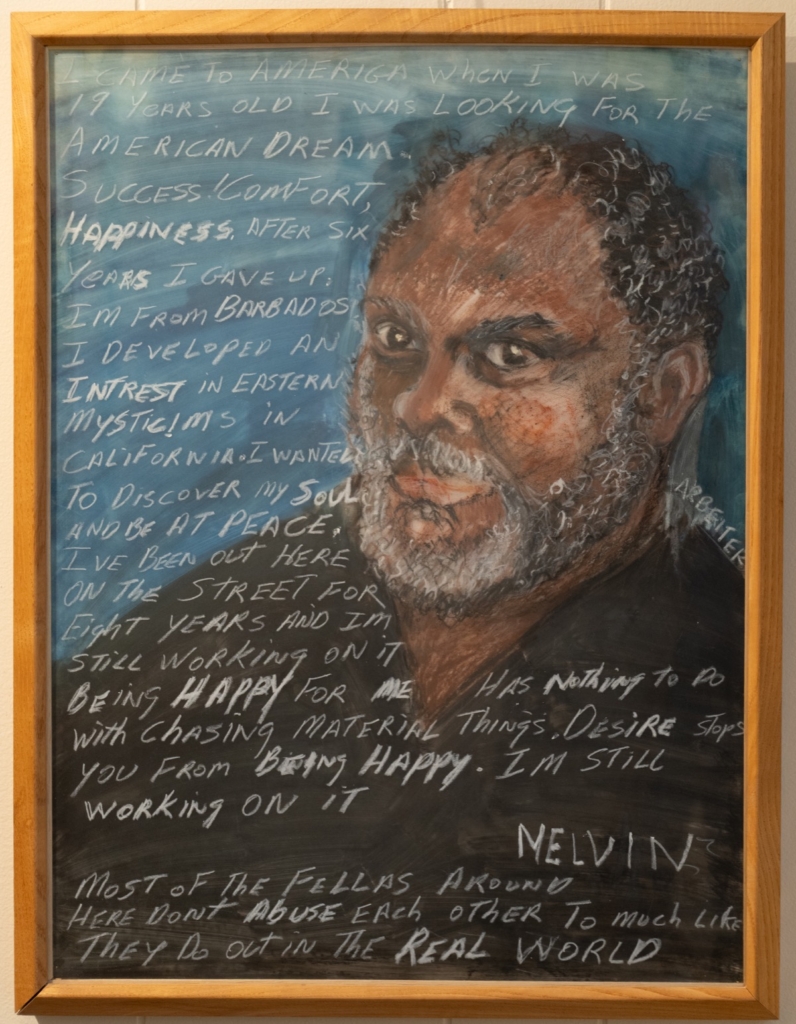
Another powerful series, “Street People,” focused on homelessness in New York City. Arbeiter paid unhoused individuals to model for her paintings, offering both compensation and visibility. A work from the series, “Melvin,” was featured in the exhibition.
Arbeiter was also a dedicated educator. She founded the Joan Arbeiter Studio School, which operated from 1976 to 1990, and served as an instructor and foundations coordinator at the duCret School of the Arts in Plainfield from 1983 until her retirement in 2015. Beyond her artistic career, she remained active in the Metuchen community, participating in local fundraising efforts and registering women voters.
Edith Hodge Pletzner
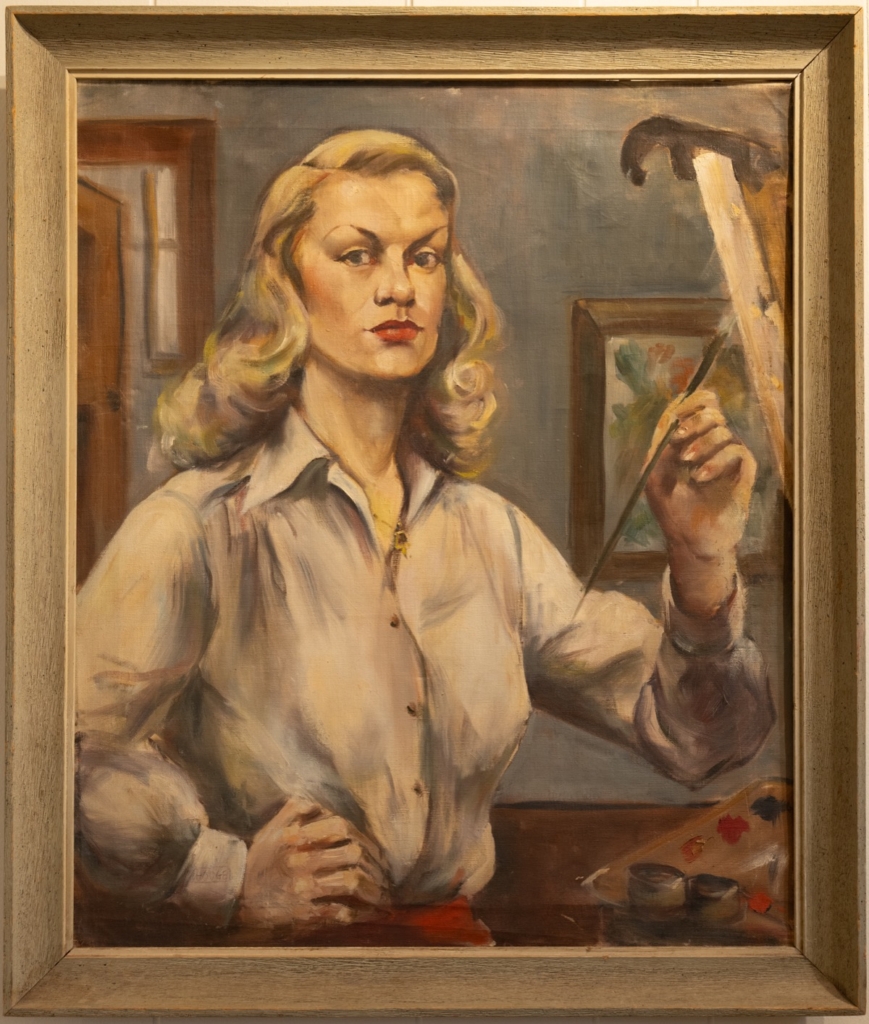
Painter Edith Hodge Pletzner (1924–2019) approached art with technical discipline and a deep fascination with the human figure.
Born in Orange, New Jersey, Pletzner began exploring art at 13 when she enrolled in the Practical Arts program at Essex County Vocational School. During World War II, she served as a cartographer and draftsman in the Women’s Army Corps, rising to the rank of corporal. She received the Good Conduct Medal and served as a guide-on bearer — a position of honor — for her unit’s color guard.
After the war, Pletzner used the G.I. Bill to study at the Newark School of Fine and Industrial Arts. While working as a dance instructor at Arthur Murray Dance Studio, she met her future husband. The couple raised three children.
Pletzner remained immersed in the arts throughout her life, overseeing antique shops, galleries, and studios across New Jersey. Her portraiture blends impressionistic softness with a strong understanding of anatomy.
One of her most notable works — a portrait of her two daughters — was displayed at the Smithsonian Institution in Washington, D.C.
For Pletzner, artistic skill began with observation.
“Before you can paint,” she often told students, “you have to learn to see.”
Helen M. Stummer
Photographer and visual sociologist Helen M. Stummer (1926–2023) used her camera to document communities often overlooked in mainstream narratives.
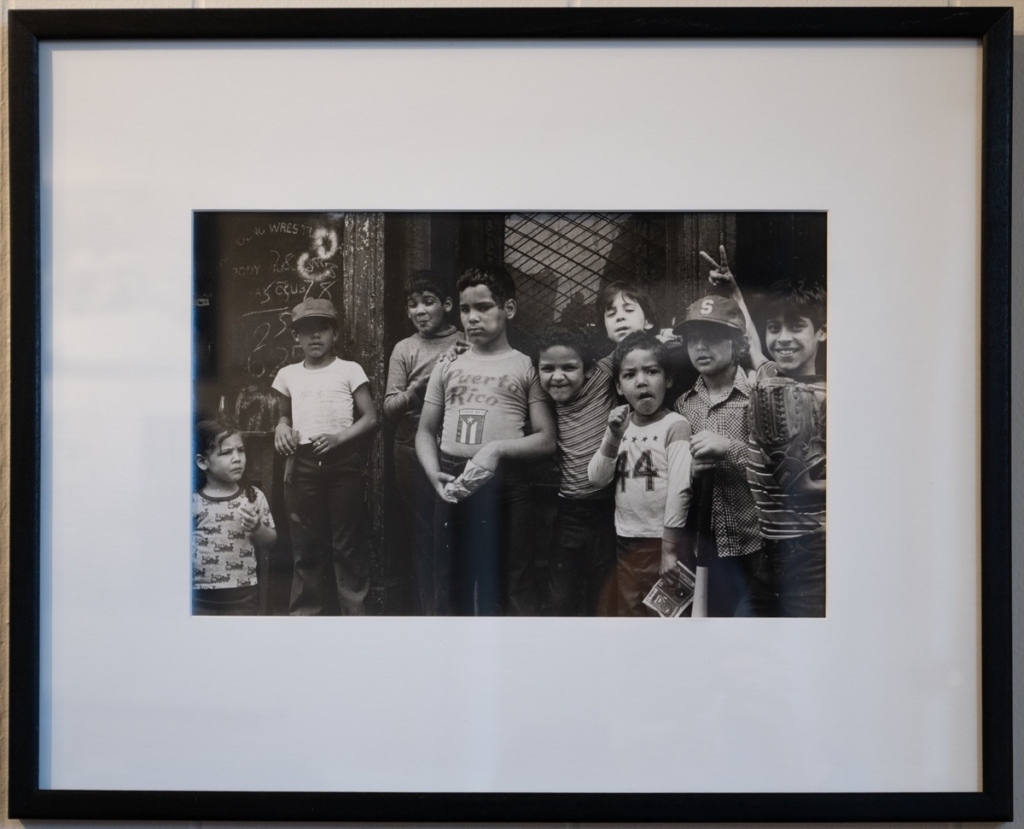
She studied photography at Union County College, the International Center of Photography in Manhattan, and Kean University before earning a Master of Arts degree in Visual Sociology from Vermont College.
Stummer spent years photographing the urban poor in Newark and on Manhattan’s Lower East Side. Her images capture homes, street life, and daily moments within neighborhoods shaped by economic hardship.
According to the New Jersey Historical Society, many of her photographs follow children growing up in these environments, documenting both the challenges they face and their resilience.
Through her work, Stummer explored themes of race, class, social justice, and human dignity. Much of her photography focused on families in Newark, creating a visual record of life in the city.
She later chronicled her experiences in two books, “No Easy Walk: Newark 1980–1993” and “Risking Life and Lens: A Photographic Memoir.”
A Shared Legacy
Although these artists worked in different mediums and explored different themes, “Cutting Their Own Path” highlighted a shared spirit of independence and creative determination.
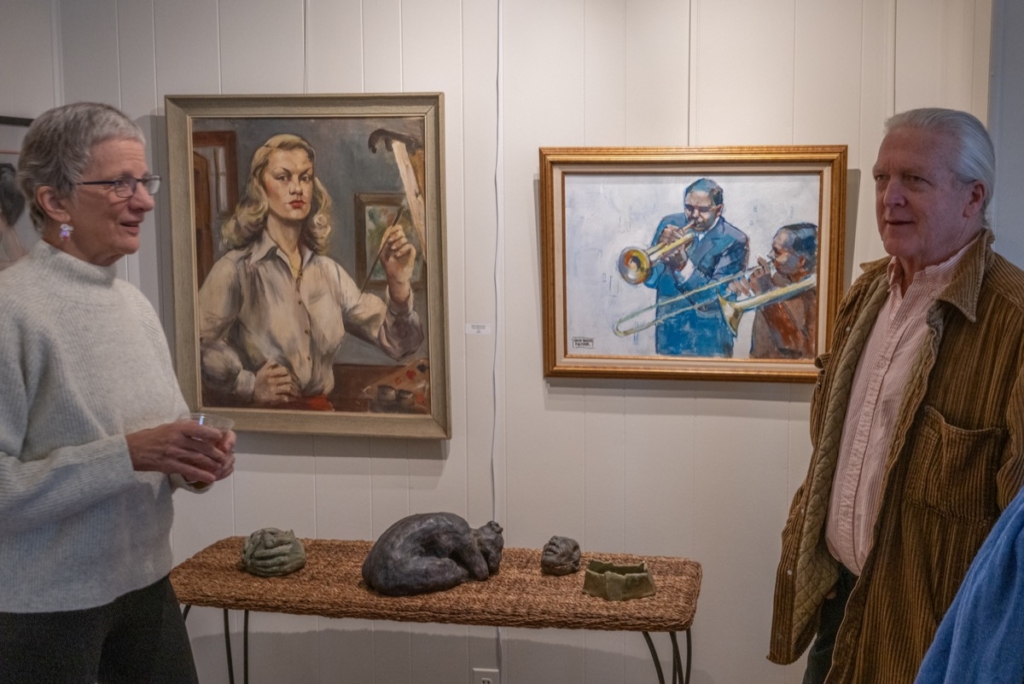
Approximately 18 photographs from Stummer’s collection were on display at Basecamp Studio & Gallery, while 10 to 12 works from Arbeiter and Pletzner were featured at the FOMA gallery.
The exhibition ran through March 22. For Shackney, the exhibition was also a reminder of the quiet but lasting influence of art.
“Artists persist in their quest to open minds,” she said. “And this happens every day, with no fanfare, when just one person hears a piece of music, views a painting, or experiences a performance that suddenly strikes a chord deep within them.”


