
Photographer Jillian Guyette didn’t expect to end up in South Jersey. Raised in Rochester, New York, and trained in New York City, she built her early career in fashion and commercial photography, working with brands such as Martha Stewart and Free People and spending extended periods on set between Philadelphia and Manhattan. But in 2023, after years of working out of her home as a freelancer, she opened a storefront studio space in downtown Haddonfield, and something shifted. The town, she says, feels like Stars Hollow (the fictional town in the beloved television series “Gilmore Girls”): walkable, historic, and filled with small-town charm, yet close enough to both Philadelphia and New York that she’s able to work in both cities.
The studio, located on Tanner Street, is part working artist’s space, part gallery. Guyette shoots black-and-white film portraits here, scans her own negatives, and, on occasion, opens the back area for vintage clothing sales. Flooded with natural light, the space has had an unexpected influence on Guyette’s work. “Shooting in here is really nice,” she says. “It’s super fluid. It’s all natural light. The space dictated that I should be doing [portraiture].” While it wasn’t the reason she rented the space, she says it has been a pleasant surprise.
Just as important, the studio has become a visible example of what it means to be a working artist. Before each session, Guyette makes sure the space is prepared with care. “I always have music on in here. I always make sure it smells really good. That’s important,” she says. From yoga-teacher training, she learned to take a moment to center herself before clients arrive, aware that being photographed can make people feel uneasy. “Portraits make people nervous,” she says. “Family sessions make people nervous.” She places her subjects within the frame but avoids heavy direction, allowing children to move naturally and parents to relax into the moment. Though the finished portraits feel effortless, the process is not. “People think, ‘Oh, photographer, how glamorous,'” Guyette says. “And I’m like, half of it is just schlepping really heavy equipment.” The resulting works are spare and restrained. Shot on black and white film under natural light, the portraits feel at once of another time and entirely timeless.
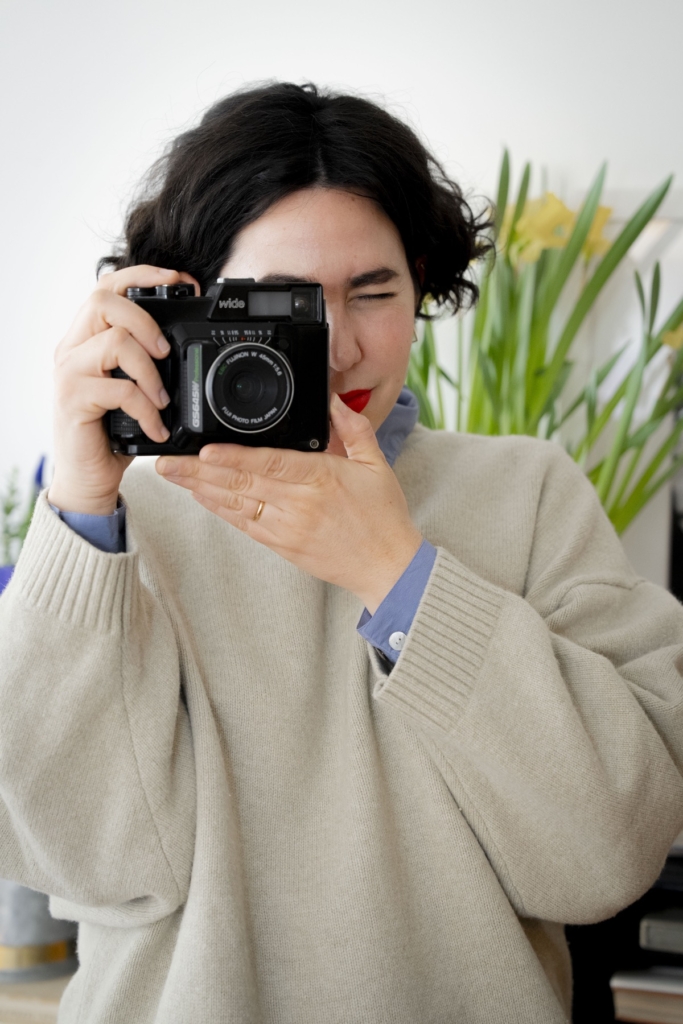
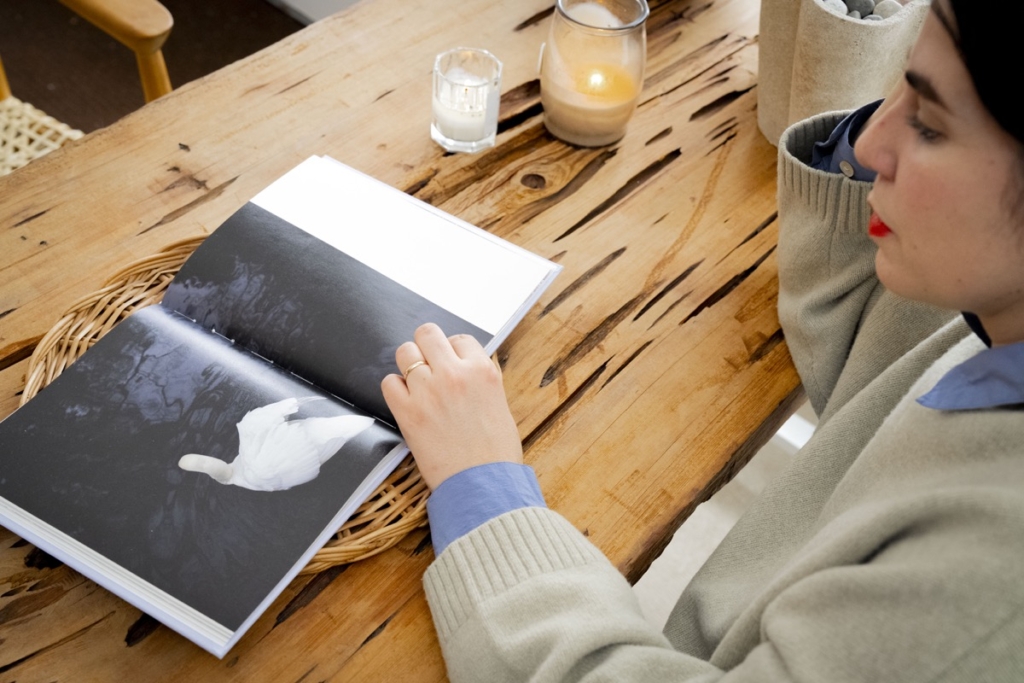
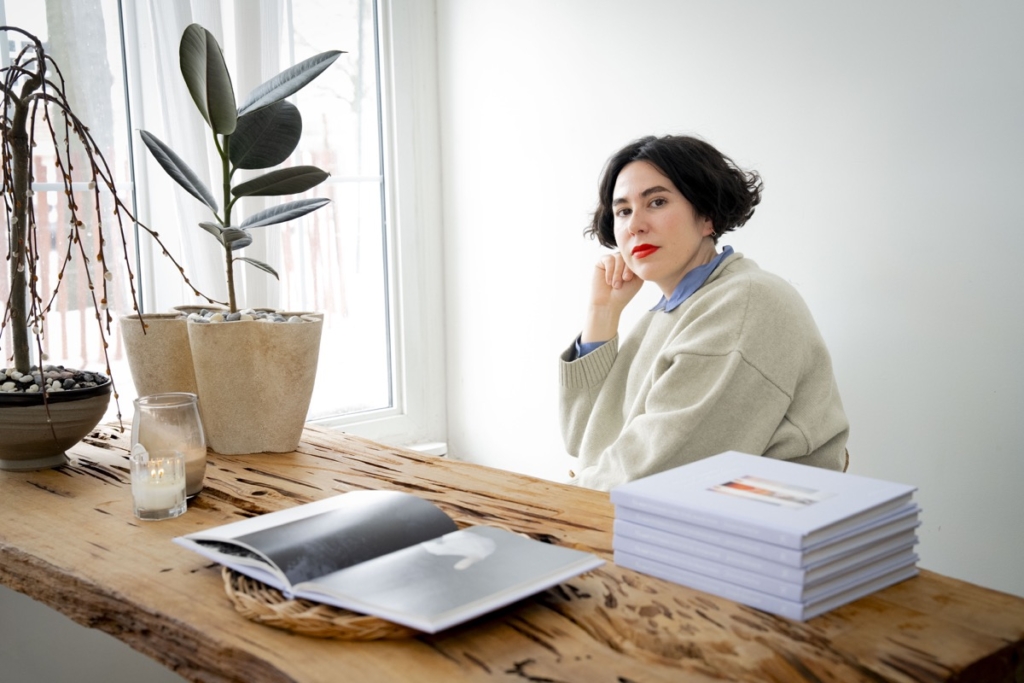
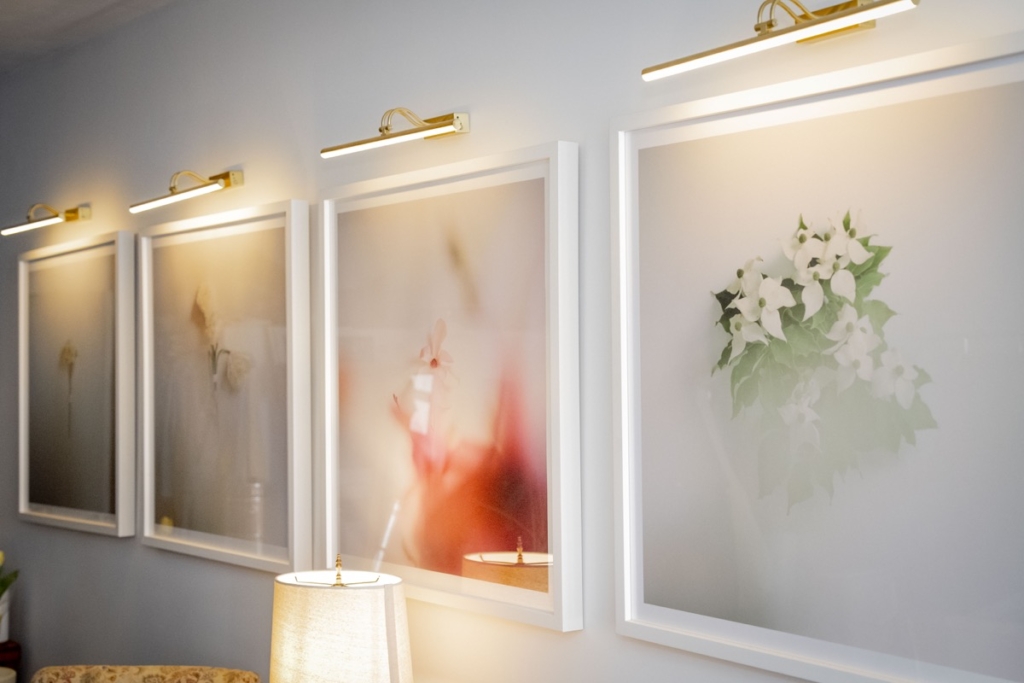
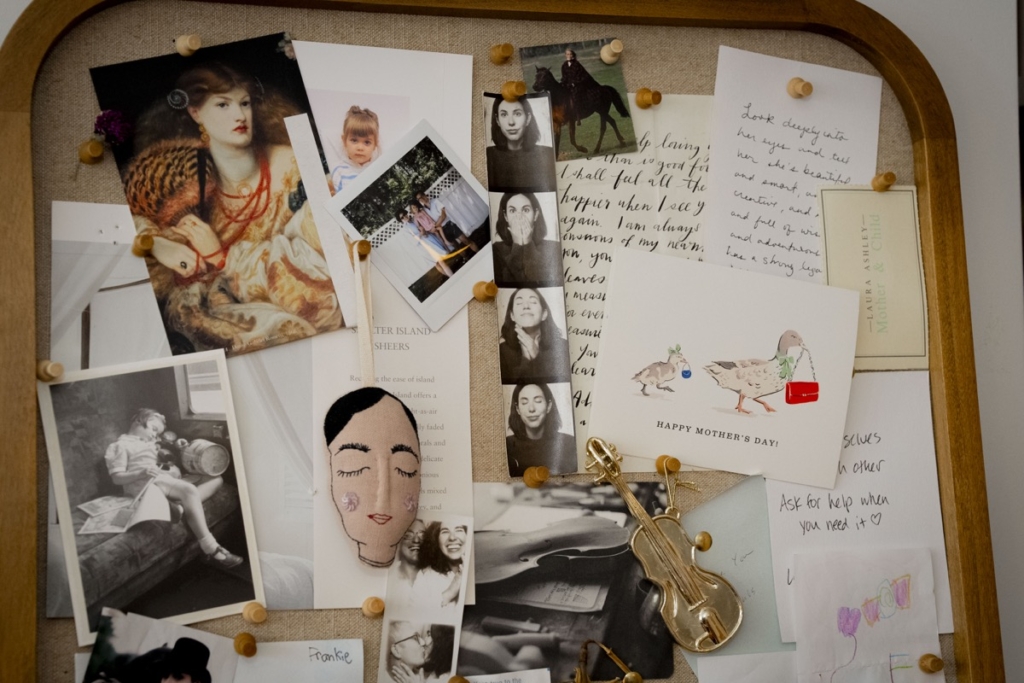
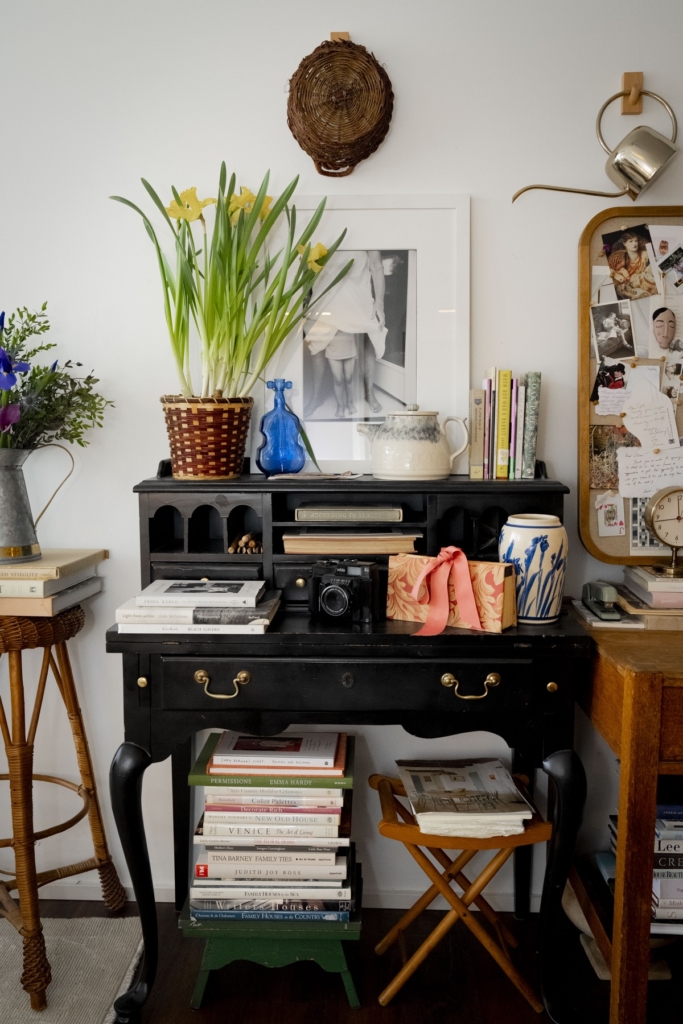
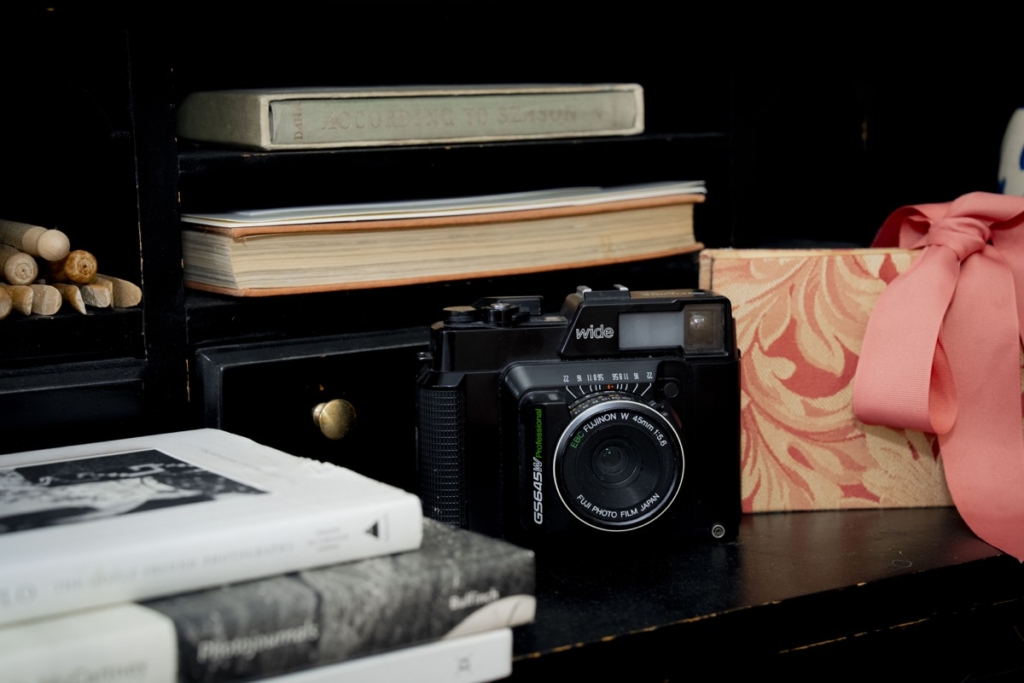
“Shooting in here is really nice,” Jillian Guyette says, of her storefront studio space in downtown Haddonfield. “It’s super fluid. It’s all natural light. The space dictated that I should be doing [portraiture].”
In some ways, that creative atmosphere feels familiar. Guyette grew up in a house shaped by art and intuition; her mother is a painter, and her father worked as a psychic medium, giving readings from an office there. Creativity wasn’t abstract; she saw it practiced daily. “I just think arts and humanities are so important,” she says. “I want more creativity, more sensitivity. I think we really need it right now.”
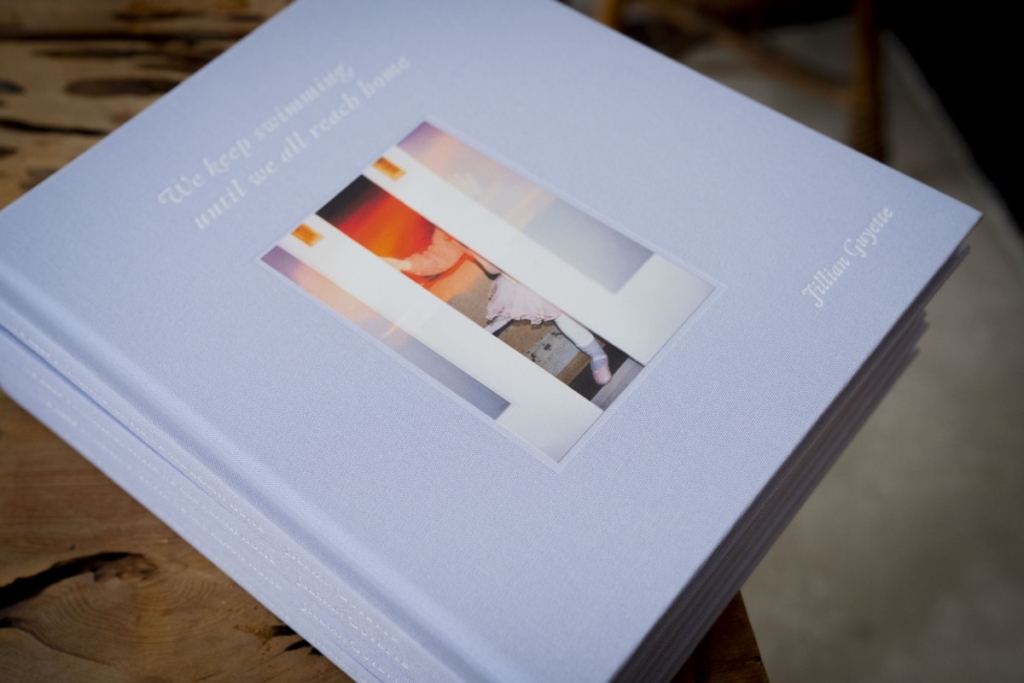
That belief began to crystallize in 2020, when the photo industry paused during the pandemic, and Guyette found herself home with her newborn daughter. Without commercial shoots to anchor her schedule, she began photographing her child and then her mother-in-law and her own mother. Those images grew into a project that became her book, “We Keep Swimming, Until We All Reach Home,” published this past November. Spanning several years, the photographs explore “women’s intergenerational relationships, inherited histories, and [Guyette’s] esoteric upbringing,” according to the book’s blurb. Shot on analog film, the images shift between black and white and muted color. Women and children appear pressed close together, sometimes turned partially away from the lens. In one photograph, a woman stands with her back to the camera, a tree tattoo trailing roots down her spine. In another, limbs overlap and fold into one another. The effect is intimate and at times haunting. “I hope the book feels familiar,” she says. “That someone can put themselves into it.”
With the book complete, Guyette has shifted her focus back to her studio, commissions, and to a growing number of local families who stop in for portraits. Before opening her own studio, she had never photographed children other than her own daughter. “I never shot families before,” she says. “Once I started doing it, it felt like a really nice thing to offer.” Her photography sessions are minimally directed, allowing people to let their guard down and just be. Recently, a family came by a year after their first shoot. “It makes [the work] really special,” she says. Seeing how the children had grown and changed added an unexpected dimension to her portraits.
For Guyette, success looks different from what it once did. “Success for me is being able to continue to work as a photographer and take care of my daughter simultaneously,” she says. Lately, that means carving out space to return to her flower series, where petals and stems appear almost gossamer against simple backdrops, work she describes as her most consistently collected prints. But running a storefront studio also requires balance. “Being true to yourself and your practice, and offering that up in a public way is sometimes difficult,” she says. The goal is to keep the work authentic while making it approachable. “I think it’s okay to take your time.”


