
Many Americans have misconceptions about donating blood. They lack knowledge about the process or fear needles.
One powerful finding is that when an individual donates one pint of whole blood, they can save up to three lives.
Freehold’s newest blood center, New Jersey Blood Services (NJBS), located on Route 9, celebrated its grand opening ribbon cutting ceremony on December 2nd and is already seeing steady growth in donor appointments along with positive community feedback.
Sarah Horn, marketing manager at the New York Blood Center, oversees all 21 donor centers across New York and New Jersey, which collectively deliver more than 500,000 lifesaving blood products annually. The new Freehold location marks the organization’s fifth donor center, the furthest south in New Jersey.
“People can’t live without blood,” Horn said. “For us, opening a new donor center, especially in Freehold, is about accessibility.”
In New Jersey alone, the demand is significant. Thousands of donations are needed each week to ensure hospitals remain supplied and patients receive lifesaving care.
Some alarming statistics: “NJBS needs more than 7,500 blood donations each week to meet the demands of the hospital and the community to donate blood,” Horn said. “Sixty percent of the population is eligible to donate blood but only 3% do.”
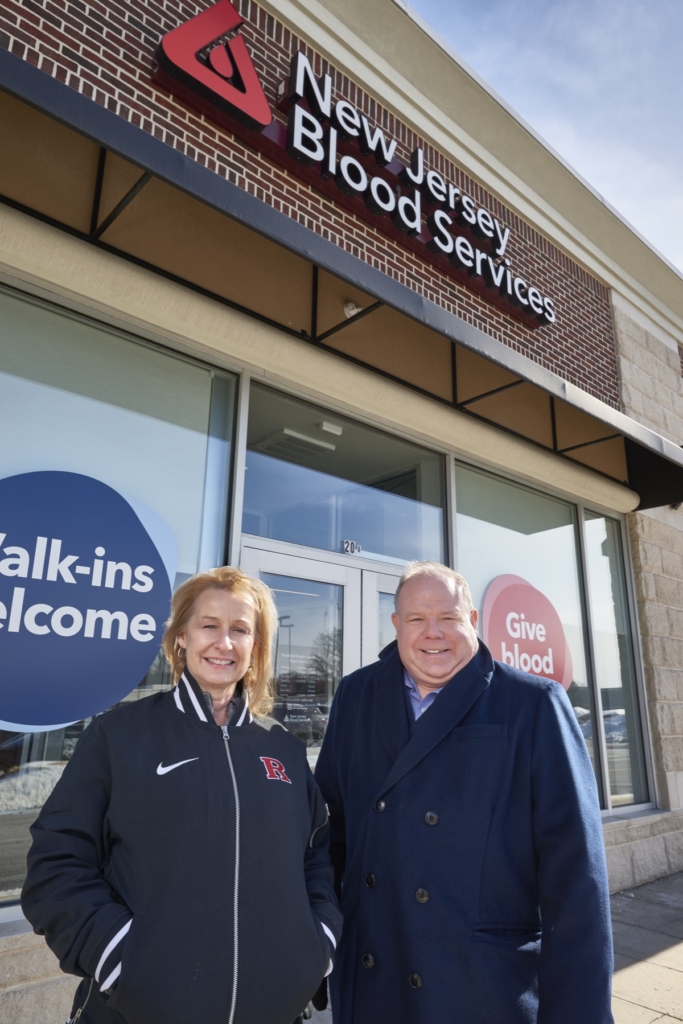
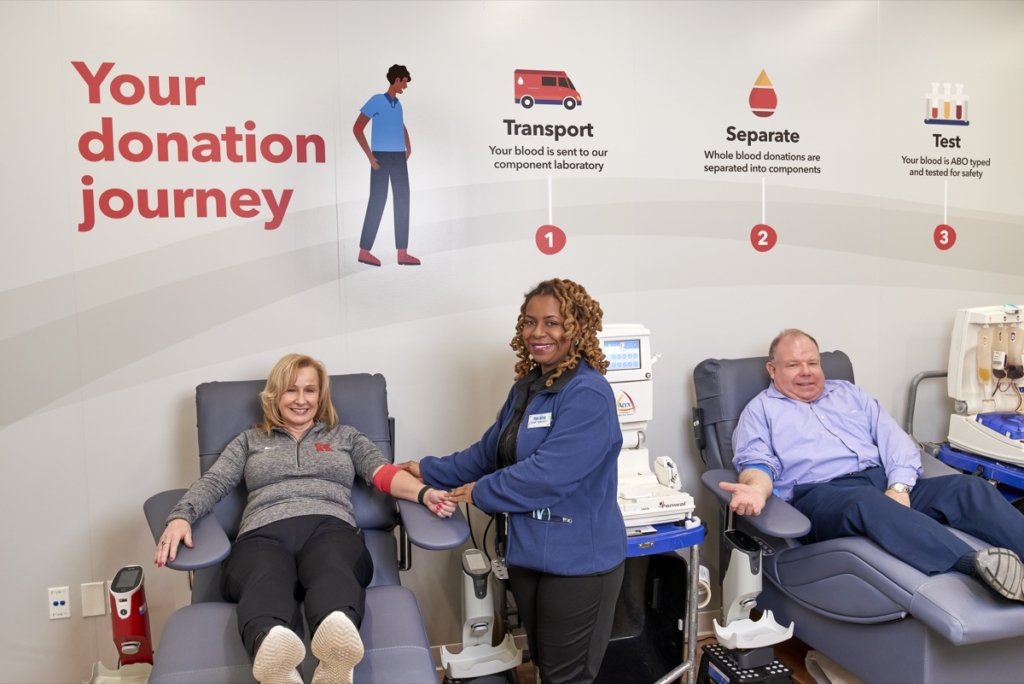
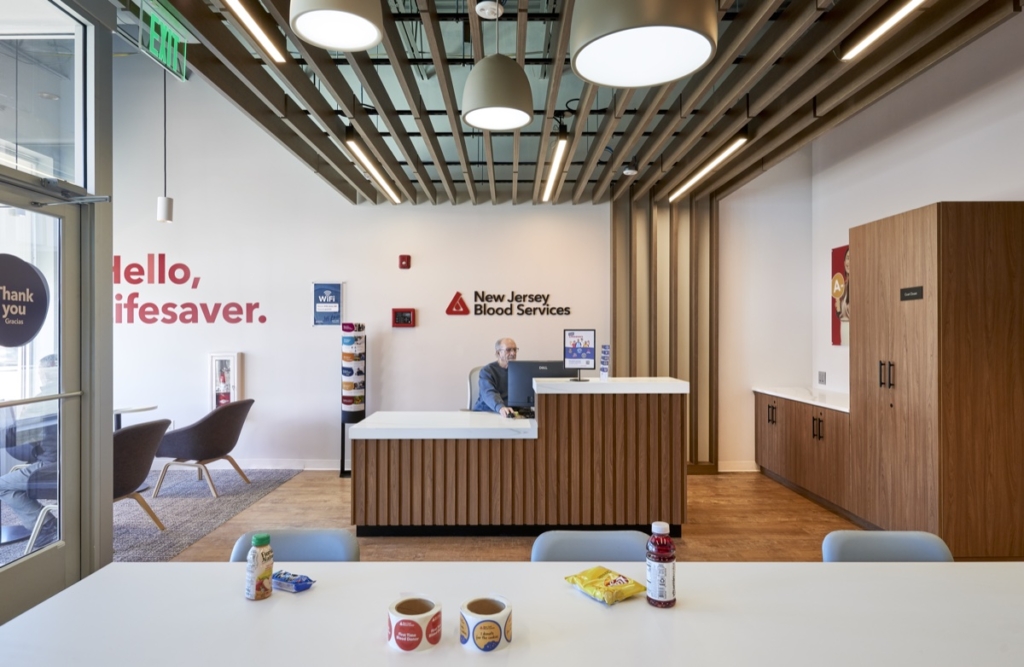
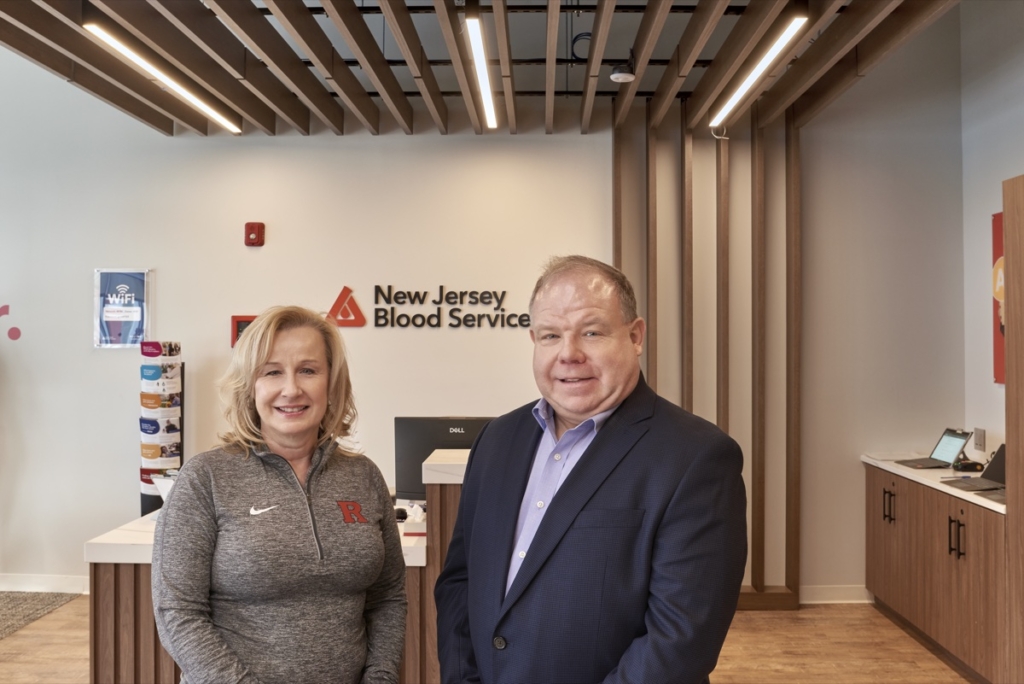
“People can’t live without blood,” said Sarah Horn, marketing manager at the New York Blood Center, who oversees all 21 donor centers across New York and New Jersey. “For us, opening a new donor center, especially in Freehold, is about accessibility.” The new Freehold location marks the organization’s fifth donor center, the furthest south in New Jersey
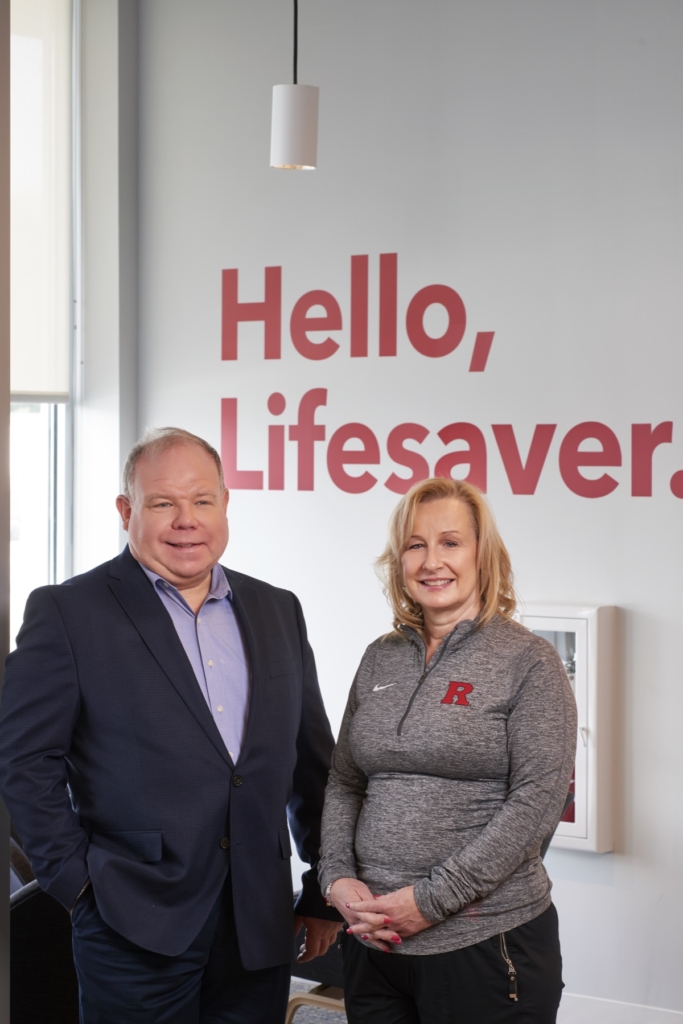
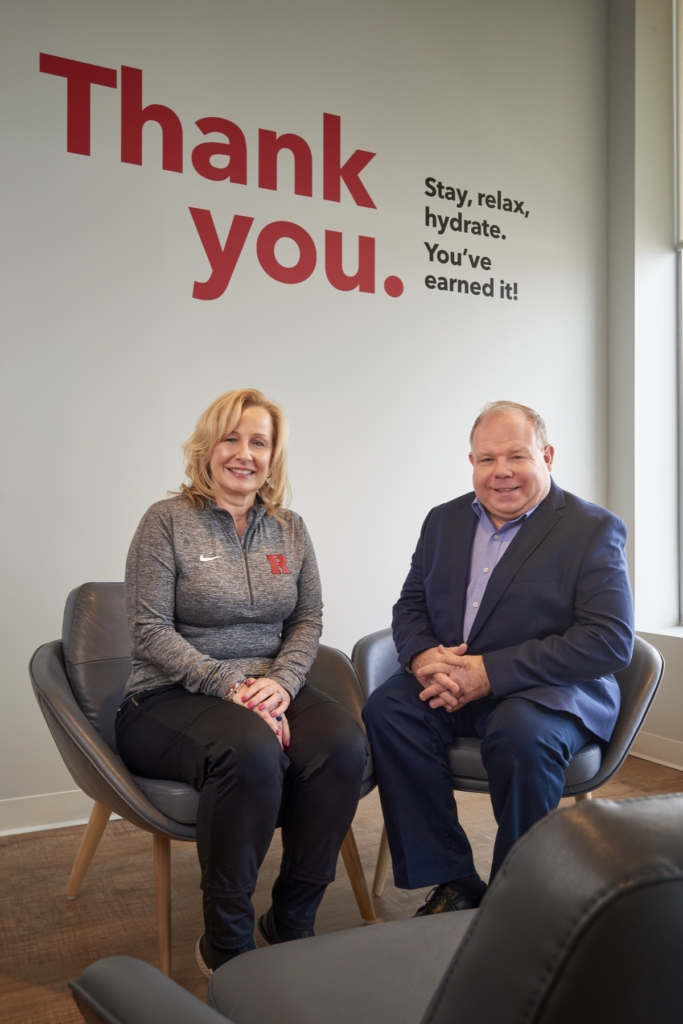
David Dombrowski and Susan Beurskens are two longtime “superdonors,” whose donations of whole blood and platelets have helped countless people.
Since 2013, David Dombrowski, a Freehold resident who spent 30 years as a biomedical technician at Deborah Heart and Lung Center, has donated 113 times, giving whole blood and, in recent years, platelets.
His journey began in his teenage years when the Central Jersey Blood Bank regularly held blood drives at his school.
Dombrowski began donating organically without a grand plan. Any time there was a blood drive, he would participate. “It took two hours, a line in [my] arm, I watched TV,” he said. It was a way he could help people and he did it without too much thought.
Donating later became deeply personal for Dombrowski when his sister experienced a medical emergency.
“My sister had a tough pregnancy 19 years ago,” he explained, “her and my two nieces needed blood. One of my nieces didn’t make it.”
His sister continues to host blood drives in her daughter’s memory.
His reflection was extra poignant, as our interview took place on the exact day of his niece’s passing nineteen years ago, which he felt was a special sign from her watching over.
Donating twice a month, Dombrowski hopes to encourage others who may be hesitant.
“It’s a hard thing to donate blood,” he acknowledged. “A lot of people say they’re afraid.”
He has already visited the new Freehold Donor Center multiple times. “It’s different, nicer, and a little more comfortable,” he said, noting that this center is an upgrade while also being homey.
Susan Beurskens, an associate athletic director for marketing at Rutgers University, New Brunswick and a Howell resident, has been donating since 1994 and has logged more than 150 donations. She donates platelets, which are critical for helping cancer patients, specifically.
“Platelets go to help a lot of cancer patients. I started doing that back in the ‘90s. With platelets you can donate 24 times a year. Every seven days you can go.”
She added, “I was working for another company and they were doing a blood drive and needed one more donor, and I met the weight requirement. In all honesty, I wanted to donate.”
Later, her donations became even more meaningful when her mother required transfusions during cancer treatment.
Maintaining a strong blood supply at donation centers is important, stressed Beurskens.
“You never know if you or a family member might need it,” she said. “There is a severe blood emergency right now. If there’s an emergency, you need an ample blood supply.”
Beurskens was immediately impressed by the new Freehold Donor Center when she visited shortly after its opening.
“It’s an incredible, beautiful facility, unbelievable, and very welcoming. It doesn’t have that medical office feel — it felt very homey.”
For Beurskens, platelet donation is also a form of service. “I look at my job as busy and crazy, the platelets are my way of volunteering. My way of giving back and doing something and saving [lives].”
She and Horn separately addressed a pattern of decline in younger donors, as donations from individuals under 30 have dropped more than 30% in recent years. Horn said this decrease is partly attributable to lost years during the pandemic when blood drives were inaccessible.
The core takeaway is simple: when people are educated and informed, they donate and lives are saved. Donating may seem daunting, but in the scheme of things, it’s doable. Freehold’s old and new donor centers “hold” powerful stories of lives saved, with many more yet to be written through this new center’s presence in the community.
If everyone who was eligible donated blood twice a year, “we wouldn’t have things such as blood emergencies,” Horn noted.


