
In a city famously adorned with more than 4,000 murals, it takes something extraordinary to shift the landscape. In the fall of 2021, that shift happened on a 100-foot wall in Fishtown, where a vibrant wash of pinks, purples, yellows, and hand-drawn line portraits announced a historic milestone: Mural Arts Philadelphia’s first project celebrating transgender people. Titled “We Are Universal,” the 2,250-square-foot artwork by illustrator and muralist Kah Yangni didn’t just add another splash of color to the city — it redefined who gets to be seen, honored, and held with tenderness in public space.
What makes “We Are Universal” so striking is not only its subject matter, but its origin story. The mural was created in close collaboration with residents of Morris Home, a residential recovery program dedicated specifically to transgender and gender-nonconforming people. For more than two years, Mural Arts and Morris Home worked together through workshops, conversations, and community gatherings where residents reflected on identity, resilience, survival, and joy. Their words from a listening session —“We’re trans, we’re survivors. We are joyful. We feel rage. We are universal!” — became the mural’s central text, lettered in Yangni’s signature hand-drawn style that feels more like a journal page than a wall.
The result is a rare moment in a country where public art is not made about a community but with them, honoring lived experience rather than projecting a symbolic gesture. As several residents expressed during the mural’s dedication, seeing their faces, words, and spirit on such a large scale offered a profound sense of belonging. Many described the unveiling as a moment of “being seen” for the first time in their city.
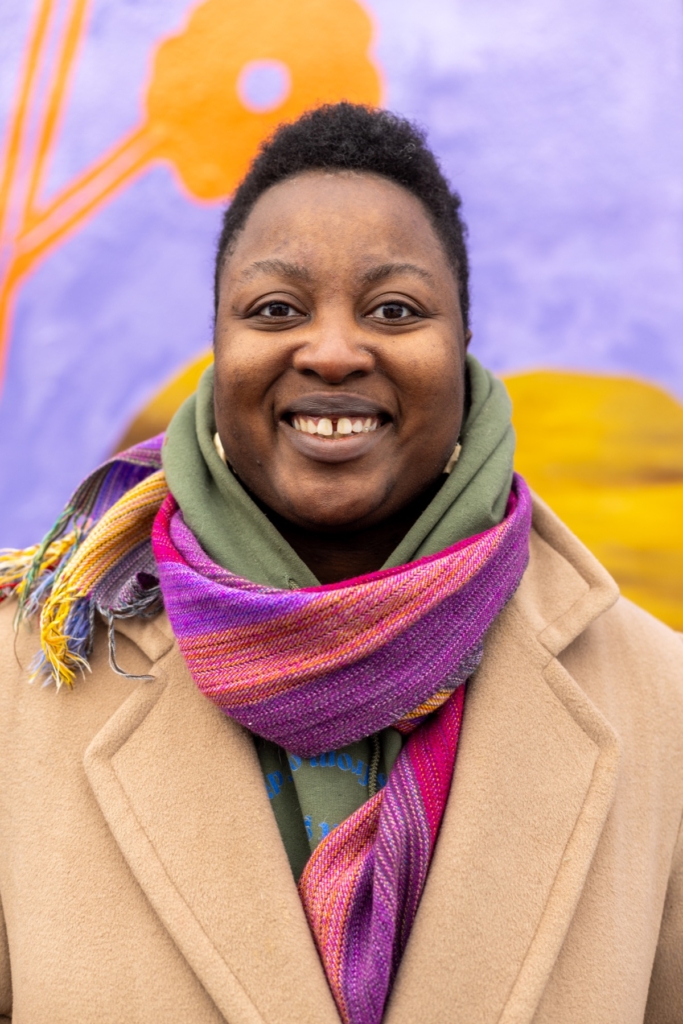

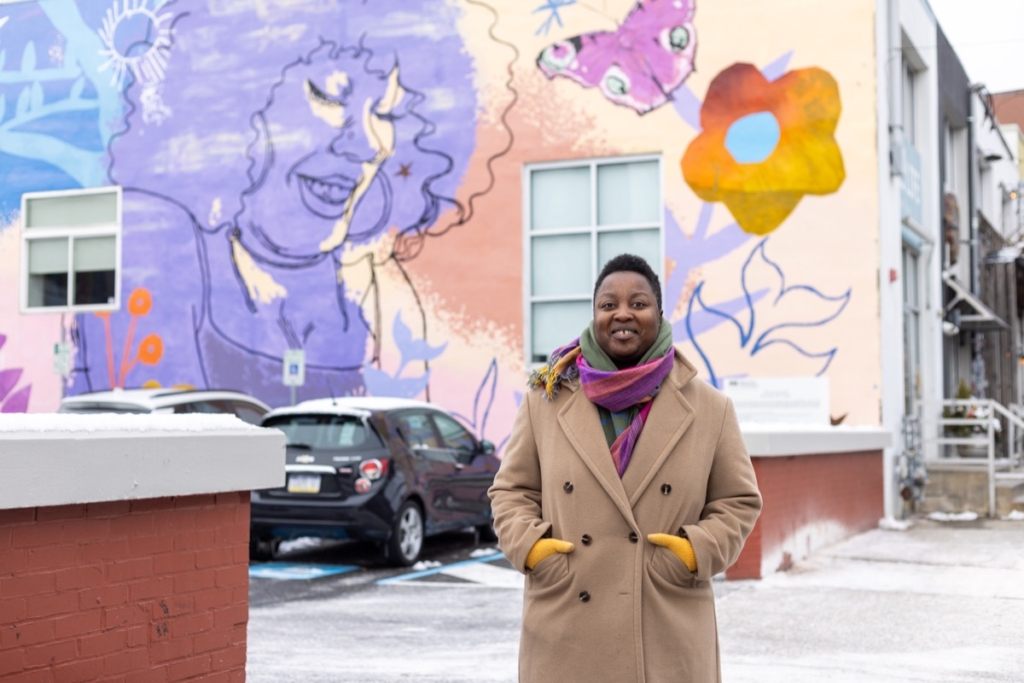
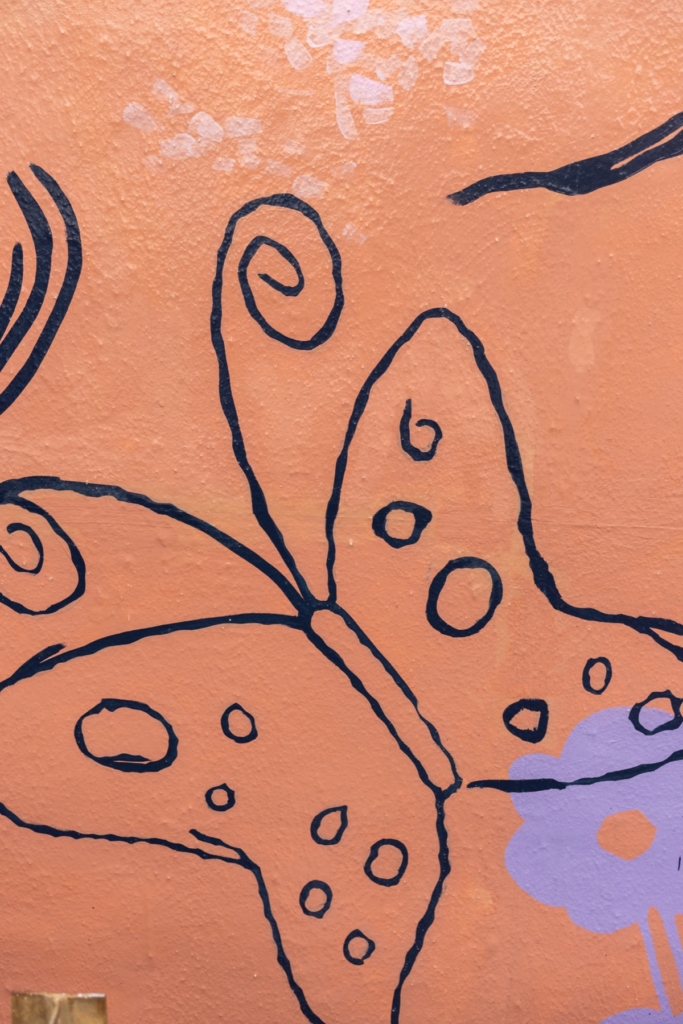
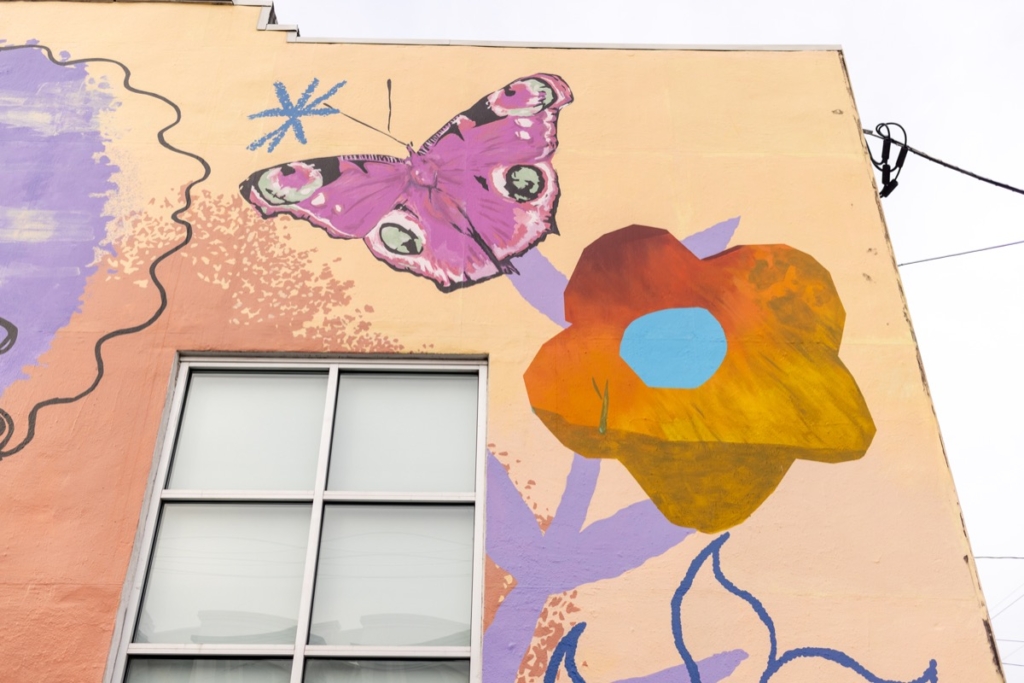
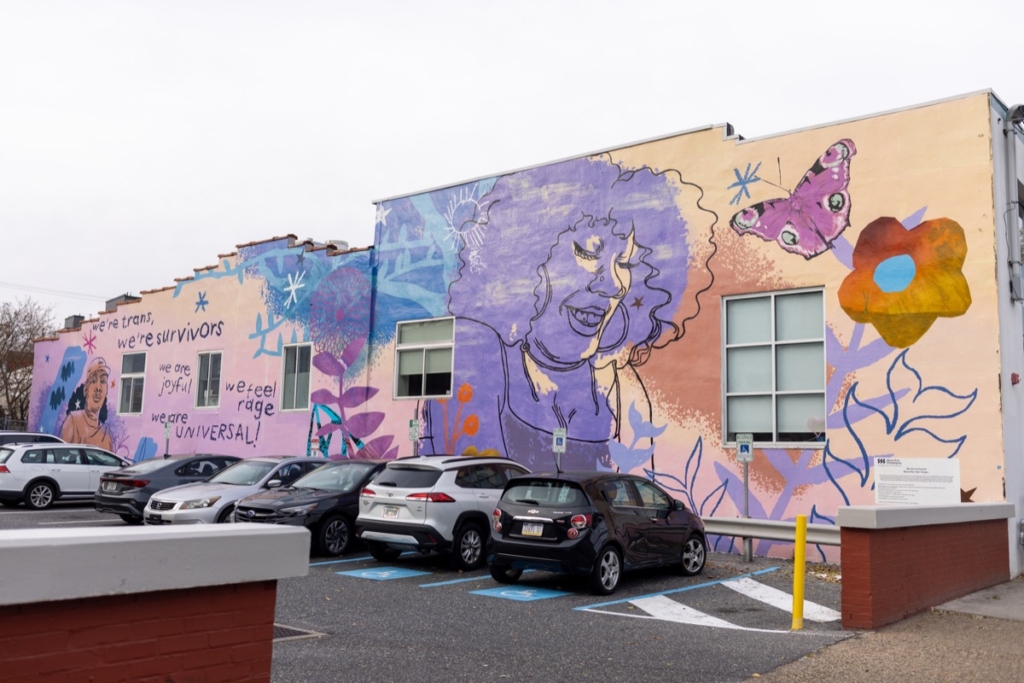
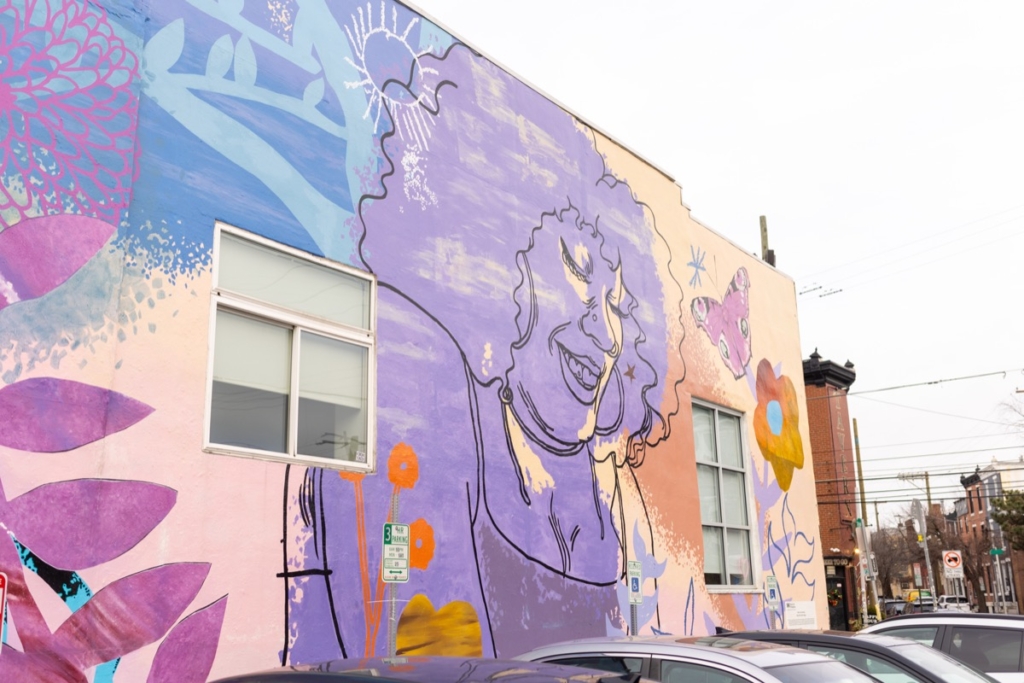

Titled, “We Are Universal,” the 2,250-square-foot artwork by illustrator and muralist Kah Yangni didn’t just add another splash of color to the city — it redefined who gets to be seen, honored, and held with tenderness in public space.
Yet “We Are Universal“ is far from a somber monument. Its power lies in its brightness, warmth, and softness, a deliberate choice by Yangni, who wanted to counter the overwhelming focus on trans trauma in national conversations. Instead of visuals centered on violence or struggle, Yangni imagined something that looked like “a warm hug” — art that affirmed life, joy, and the fullness of trans humanity. Against a glowing gradient sky, two Black trans residents are drawn in simple, heartfelt lines, surrounded by blooming flowers, leafy vines, butterflies, and shimmering pastels. Nothing is rendered sharply; everything is soft, curved, gentle. The mural invites viewers to feel rather than decode.
Walk past the wall on Frankford Avenue and the mural seems to breathe — the colors shifting subtly in daylight, the figures emerging from the wash of pigments like memories rising to the surface. The palette itself feels political: a rejection of drabness, erasure, and invisibility. The mural’s joy becomes a radical act.
The imagery is intimate, tender, and celebratory, but also complex. Embedded in its vibrancy is the acknowledgment of survival. The phrases “joyful” and “survivors” appear alongside “rage,” creating an emotional spectrum that mirrors the lived realities of many trans Philadelphians. Yangni’s choice to make the hand-lettering uneven reinforces this human texture — imperfection as authenticity, softness as strength.
Community was the heartbeat of the project from start to finish. The mural is part of Mural Arts Philadelphia’s Porch Light program, a collaboration with the city’s Department of Behavioral Health and Intellectual disAbility Services, which uses public art as a catalyst for healing, visibility, and neighborhood connection. Assistant artists Sammy Kovnat and De’von Downes, volunteers, and local supporters helped paint the mural, many describing the process as joyful and grounding. “A lot of hands touched it before it was done,” says Yangni. Cake Life Bake Shop, the building’s tenant at the time, offered their wall enthusiastically, making their corner of Fishtown a site of affirmation rather than exclusion.
When the mural was dedicated in late September 2021 — just before Mural Arts Month — dozens of people gathered. Some were longtime advocates, some were neighborhood residents stopping by out of curiosity, and some were trans Philadelphians witnessing history. For them, the mural wasn’t just an artwork. It was a claim to space, a declaration of presence, a mirror held up to a community too often forced into the shadows.
In Philadelphia’s catalog of murals, “We Are Universal” is remarkable — not only because it is a landmark trans-affirming mural, but because it insists that joy and justice can share the same wall. It invites the city to imagine public art differently: less as decoration, and more as an act of love. Here, in strokes of lavender and coral, in the curve of a portrait line, in the fluttering wings of a painted butterfly, a community stands visible, vibrant — universal.


