
Some things just hit home.
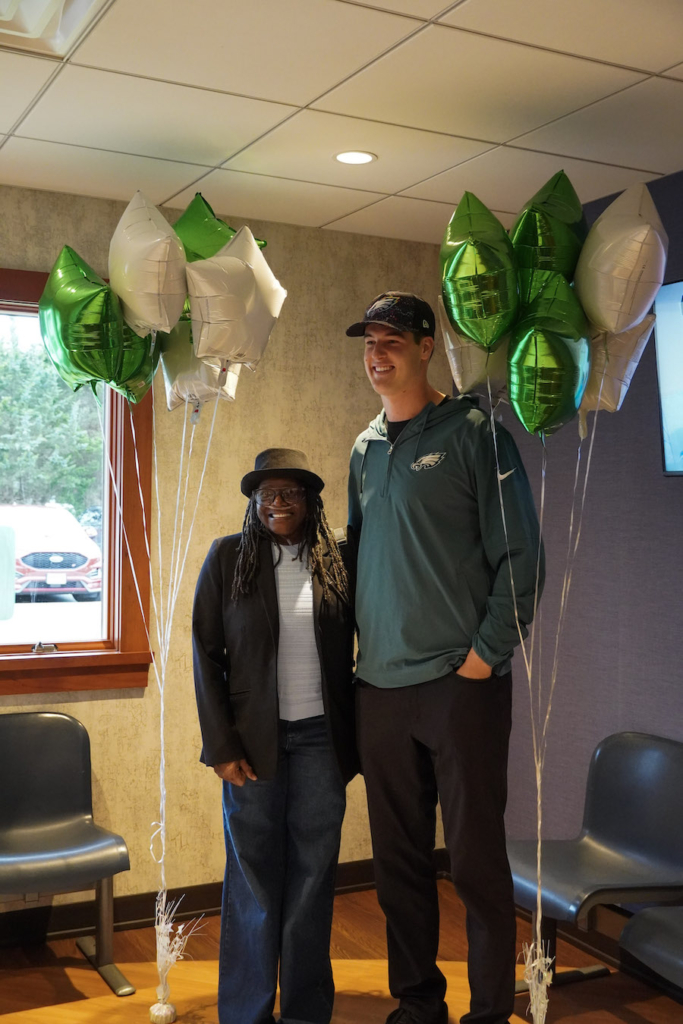
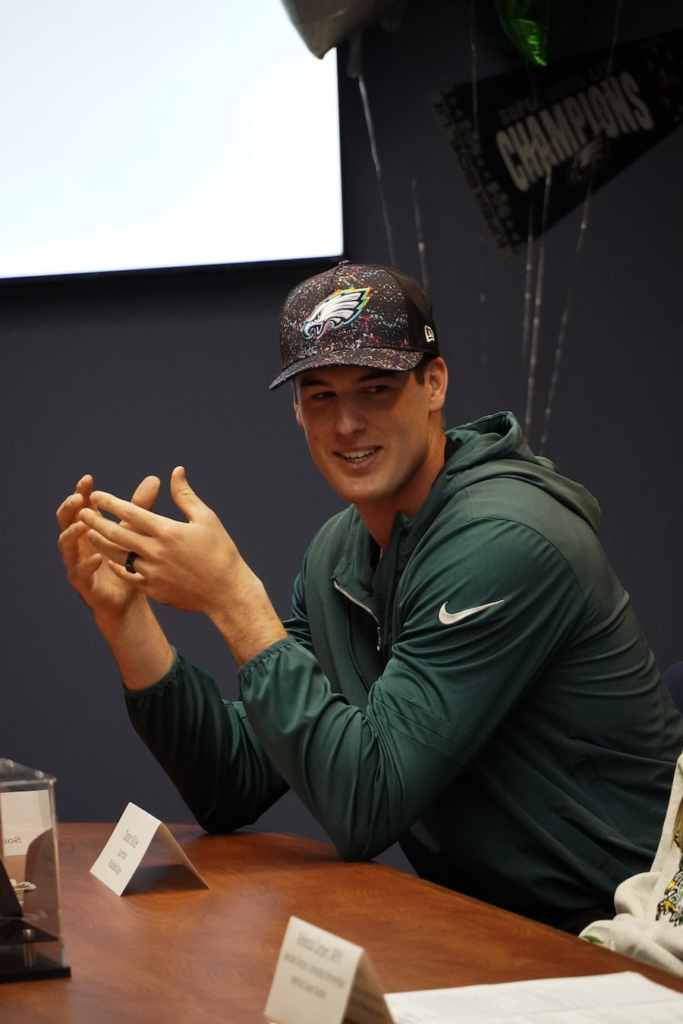
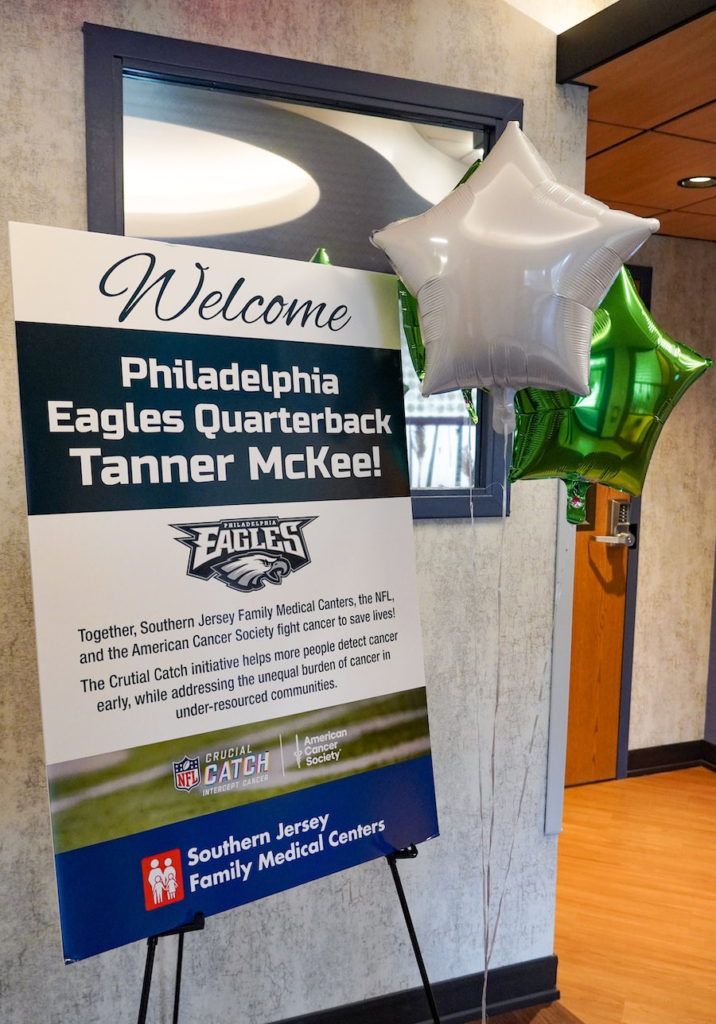
And for Tanner McKee, a quarterback for the Philadelphia Eagles, attending events as a Crucial Catch ambassador for the American Cancer Society is one of them.
“When I was 16, I was diagnosed with melanoma skin cancer,” McKee said at a roundtable at the Southern Jersey Family Medical Center in Hammonton. “I’m definitely a beneficiary of someone who got lucky and catching it early.
“Screening is everything.”
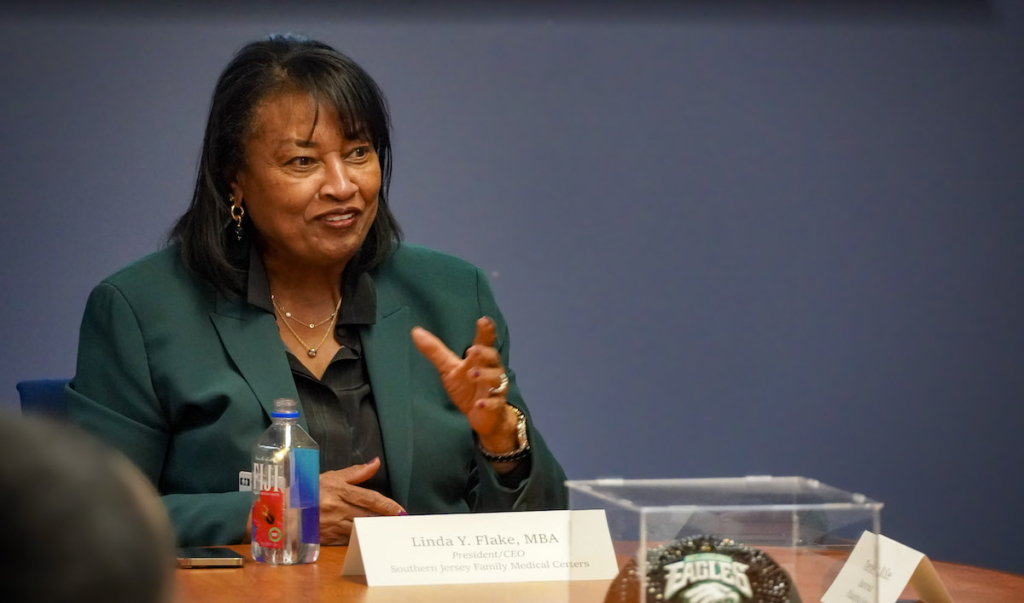
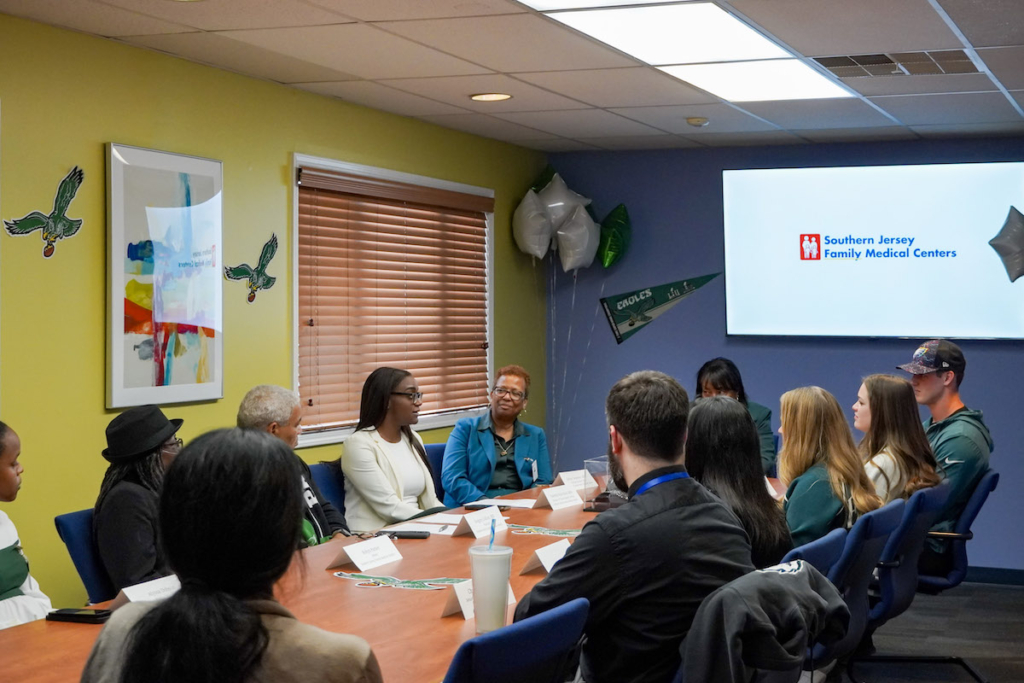
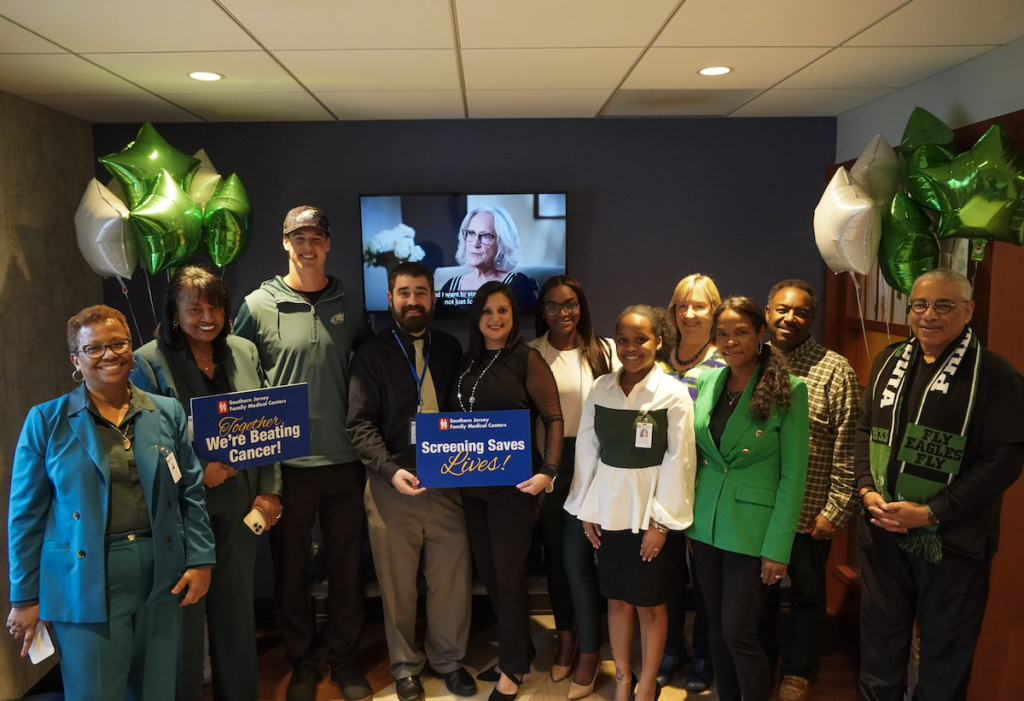
The Southern Jersey Family Medical Center (SJFMC), a community health center, welcomed McKee and the American Cancer Society for a roundtable to discuss the impact of the Crucial Catch initiative and what it means for their facility.
“Over the past 48 years part of our mission has been to focus in terms of preventing and promoting high quality care to everyone regardless of their ability to pay,” said Yoammy Pozo-Sosa, director of clinical support services for SJFMC.
“We want to make sure everyone has the opportunity to receive primary care and specialty care and services which we offer here.
“In working with the American Cancer Society and also being part of this [initiative] has allowed us to empower the community with information in terms of preventative services which I think is something that is truly important here.”
SJFMC is the health care home for residents in five South Jersey counties. With eight service delivery sites in Atlantic, Burlington and Salem counties, SJFMC has a staff of almost 250 employees, including physicians, nurse mid-levels, nurses, clinical support staff and administrators, according to its website.
Over 53,000 patients are served by SJFMC, generating approximately 161,000 patient visits annually. The growth of the Southern Jersey Family Medical Centers, Inc. has necessitated an expansion of primary care and specialty services based on the needs of the patients. Services include pediatric and well-baby care, adult and internal medicine, women’s health care and family planning, dental services, behavioral health, foot care, care management, community outreach, health education, patient transportation and translation services.
Throughout the years, Southern Jersey has remained committed in its mission and tradition of providing care in a compassionate manner, regardless of the patient’s ability to pay. Uninsured patients are welcome, and outreach efforts are designed to reach patients most in need of comprehensive and accessible medical care.
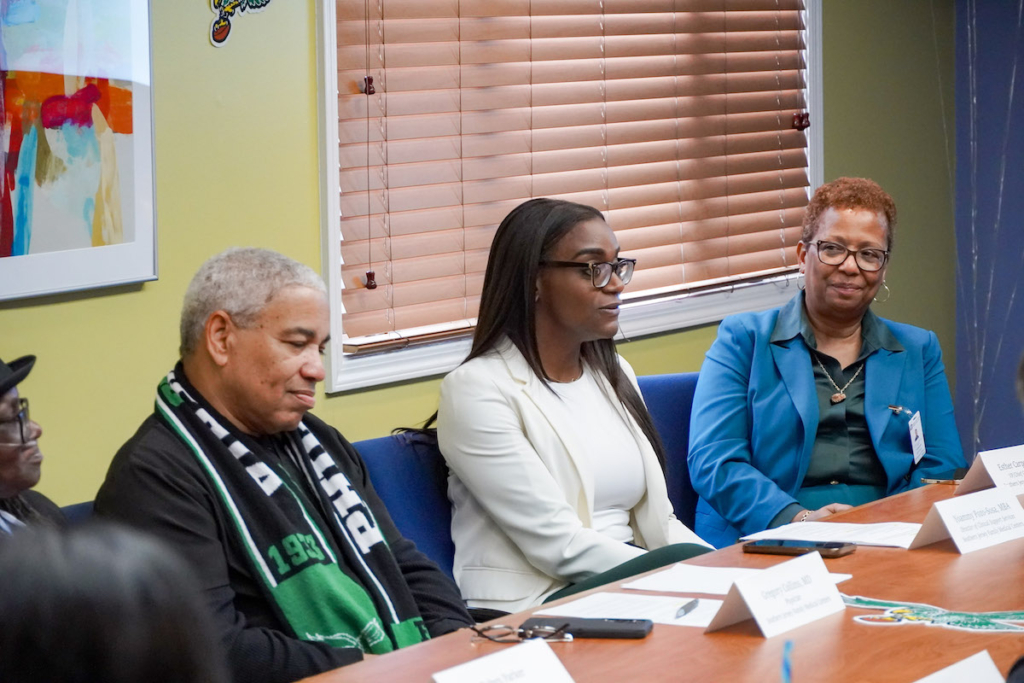
Gregory Collins, former chief medical officer at SJFMC, said the center has taken care of over two million patients.
“Last year we saw 53,000 patients,” he estimated. “Most of our patients are uninsured or underinsured and fall beneath 200 percent of federal guidelines.”
It’s a vulnerable population. Financial capacity can limit access to the best care patients may need. At SJFMC, they are there for them, Collins said.
It is estimated that 42% of people in New Jersey were screened for colorectal last year. Nationally, 65% of people were screened, he said.
And if tested positive for colorectal cancer, “it really depends on the stage that it is caught” as to survival rate.
“If caught in the early stages then the cure rate is almost 99 percent,” Collins said. “If caught in later stages, the survival rate is less than 10 percent.”
Hence the importance of the Crucial Catch initiative.
Collins noted health disparities in African American communities.
“The reason for that is a lot of social services,” he explained. “A lot of financial issues, a lot of educational issues. Many don’t necessarily understand the importance of getting screened for colorectal cancer.”
The biggest impact on increased screenings has been providers making recommendations to patients.
“Certainly, we can have advertisements, we can have round table discussions, we can have community events, but that one-to-one recommendation by a provider in an exam space is the number one reason that pushes patients to get screenings,” Collins said.
Preventative care is also key.
“Colorectal cancer is not only just in the colon,” Collins explained. “It can be associated with other disorders.
“Uterine cancer. Breast cancer. Stomach cancer. All these things can present it as precursors to colon cancer. Depending on which type of cancer you have, different types of things lead to colorectal cancer.”
A big factor is diet.
“One of the reasons we found why colorectal cancer is increasing is because of the American diet,” Collins said, noting processed, fatty and sugary foods, and not enough fiber in the diet.
The team at SJFMC spends a lot of time counseling patients about dietary habits.
“What to eat is equally important as predispositions to genetic factors,” Collins said.
Pozo-Sosa said they understood the importance for SJFMC to come together as a multi-disciplinary team in efforts to provide the best care for their patients.
“We provide them with education, all the information they need in terms of how to collect their samples, where to go, make sure they complete their test and what happens after” she said.
Pozo-Soso said they also understood the importance of working with key connections and community partners and agencies to help patients who may not have insurance.
“When we look at numbers in 2024 for colorectal screening at Southern New Jersey [and the numbers in] September 2025, we definitely increased by three percent,” she said.
And there is still more work to be done.
“In people, particularly men younger than age of 50, colorectal cancer is increasing,” Collins said. “[Colorectal cancer is] the number one death in men under the age of 50. It’s the number two in women under the age of 50.
“We have made some headway certainly in the past 10 years, we decreased the rate of mortality by 30 percent by efforts like this…
“There’s still a long way to go.”
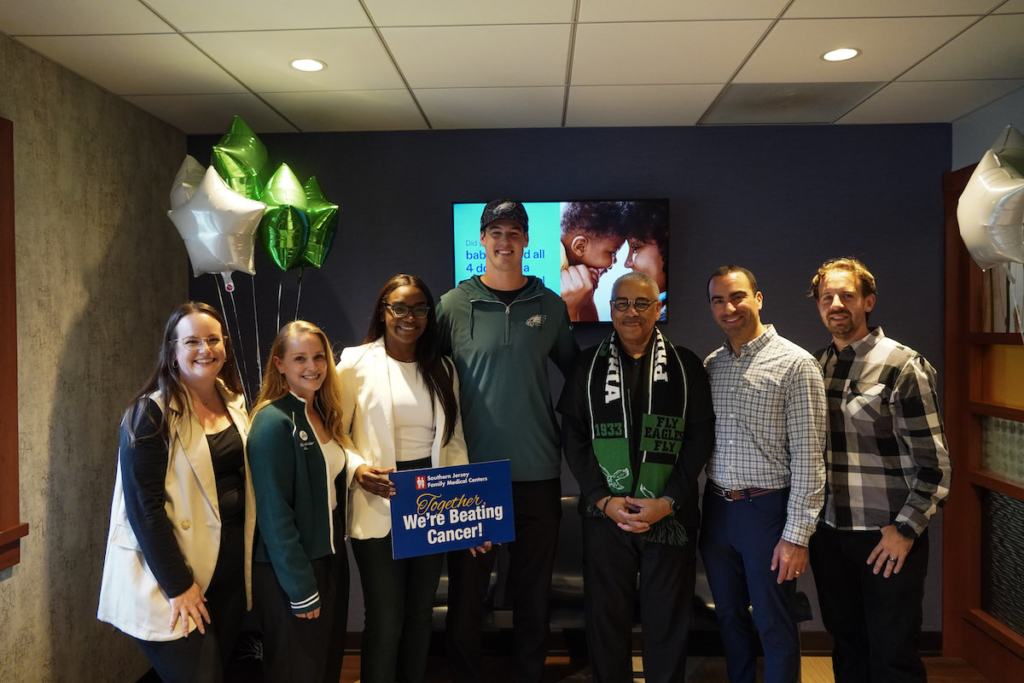
After the roundtable, McKee, who attended the event with his wife Laura, toured the SJFMC facility.
“My great grandfather passed away from melanoma,” McKee said. “We knew we had it in the family. My mom recognized a suspicious mole on my forehead.”
After a bunch of biopsies and surgery to take out two lymph nodes in his neck to ensure the cancer did not spread, McKee said he was on the lucky side.
“I didn’t have to do chemo because the borders [of tissue] were clear,” he said.
But there was a risk for the rising NFL quarterback. A risk that he would not be able to move his shoulder afterwards due to the nerves in his neck.
McKee was drafted by the Philadelphia Eagles in the sixth round of the 2023 NFL draft after playing college football for Stanford.
Since 2012, the American Cancer Society and NFL’s Crucial Catch initiative has supported over 840,000 cancer screenings and impacted more than 1.9 million lives. While educating fans about the importance of cancer screening, early detection, and risk reduction, the initiative also raises funds for CHANG grants that help community health center and NFL-affiliated or in-market hospitals in under-resourced areas access to cancer screening.


